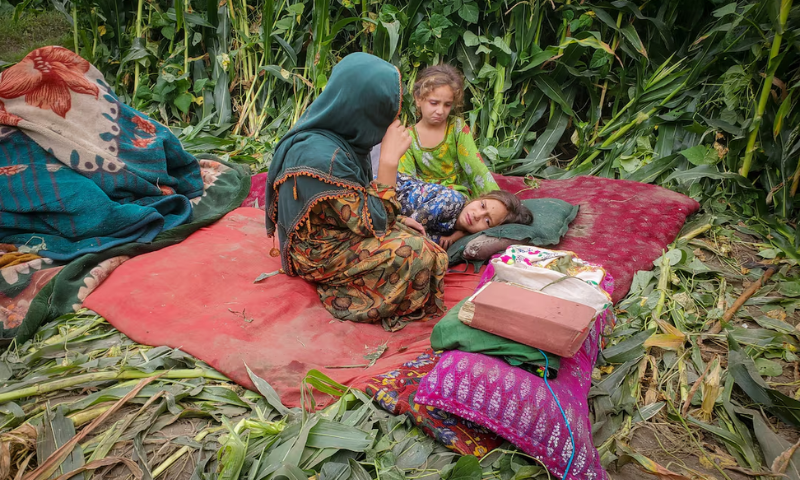
Kabul, September 1, 2025: More than 800 people were killed and at least 2,800 injured when a powerful earthquake struck eastern Afghanistan around midnight, officials said Monday, as rescuers struggled to reach remote mountainous areas cut off by landslides and heavy rains.
The 6.0-magnitude quake, which struck at a shallow depth of 10 km, flattened mudbrick homes across the eastern provinces of Kunar and Nangarhar. Taliban spokesman Zabihullah Mujahid confirmed 812 deaths, most in Kunar, with entire villages razed.
“This is one of the deadliest earthquakes in recent years. We urgently need international assistance,” health ministry spokesperson Sharafat Zaman told Reuters. Another ministry official, Abdul Maten Qanee, said all available teams had been mobilised to provide food, health, and security assistance.
Rescue efforts were hampered by rough terrain, poor communications, and days of heavy rainfall that increased the risk of landslides. “Many roads are impassable, and mobile networks are down in large areas,” said Kate Carey, an officer at the UN humanitarian coordination office (UNOCHA). She warned that animal carcasses in collapsed villages posed a contamination risk to water supplies.
The Afghan defence ministry said 40 military flights had so far evacuated 420 wounded and dead. Helicopters ferried casualties from cut-off villages as residents and soldiers carried survivors to waiting ambulances.
Ziaul Haq Mohammadi, a university student in Jalalabad, recalled being thrown to the ground as his house shook violently. “We spent the whole night in fear, waiting for aftershocks,” he said.
International reaction was slow, with Kabul’s foreign office noting no foreign governments had initially offered help. Later on Monday, China pledged to provide disaster relief “according to Afghanistan’s needs,” while India announced it had delivered 1,000 family tents to Kabul and was dispatching 15 tonnes of food to Kunar. UN Secretary-General Antonio Guterres said the UN mission in Afghanistan was preparing emergency support, while Pope Leo expressed condolences.
The quake adds to the Taliban administration’s mounting challenges as foreign aid, once the backbone of Afghanistan’s finances, has sharply declined since the group took power in 2021. International donors have slashed assistance to $767 million this year from $3.8 billion in 2022, citing global crises and Taliban restrictions on women, including bans on female aid workers.
Afghanistan, straddling the collision zone of the Indian and Eurasian tectonic plates, is one of the world’s most earthquake-prone countries. Weak construction and densely populated mountain regions make tremors particularly deadly. In 2022, a 6.1-magnitude quake killed 1,000 people in the east, while another struck Herat in 2023, leaving many still in temporary shelters.
Richard Walker, a tectonics professor at Oxford University, said Afghanistan’s vulnerability lies in its fragile housing. “Even moderate quakes can cause catastrophic damage in the Hindu Kush, where millions live in poorly built structures,” he said.
Officials warned casualties could climb further as rescuers gain access to remote villages near the Pakistan border.