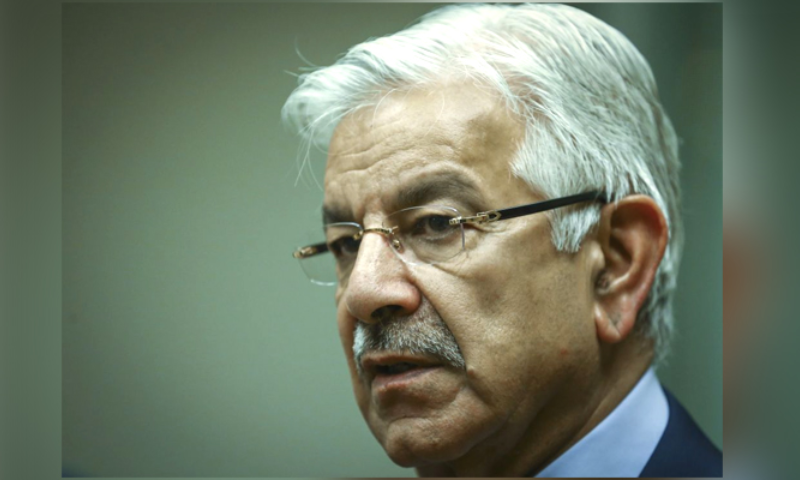
Islamabad, March 3, 2026: Defence Minister Khawaja Asif on Tuesday termed the war imposed on Iran — despite Tehran’s willingness to reach an agreement — as part of a broader “Zionist agenda” aimed at expanding Israel’s influence up to Pakistan’s borders and encircling the country with hostile forces.
In a statement posted on X, the minister said it was imperative for all 250 million Pakistanis, irrespective of political or religious affiliation, to understand what he described as a conspiracy and the intentions of the country’s “eternal enemies.”
His remarks came as the Middle East conflict intensified, with Israel launching strikes inside Iran and Tehran retaliating with missiles and drones targeting what it described as “US interests and bases” across Gulf states.
During the four-day escalation, several senior Iranian leaders, including Supreme Leader Ali Khamenei, were reportedly killed in what Iranian officials described as “unprovoked and unwarranted” airstrikes carried out by Israel and the United States.
Iranian authorities warned that Khamenei’s death would mark a decisive turning point, with the Islamic Revolutionary Guard Corps vowing retaliation and declaring that the “great crime will not go unpunished.”
In his statement, Asif described Zionism as a threat to humanity, asserting that from the creation of Israel on Palestinian land to the present day, every catastrophe faced by the Muslim world and every war imposed upon it carried, directly or indirectly, the role of Zionist ideology and the Israeli state.
He further alleged that Zionist forces had controlled the global economic system for a century and that major world powers were effectively held hostage by that influence.
Referring to Pakistan’s defence capabilities, Asif said the country was a nuclear power and that the strength of its armed forces was recognized globally. He said the nation owed its sovereignty to its “martyrs and ghazis” and prayed for blessings upon those who contributed to making Pakistan a nuclear-armed state.
The defence minister also paid tribute to former prime minister Nawaz Sharif, stating that his decision to conduct nuclear tests had demonstrated to the world that Pakistan possessed nuclear capability.
Asif warned that although Iran had shown readiness for dialogue, war had been imposed upon it as part of a larger strategy to extend Israeli influence toward Pakistan’s borders. He cautioned that a coordinated agenda involving Afghanistan, Iran and India could ultimately be directed against Pakistan, leading to hostile borders, encirclement by adversaries and the risk of the country being reduced to a vassal state.
Concluding his remarks, the minister prayed for unity within the Muslim world, called for the liberation of Palestine, and expressed hope that Pakistan would remain strong and secure. He also prayed for divine protection for the country’s defenders and for their continued strength and resolve.