Tehran/Tel Aviv/Moscow, March 18, 2026: A rapidly intensifying war involving Israel, Iran, and the United States has pushed the Middle East into one of its most dangerous confrontations in recent history, following targeted assassinations, large-scale missile attacks, and widening regional instability.
Israeli strikes kill top Iranian leadership
Israel confirmed that senior Iranian figures, including Ali Larijani and Gholamreza Soleimani, were killed in precision airstrikes near Tehran. Iranian authorities later verified the deaths.
Larijani’s killing marks the most high-profile assassination since the reported death of Iran’s Supreme Leader Ali Khamenei in the initial wave of US-Israeli strikes on February 28—that triggered the ongoing war.
Israeli Defence Minister Israel Katz said the strikes targeted key figures behind what he described as Iran’s military and strategic apparatus, while Prime Minister Benjamin Netanyahu stated that Israel aims to weaken the Iranian regime and “create conditions” for internal change.
The Israel Defense Forces (IDF) described the operation as a “precise strike,” adding that Larijani had emerged as a central decision-maker in Iran following Khamenei’s death.
Iran retaliates with massive missile barrage
In a major escalation, Iran’s Islamic Revolutionary Guard Corps (IRGC) launched one of its largest retaliatory operations, firing over 100 missiles toward Israeli targets under “Operation Waada-e-Sadiq 4.”
The barrage targeted key locations in Tel Aviv, including military and security installations, using advanced missile systems such as Khorramshahr-4, Qadr, Emad, and Khaibar Shekan.
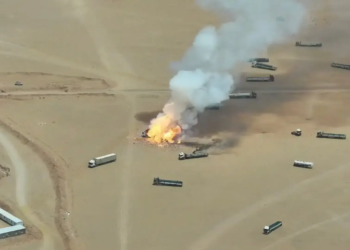
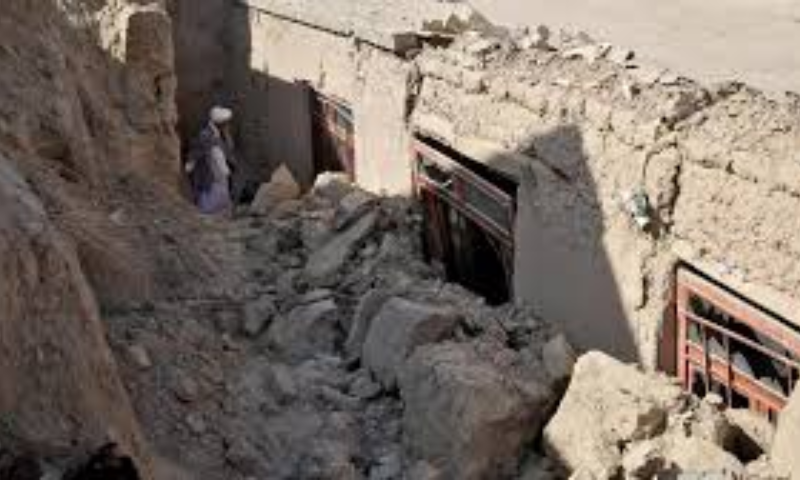
Strikes caused widespread destruction in areas including Ramat Gan, where residential buildings were hit, vehicles destroyed, and fires broke out. Israeli authorities confirmed at least two civilian deaths and multiple injuries, with casualties linked to debris and cluster munitions.
Iran described the operation as both punitive and preemptive, warning that it would defend its leadership and national security “at all costs.”
Expanding conflict and civilian toll
Since the outbreak of hostilities, more than 1,300 people have reportedly been killed in Iran due to Israeli and US strikes, including women and children. In Israel, at least 14 fatalities have been recorded from Iranian missile attacks.
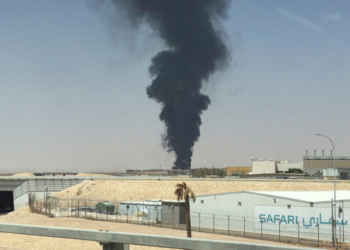
The conflict has also spilled into neighboring regions. In the United Arab Emirates, a Pakistani national was killed by debris from an intercepted missile, while drone attacks disrupted oil operations at Fujairah port.
In Beirut, Israeli airstrikes have killed civilians and displaced thousands, with Lebanese authorities reporting over 900 deaths and more than a million displaced since early March.
Global energy and security crisis
The war has severely disrupted global energy markets, particularly through the Strait of Hormuz—a critical oil transit route—leading to oil prices surging above $100 per barrel.
Iran has effectively restricted passage for US and allied vessels, prompting Washington to launch strikes on Iranian missile infrastructure to reopen shipping lanes. US President Donald Trump stated that American forces could act independently amid limited NATO participation.
International reactions and rising concerns
Russia condemned the killings of Iranian leaders, calling them “murder” and urging restraint, while Türkiye and other regional actors criticized the strikes as violations of international law.
Iran’s Foreign Minister Abbas Araghchi said Tehran’s nuclear policy would remain unchanged despite leadership losses, while signaling a shift toward tighter control of regional waterways.
Meanwhile, Israel has signaled its intent to continue targeting senior Iranian leadership, including the newly elevated figure Mojtaba Khamenei, raising fears of further escalation.
Region on edge
As missile exchanges, assassinations, and airstrikes continue, the Middle East stands at a critical juncture. The cycle of retaliation has heightened fears of a broader regional war, with significant humanitarian, economic, and geopolitical consequences.
Analysts warn that without urgent diplomatic intervention, the conflict risks spiraling into a prolonged and devastating crisis with global repercussions.