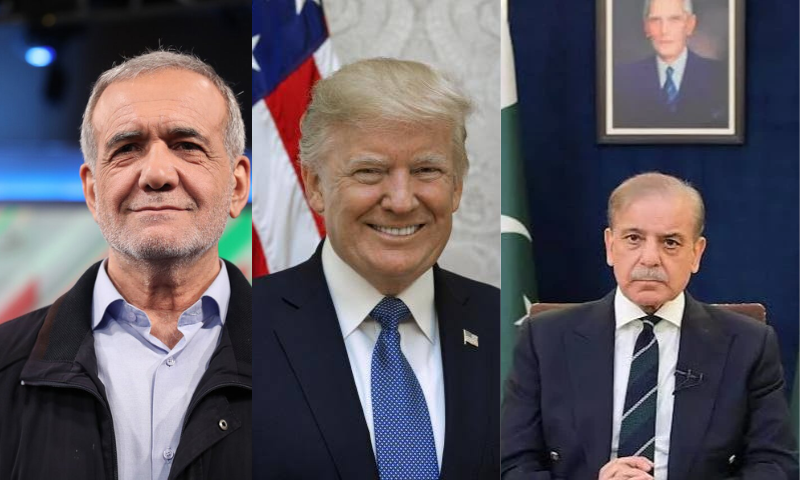
Islamabad/ Tehran/ Washington, June 12, 2026: Pakistan’s Prime Minister Shehbaz Sharif announced on Friday that the final agreed text of a peace agreement between the United States and Iran has been reached, raising hopes for an end to months of conflict that has destabilised the Middle East, disrupted global energy markets, and heightened regional security concerns.
In a statement posted on X, the prime minister said Pakistan’s intensive mediation efforts had brought the two sides closer than ever to a breakthrough, while warning against misinformation aimed at undermining the peace process.
“Setting aside the noise, we can confirm that a final, agreed upon text of the peace deal has been reached and Pakistan is now working closely with both sides to finalise the next steps. Peace has never been this close as it is now,” Shehbaz Sharif said.
The announcement came as Iranian Foreign Minister Abbas Araghchi also confirmed that the proposed Islamabad Memorandum of Understanding (MoU) between Tehran and Washington was nearing completion.
“The Islamabad Memorandum of Understanding has never been closer,” Araghchi wrote on X, while urging the media to avoid speculation until the agreement is formally finalised.
Pakistan’s diplomatic role has emerged as a central feature of the peace initiative, with Islamabad facilitating communication between Washington and Tehran amid escalating military confrontations in recent months.
The proposed agreement, widely referred to as the “Islamabad Agreement,” is expected to become one of the most significant diplomatic achievements in the region in recent years if formally signed.
According to multiple reports, negotiations have involved senior officials from both countries as well as regional mediators, with Pakistan playing a leading role in efforts to bridge differences and secure a lasting settlement.
Despite growing optimism, significant uncertainty remains over the exact contents of the agreement.
A White House official told Anadolu Agency that Iran had agreed to a “performance-based deal,” under which sanctions relief would only be granted after Tehran fulfilled a series of commitments.
According to the official, the proposed arrangement would require the dismantling of Iran’s nuclear programme, destruction of nuclear material, reopening of the Strait of Hormuz, and an end to Iranian support for militant groups.
However, Iranian media outlets published details of a separate 14-point draft memorandum that appeared substantially different from the US version.
According to Iran’s Mehr News Agency, the draft includes:
- Suspension of sanctions on Iranian oil and petrochemical exports.
- Release of approximately $24 billion in frozen Iranian assets.
- A commitment by the United States and its allies to support a reconstruction programme for Iran worth at least $300 billion.
- Withdrawal of US military forces from areas surrounding Iran.
- A permanent cessation of hostilities, including fighting in Lebanon.
- Future negotiations limited to nuclear issues, sanctions relief and economic reconstruction.
The Iranian draft reportedly excludes discussions regarding Tehran’s missile programme and its support for regional allied groups.
Trump rejects leaked Iranian claims
US President Donald Trump on Friday publicly dismissed Iranian descriptions of the agreement, insisting that statements released by Tehran did not accurately reflect the terms agreed upon in writing.
“What they said, including their weak and pathetic statement on having a deal, bears no relation to the truth,” Trump wrote on Truth Social.
“They better get their act together, and fast.”
Trump had earlier announced that planned US strikes against Iran had been cancelled because a deal was within reach.
The US president has repeatedly stated that an agreement could be signed within days and suggested that Vice President JD Vance may attend a formal signing ceremony expected to take place in Europe.
According to reports, Geneva is emerging as the most likely venue for the signing.
One of the most critical elements of the negotiations remains the reopening of the Strait of Hormuz, through which a substantial share of global oil supplies passes.
The strategic waterway became a focal point of tensions after Iran restricted maritime traffic following US military strikes earlier this year.
While US officials have called for the immediate reopening of the strait, Iranian reports indicate that reopening would occur gradually and in coordination with regional partners.
The prospect of a deal has already eased market concerns, with global oil prices falling and international stock markets rallying on expectations that disruptions to energy supplies may soon end.
Lebanon remains a major sticking point
The conflict in Lebanon has emerged as another major issue in the negotiations.
Iranian officials have repeatedly insisted that any comprehensive agreement must include an end to Israeli military operations in Lebanon, where fighting between Israel and Hezbollah has continued despite multiple ceasefire announcements.
A Western diplomatic source said Tehran remained firm that a settlement must address the Lebanon front alongside broader regional issues.
Hezbollah officials also expressed confidence that Iran would not agree to any arrangement that excludes Lebanon.
Meanwhile, Israeli forces continued military operations in southern Lebanon on Friday, carrying out airstrikes and issuing new displacement orders for residents in several towns and villages.
Israeli Prime Minister Benjamin Netanyahu reiterated that Israel would not allow Iran to obtain nuclear weapons, declaring there was “full agreement” between himself and President Trump on the issue.
“As long as I am Prime Minister, Iran will not have nuclear weapons,” Netanyahu said.
Israel has maintained that any agreement must permanently prevent Iran from developing nuclear weapons, while Tehran continues to insist that its nuclear programme is exclusively peaceful.
The proposed agreement follows months of conflict that began with US and Israeli strikes on Iran and subsequently expanded into a wider regional confrontation involving attacks on military facilities, shipping routes and proxy forces across the Middle East.
Thousands of people have reportedly been killed in Iran and Lebanon since the conflict escalated, while global energy markets experienced significant volatility.
If finalised, the Islamabad Agreement would not only end one of the most dangerous regional crises in recent years but would also mark a major diplomatic success for Pakistan, which has positioned itself as a key mediator in efforts to restore stability in the Middle East.
Officials in Islamabad, Washington and Tehran have all indicated that negotiations are in their final stages, with a formal announcement potentially expected within days.