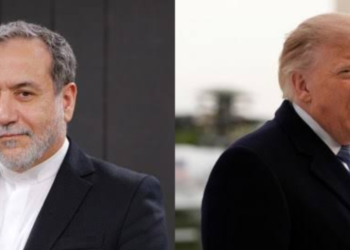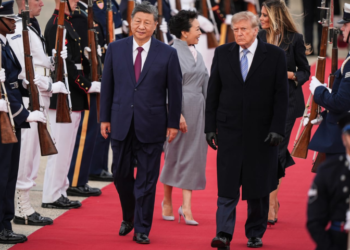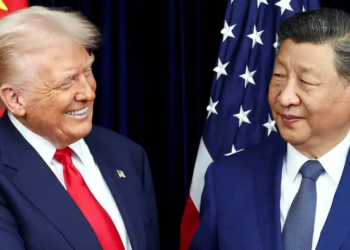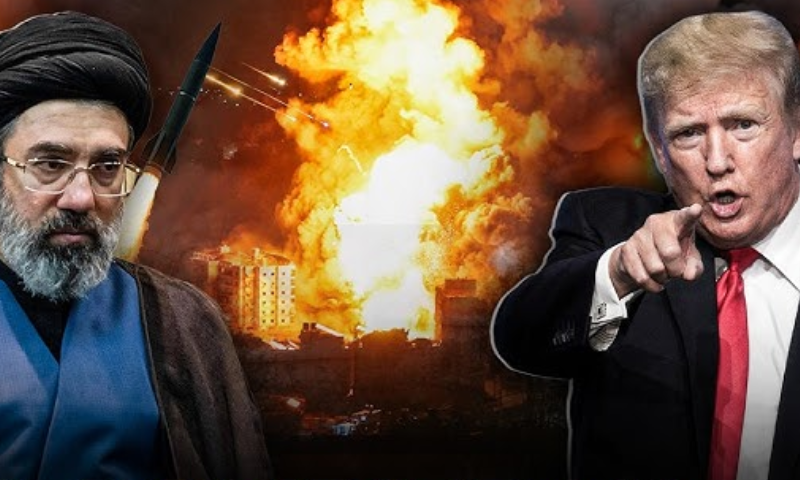
Tehran, June 27, 2026: Senior Iranian official Mohsen Rezaei has warned that any renewed military confrontation initiated by the United States or Israel would result in “extensive human losses,” while accusing Washington of failing to honour its commitments under the recently signed Islamabad Memorandum of Understanding (MoU).
Speaking in an interview with US-based NewsNation television, Rezaei, a senior adviser to Iran’s Supreme Leader and former commander of the Islamic Revolutionary Guard Corps (IRGC), said Iran remained fully prepared to respond decisively to any future military action.
“If the United States or Israel makes even the slightest threat against Iran, the next war will not resemble the previous one,” Rezaei said. “President Donald Trump should know that this time they would suffer extensive human losses.”
He said Iran had entered recent negotiations in Switzerland “seriously and swiftly,” but claimed the United States had failed to uphold its commitments during the diplomatic process.
According to Rezaei, Tehran has developed new military capabilities that would fundamentally change the nature of any future conflict.
He also accused Washington of continuing to issue military threats despite what he described as Israeli violations of the first clause of the Islamabad Memorandum of Understanding, adding that Iran had seen no meaningful shift in the Trump administration’s approach.
“We believe they are trying to buy time,” he said, arguing that Washington was more focused on domestic political and economic challenges than reaching a lasting agreement with Tehran.
Rezaei said any durable agreement must include US recognition of Iran’s rights under international law, including its peaceful nuclear programme under the Nuclear Non-Proliferation Treaty (NPT).
He also demanded the lifting of US sanctions, the release of Iranian assets frozen overseas, and recognition of Iran’s role in managing the Strait of Hormuz.
“The Strait of Hormuz has nothing to do with the US,” he said, maintaining that its management rests with Iran and Oman. He added that countries benefiting from maritime trade through the strategic waterway should contribute to its security and environmental protection.
Reiterating Tehran’s longstanding position, Rezaei insisted Iran was not pursuing nuclear weapons.
“The claim that Iran seeks nuclear weapons has always been a big lie,” he said, referring to previous US intelligence assessments that concluded Iran was not developing a nuclear bomb.
He also accused successive US administrations of relying excessively on Israeli intelligence and political influence in shaping their Iran policy.
Addressing the American public directly, Rezaei distinguished between the US government and its citizens.
“We do not want the American people to suffer,” he said. “But we will firmly defend ourselves against any aggression by the US government or its military.”
Separately, Iran’s Foreign Ministry condemned fresh US strikes on several sites along the country’s southern coastline, accusing Washington of violating both the UN Charter and the recently signed peace agreement.
In a statement, the ministry said the attacks targeted coastal surveillance facilities and reaffirmed Iran’s right to self-defence, adding that Iranian armed forces had launched retaliatory strikes against US-linked targets.
Tehran also called on Gulf countries to prevent their territories from being used for military operations against Iran and urged the United Nations and other international organisations not to remain silent over what it described as violations of international law.
Meanwhile, Iranian Foreign Minister Abbas Araghchi held a telephone conversation with UAE Foreign Minister Sheikh Abdullah bin Zayed Al Nahyan to review the latest regional developments.
According to Iran’s state news agency IRNA, the Emirati foreign minister stressed the importance of maintaining dialogue and pursuing diplomatic solutions, expressing hope that ongoing negotiations would contribute to regional peace, security and stability.
Elsewhere, Lebanon’s National News Agency reported that Israeli forces carried out overnight airstrikes near the border town of Markaba, approximately 1.5 kilometres from the Israeli frontier.
The reported strike came shortly after Israel and Lebanon signed a framework agreement in Washington, which US Secretary of State Marco Rubio described as the first step towards broader negotiations.
Commenting on the agreement, Lebanese lawmaker Ashraf Rifi welcomed the development, saying Lebanon was finally “acting like a state.”
He argued that the concept of “a state within a state” had failed and said Lebanon’s national decision-making should no longer remain subject to what he described as Iranian influence or Hezbollah’s dominance over state institutions.
Separately, Iran’s semi-official Mehr News Agency quoted local port authorities as saying that Sirik Port in eastern Hormozgan province sustained no damage despite renewed US attacks following an earlier incident involving a cargo vessel struck by an Iranian drone.
Authorities said port operations continued normally and no equipment had been damaged despite explosions reported in the area.