Washington/Tehran, August 22, 2026: The United States and Iran exchanged defiant messages on Saturday as Washington prepared to announce what it called the “toughest sanctions in history” against Tehran, while the six-month-old conflict continued to disrupt oil shipments through the strategically vital Strait of Hormuz.
US Treasury Secretary Scott Bessent is scheduled to hold a press conference on Monday at 2pm local time to unveil the new economic measures, with Washington also urging China to cooperate with the sanctions regime. The move could place additional pressure on Iran and its major trading partners, particularly China, which purchased more than 80 per cent of Iran’s seaborne oil exports in 2025, according to analytics firm Kpler.
Iran, meanwhile, rejected the planned measures as an unlawful attempt by Washington to extend its authority beyond its borders.
Iranian Foreign Ministry spokesperson Esmaeil Baghaei said the proposed sanctions amounted to an “assertion of extraterritorial sovereignty over every independent member state of the United Nations”.
“Such secondary sanctions find no foundation in international law,” Baghaei said in a post on X.
US President Donald Trump, who has warned countries against providing “any type of lifeline to Iran”, said on Friday that Washington was closely monitoring developments.
“They would love to make a deal, but they’re not ready to make the right deal, in my opinion,” Trump said of Iran.
The exchange came as the two sides remained locked in confrontation, with neither actively exchanging fire nor engaged in substantive peace negotiations. At the same time, the conflict has brought maritime traffic through the Strait of Hormuz, one of the world’s most important energy corridors, close to a standstill.
Hormuz traffic remains severely restricted
Thousands of seafarers remain stranded aboard hundreds of vessels as commercial shipping through the narrow waterway has virtually halted.
Ship-tracking data showed that only four commodity vessels passed through the Strait of Hormuz on Thursday, with none of them being large crude-oil carriers or liquefied natural gas tankers.
Iran has also warned that it could strike unauthorised oil tankers attempting to transit the waterway, preserving the strait as one of Tehran’s most significant remaining sources of leverage.
However, Iran has granted permission for a number of Iraqi oil tankers to pass through the strait following repeated requests from Baghdad, Iranian state news agency IRNA reported on Saturday.
The report said permission for Iraqi tankers was among the principal requests raised during Iranian Parliament Speaker Mohammad Bagher Ghalibaf’s recent visit to Iraq.
US Energy Secretary Chris Wright said the US military had helped facilitate the movement of an average of eight million barrels of oil a day through the strait over a seven-day period.
That figure remains sharply below the more than 20 million barrels a day that passed through the waterway before the war, equivalent to roughly one-fifth of global oil consumption.
The disruption has heightened concerns over global energy supplies, freight costs and inflation as the conflict approaches its six-month mark.
Iran’s economy under mounting pressure
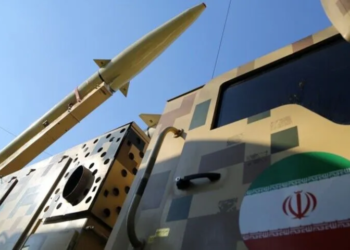
The US military campaign has severely damaged Iran’s economy and significantly weakened its naval and air capabilities. Tehran, however, retains substantial missile and drone capabilities that allow it to threaten tanker traffic and regional targets.
The conflict has also placed increasing pressure on Iran’s domestic economy.
Ghalibaf, who has been involved in mediated negotiations with Washington, acknowledged the economic strain while speaking to Iranian and Iraqi businesspeople on Thursday.
“No matter how much military power we have, we won’t survive if people are hungry and we don’t have financial turnover, economic growth, and national production,” he said, according to IRNA.
His remarks underscored the difficult balance facing Tehran as it seeks to maintain military deterrence while keeping its economy functioning under severe external pressure.
Tehran signals resistance but leaves door open to diplomacy
Iran’s military leadership continued to issue strong warnings against further attacks.
Chief of Staff of Iran’s armed forces Major General Ali Abdollahi said on Friday that Iran would respond to threats with “crushing, punishing and devastating responses”.
President Masoud Pezeshkian, however, adopted a more diplomatic tone, saying the war should eventually end through negotiations while insisting that Iran would not surrender its sovereignty or dignity.
“It would be better to end the war today, when we are powerful and have dignity,” Pezeshkian said, according to the ISNA news agency.
Pezeshkian has repeatedly argued that Iran must maintain its defensive capabilities while remaining open to genuine diplomatic avenues.
The president’s position reflects the growing pressure on Tehran to balance its military response with the economic realities created by the conflict, particularly the disruption of oil exports and international trade.
Trump yet to achieve all stated war objectives
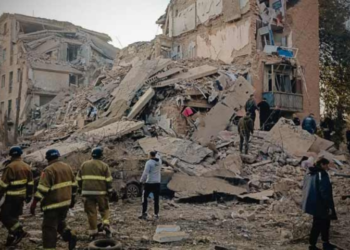
The conflict has inflicted heavy casualties and widespread damage. Thousands of people have reportedly been killed, including 168 Iranian schoolchildren on the first day of the war. The United States has reported more than 750 military personnel wounded and 18 killed.
Despite the damage inflicted on Iran’s military infrastructure, several of Trump’s stated objectives remain unresolved.
These include dismantling Iran’s nuclear programme and creating conditions that could lead to the overthrow of Iran’s clerical leadership. The current status of Iran’s nuclear programme also remains uncertain, particularly because UN inspectors have been unable to access the country’s facilities since 2025.
With the announcement of new US sanctions expected on Monday, Washington appears set to intensify economic pressure on Tehran rather than immediately pursue a comprehensive diplomatic settlement.
For Iran, the challenge is becoming increasingly complex: preserve its ability to deter further military action, maintain control over strategic leverage such as the Strait of Hormuz, and prevent further deterioration of an economy already under severe strain.