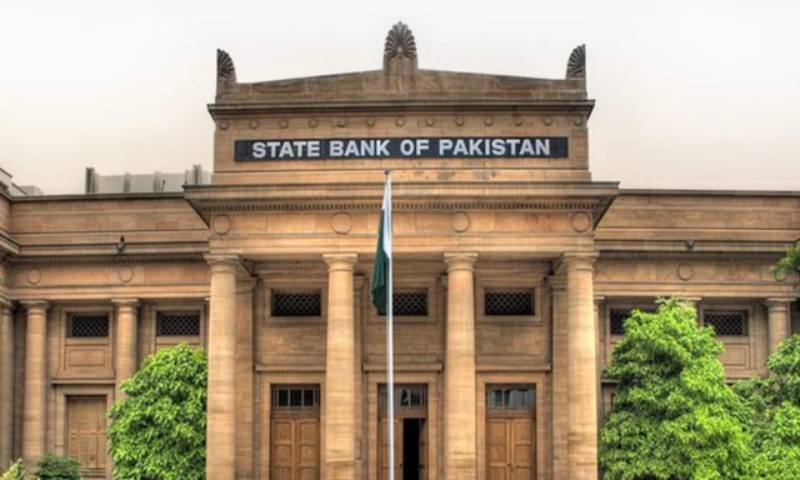
Karachi, September 14,2026: The State Bank of Pakistan’s (SBP) Monetary Policy Committee (MPC) on Monday kept the key policy rate unchanged at 11.5 per cent, as renewed tensions in the Middle East and elevated global oil prices continue to pose inflationary risks.
The decision was largely in line with market expectations. A recent Topline Securities poll showed that 84 per cent of respondents expected the central bank to maintain the policy rate, while 14pc anticipated a 50-basis-point increase and 2pc expected a 100-basis-point hike.
Market participants had largely favoured a status quo, citing improving external finances and sufficient real interest rate gains to offset risks arising from higher international oil prices.
However, some analysts had expected the SBP to raise the rate by 50 basis points, amid concerns over renewed US-Iran hostilities, potential disruption to shipping through the Strait of Hormuz and rising global energy prices.
International oil prices rose more than 2pc on Monday after fresh Houthi strikes on Saudi Arabia and Iranian attacks on ships in the Gulf added to supply concerns following the closure of a key Saudi oil pipeline.
Brent crude futures increased by $2.90, or 2.77pc, to $107.51 per barrel, while West Texas Intermediate (WTI) futures rose $2.27, or 2.27pc, to $102.32 per barrel. Prices had initially climbed by more than 3pc at the market opening.
The rise in global oil prices is a particular concern for Pakistan because of the country’s dependence on imported energy, increasing the risk of higher import costs and domestic inflation.
Pakistan’s inflationary pressures have already intensified. The Sensitive Price Indicator (SPI), which measures weekly inflation, increased 8.62pc year-on-year during the week ended September 10, with higher onion and petroleum product prices among the major contributors.
Headline inflation rose to 11.15pc year-on-year in August from 9.2pc in July, compared with 3.1pc a year earlier. The latest reading is also significantly above the SBP’s medium-term inflation target range of 5-7pc.
The central bank has kept the policy rate unchanged since raising it by 100 basis points in April in response to rising global energy prices and supply-chain risks. That was the first rate increase in nearly three years.
Prior to the April increase, the SBP had maintained the policy rate at 10.5pc in January and March following a surprise 50-basis-point cut in December 2025.
The central bank had cumulatively reduced the policy rate by 1,050 basis points since mid-2024, bringing it down from a record 22pc reached in June 2023 as inflation eased sharply from multi-decade highs.
The MPC’s detailed statement on Monday’s decision is expected to provide further guidance on the inflation outlook, external-sector risks and the future direction of monetary policy.