
Islamabad, November 11, 2026: A three-day International Aerospace Technology Exhibition and Conference opened at the OIC-COMSTECH Secretariat on Wednesday, bringing together aerospace experts, researchers, industry representatives, diplomats and students to explore emerging space technologies and promote indigenous technological capabilities.
The conference, being held from November 11 to 13, has been organised by OIC-COMSTECH in collaboration with the Pakistan Vacuum Society and Pakistan Aerospace Council, with support from partner institutions.
Around 18 companies, start-ups, research institutions and incubation centres are showcasing their technologies and products at the accompanying exhibition. Participating organisations include Trojan, Connectech, SUPARCO, Air University, NICAT, CITADEL and the Pakistan Vacuum Society, among others.
More than 20 technical presentations are scheduled during the three-day event, covering aerospace strategy, industry development, satellite platforms, navigation and communications, human spaceflight, space life sciences, Earth observation, remote sensing, geospatial artificial intelligence and vacuum technologies.
Experts from Pakistan and abroad, including representatives from the United States, Azerbaijan and Sudan, are participating in the conference. The sessions will also explore small satellite technologies, lunar missions, satellite communications, human health in space, machine learning applications in geospatial sciences and advanced vacuum systems.
Addressing the inaugural session, Coordinator General OIC-COMSTECH Prof. Dr. M. Iqbal Choudhary said space and aerospace technologies were no longer limited to a handful of advanced countries, as satellites had become essential for communications, navigation, weather forecasting, agriculture, water management, disaster response and climate monitoring.
He said the rapidly expanding global space economy offered both opportunities and challenges for OIC member states, noting that despite significant progress by several countries, the OIC region remained heavily dependent on imported technologies and services.
Prof. Choudhary called for greater investment in human resources, research, industry and indigenous technological capabilities to enable member states to design, develop and utilise space technologies according to their needs.
He also stressed the importance of sharing expertise and costs through stronger cooperation among OIC countries.
Chief guest Air Marshal (Retd.) Javaid Ahmed, President of the Centre for Aerospace and Security Studies, said space capabilities had become increasingly important for modern societies, economies, communications and national security.
He emphasised the need to develop indigenous expertise, strengthen human resources and encourage greater private-sector participation in a highly specialised field requiring sustained investment.
He also appreciated COMSTECH and its partner institutions for bringing together academia, industry and policymakers amid rapid technological advancements.
Delivering a keynote address titled “From Dependency to Dominance”, Imtiaz Rastgar, founder of the Pakistan Aerospace Council and Chairman of Rastgar Group of Industries, highlighted the need to reduce technological dependence by strengthening domestic aerospace capabilities and developing closer links between research, industry and market requirements.
Dr. Javaid Bhatti, President of the Pakistan Vacuum Society, said the conference aimed to connect scientific knowledge with practical aerospace applications while providing researchers, engineers, students and industry representatives opportunities to interact directly with experts and technology developers.
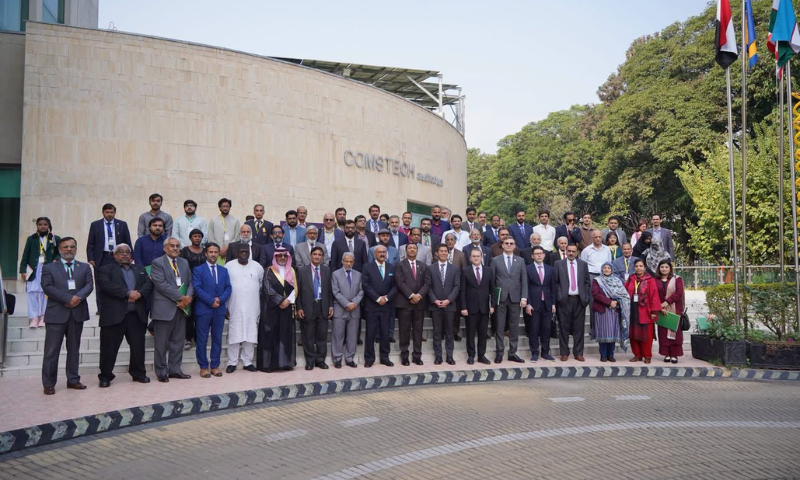
The inaugural ceremony was attended by ambassadors, deputy heads of mission and diplomatic representatives from Saudi Arabia, Jordan, Yemen, Thailand, Morocco, Tunisia, Nigeria, Russia and Indonesia, along with scientists, academics, industry representatives and students.
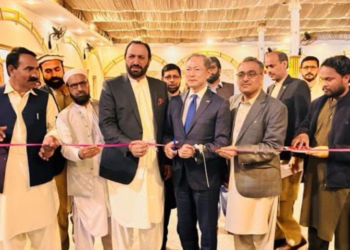
The accompanying exhibition was formally inaugurated following the opening session.
Over the next two days, specialists will deliberate on satellite technologies, navigation and communications, human spaceflight, space medicine, life sciences, Earth observation, geospatial artificial intelligence and advanced vacuum technologies. Exhibitors will also showcase their products and technological solutions through dedicated sessions.
The conference will conclude on November 13 with technical discussions focusing on vacuum technologies and their applications in aerospace systems.