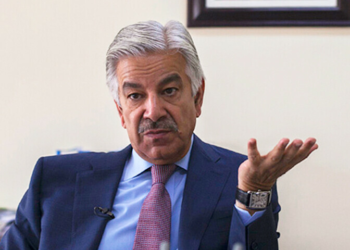

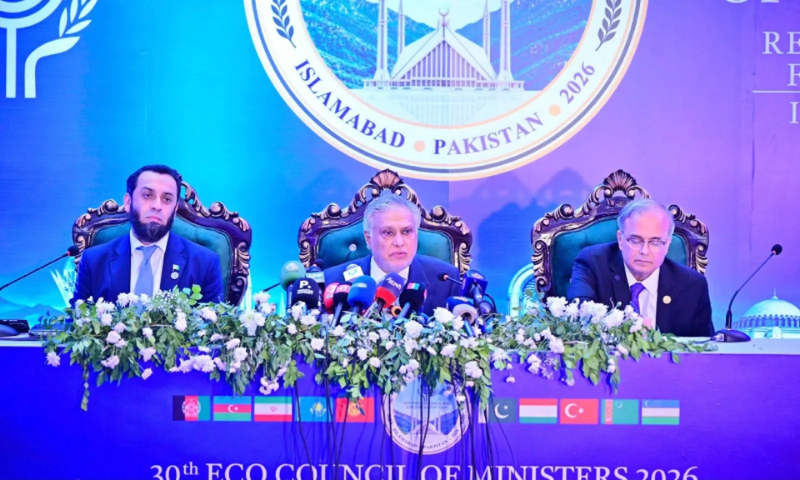
Islamabad, November 16,2026: Pakistan will host the next meeting of the apex committee of the Makkah Defence Alliance, likely towards the end of this month, Deputy Prime Minister and Foreign Minister Ishaq Dar said on Monday.
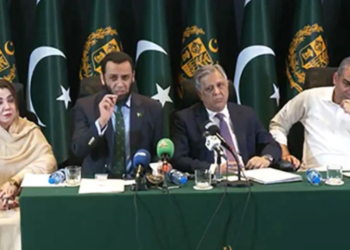
Speaking at a media briefing following the ministerial meeting of the Economic Cooperation Organization (ECO) in Islamabad, Dar said the meeting of the Strategic Political and Defence Committee (SPDC) would take place in Islamabad, as agreed by the three member countries.
He recalled that Pakistan, Saudi Arabia and Türkiye signed the Makkah Joint Defence Agreement on August 7, under which an attack on any one of the three countries would be treated as an attack on all.
“We offered in our inaugural meeting that our next formal meeting will be held in Islamabad and everybody accepted,” Dar said, adding that an emergency SPDC meeting had been held in Riyadh last month following Houthi attacks on Saudi Arabia.
The SPDC comprises the foreign and defence ministers of the three countries, along with their senior military officials.
Responding to a question about the emergence of a new regional security architecture, Dar said the region needed its own security arrangements, describing the defence pact as a possible beginning.
He said global security institutions had not been established overnight and stressed that the Makkah agreement was intended for self-defence. He added that the pact was consistent with Article 51 of the United Nations Charter, which recognises the right to individual and collective self-defence.
Dar clarified that the alliance was not intended to restrict membership to the three founding countries, saying other states could be considered once its institutional framework was established.
He said the alliance was currently going through a transition phase involving the development of its institutional infrastructure, including the secretary general’s office and a permanent secretariat in Riyadh.
A working committee comprising representatives from the foreign ministries, defence ministries and military offices of all three countries had also been established and had held several meetings.
Dar said the committee was expected to hold another meeting in November to finalise detailed procedures and standard operating procedures for the alliance.
“I’m very hopeful that, God willing, this is not going to benefit just these three countries. New membership will be entertained after we are established in about one year,” he said, adding that applications from countries willing to abide by the alliance’s principles would be considered.
Dar also reaffirmed that Pakistan had not abandoned its diplomatic efforts to secure a peaceful resolution to the conflict between the United States and Iran.
He said he had held “very candid, very frank, very brotherly, very comprehensive discussions” with Iranian Foreign Minister Abbas Araghchi on the sidelines of the ECO meeting, during which they exchanged views on the latest regional developments.
According to Dar, Iran had accelerated its seven-day proposal for reopening the Strait of Hormuz into a two-day plan, and a response from Washington was still awaited.
“We have not given up hope or efforts. We are still doing our best [so] that the situation gets sorted out,” he said.
The deputy prime minister expressed hope that Washington would respond to the proposal soon, now that its midterm elections were over.
Asked how the ECO would deal with US sanctions on Iran, particularly given that the organisation’s secretariat is based in Tehran, Dar said sanctions would not remain in place indefinitely.
He maintained that Pakistan had consistently complied with international law, the UN Charter and relevant UN Security Council resolutions.
Dar also expressed hope that the Islamabad Memorandum of Understanding signed between Iran and the United States on June 18 would be implemented.
He said the seven-day and two-day proposals concerning the Strait of Hormuz had been drawn from the Islamabad MoU and were intended to accelerate confidence-building measures, with one side taking steps towards de-escalation and the other facilitating the reopening of the waterway.
“Let’s hope for the best. We haven’t given up hope,” he said.
In a separate statement, the Foreign Office said Dar and Araghchi had reviewed bilateral relations and exchanged views on regional and international developments of mutual interest during their meeting on the sidelines of the ECO gathering.
Both sides reaffirmed the strong and brotherly relations between Pakistan and Iran and their commitment to strengthening bilateral cooperation through sustained high-level engagement.
Araghchi congratulated Pakistan on successfully hosting the ECO ministerial meeting and appreciated the deliberations, hospitality and arrangements.
The two sides also reaffirmed their commitment to advancing the organisation’s priorities, particularly regional cooperation and connectivity.
Dar emphasised that dialogue and diplomacy remained the only viable means of resolving outstanding issues, preventing escalation and achieving lasting peace and stability. Both sides agreed to maintain close contact and consultations on matters of mutual interest.
The diplomatic engagement comes as months of efforts have failed to resolve the war, which began with US-Israeli strikes on Tehran that killed Iran’s Supreme Leader Ayatollah Ali Khamenei.
During more than eight months of hostilities, Iran has restricted shipping through the Strait of Hormuz, a key global oil trade route, and carried out strikes against infrastructure and US assets across the Middle East.
Bahrain was hit by a second Iranian drone attack in three days on Sunday, ending a prolonged lull in strikes during the conflict.
On Friday, following US strikes on Qeshm Island in the Strait of Hormuz, Iran’s Revolutionary Guards said their forces had targeted a US early-warning radar system in Bahrain.