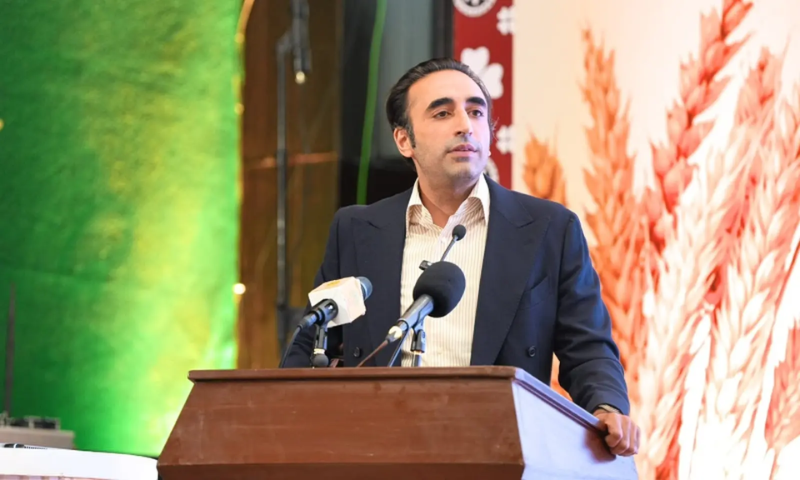
Karachi, November 20,2026: Pakistan Peoples Party (PPP) Chairman Bilawal Bhutto-Zardari has said he wants Prime Minister Shehbaz Sharif to become the first elected premier in the country’s history to complete a five-year term, urging political forces to strengthen the government’s hand in addressing mounting economic challenges.
Addressing an event in Karachi on Friday, Bilawal said the prime minister should be given the opportunity to focus on the country’s economic difficulties, particularly amid the crisis triggered by the US-Israeli war on Iran.
“My objective is that I want to strengthen the hand of the prime minister. Usually politicians create difficulties or plot his fall and secure the seat for themselves. I will not do that. I want Shehbaz Sharif to be the first prime minister to complete a five-year term,” he said.
Since Pakistan’s independence in 1947, no elected prime minister has completed a full five-year term in office.
Bilawal said the prime minister had so far not been given sufficient opportunity to concentrate on economic issues, adding that whenever Shehbaz Sharif presented a plan, objections from federal ministers and competing agendas diverted attention from the matter.
He stressed that the prime minister needed political support to develop a strategy for tackling the challenges ahead, saying the public’s primary concern was access to basic necessities rather than debates over administrative changes.
“Whether one province is created or a thousand, the only worry the public has is having access to meals twice a day,” he said, referring to the PPP’s traditional slogan of “roti, kapra, makan”.
The PPP chairman called for a national effort to address the country’s problems, saying no single political party or a small group of parties could overcome the challenges on their own.
He said the government should engage all political forces, including the opposition, and set aside personal differences in the larger national interest.
Bilawal specifically called for engagement with the Pakistan Tehreek-e-Insaf (PTI), saying that despite his political differences with its founder Imran Khan, the party had a significant parliamentary presence and should be involved in efforts to address national issues.
He urged the government to encourage PTI to play its role through parliamentary committees, adding that political differences and personal grievances should not take precedence over national interests.
Bilawal also said the PPP would continue to present its position in line with its ideology, leaving it to the prime minister to decide whether to accept his suggestions.
The remarks come amid renewed tensions between the PPP and its coalition partner, the Pakistan Muslim League-Nawaz (PML-N), following Bilawal’s strongly worded speech earlier this week in which he criticised the government over proposals for new provinces, possible constitutional changes and its treatment of the opposition.
In that address, Bilawal warned against political victimisation and questioned the repeated pattern of elected prime ministers facing imprisonment. He also criticised calls for a referendum on the creation of new administrative units, arguing that referendums in Pakistan’s history had been used for undemocratic purposes rather than democratic reforms.
He further argued that the country’s governance system had not collapsed but had instead been “made to collapse”, apparently responding to Interior Minister Mohsin Naqvi’s earlier remarks that the existing system had failed and required a reset.
Defence Minister Khawaja Asif and other PML-N leaders subsequently criticised Bilawal’s remarks.
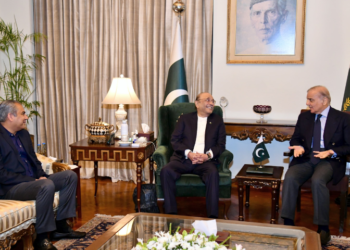
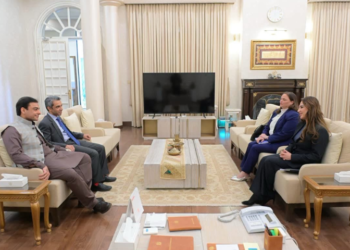
The PPP chairman continued to voice his party’s concerns in media interviews on Wednesday, questioning several federal government decisions. The political exchanges prompted Prime Minister Shehbaz Sharif and Interior Minister Mohsin Naqvi to meet President Asif Ali Zardari.
According to an official statement issued by the Presidency, the leaders reviewed the prevailing political situation and agreed that outstanding issues would be resolved through dialogue and consultation.
Although neither party publicly disclosed details of the meeting, political observers viewed it as an effort to ease tensions and repair relations between the coalition partners.