
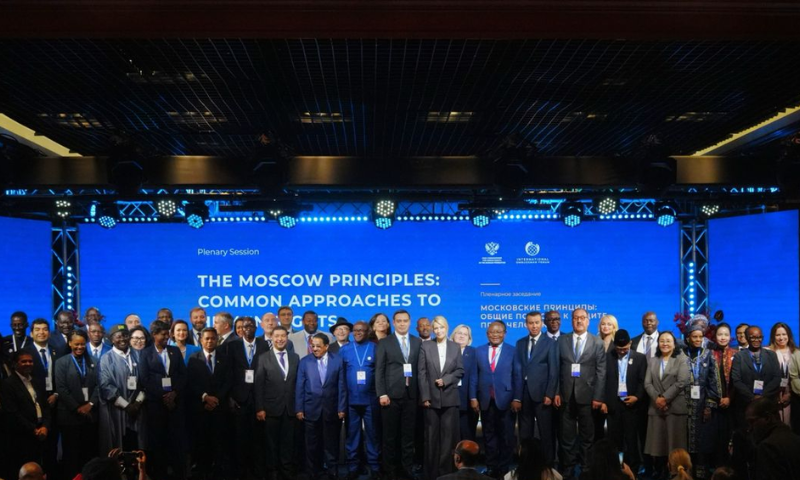
Moscow, November 21,2026: The International Ombudsman Forum, held as part of the annual meeting of the Eurasian Ombudsman Alliance in Moscow, has signed a declaration of intent to establish the Worldwide Independent Defender Union (WIDU), bringing together 74 human rights advocates as signatories.
The proposed organisation will be founded on the principles of humanism, independence, impartiality and international solidarity, and will operate in accordance with the Moscow Principles of International Human Rights Cooperation.
The declaration comprises 23 provisions covering the protection of human dignity, universality of rights and freedoms, respect for national diversity, and adherence to the rule of law and objectivity, according to a press release.
The Moscow Principles aim to strengthen the autonomy of human rights institutions and enable them to cooperate even amid disagreements between states.
The initiative comes amid growing challenges posed by armed conflicts, natural and man-made disasters, humanitarian crises and mass migration, which require greater coordination among human rights institutions.
Forum participants agreed that the fundamental rights to life, dignity and freedom should not depend on national borders or political circumstances.
The proposed union plans to establish mechanisms for cross-border legal assistance. In cases of large-scale human rights violations, ombudsmen from different countries would work together to develop common standards for crisis response.
Membership will be open to human rights defenders who share the organisation’s principles and values.
The International Ombudsman Forum brought together ombudsmen and human rights advocates from 70 countries, with more than 450 participants attending from neighbouring states, the United States, Mexico, Brazil, Greece, Indonesia, Madagascar, Mongolia, Switzerland and other countries.
Addressing the forum, Russian Human Rights Commissioner Yana Lantratova called for equal treatment in the protection of human rights, irrespective of nationality, religion, country of residence or political beliefs.
“We cannot allow double standards in human rights protection. It is essential to respect everyone’s rights, regardless of nationality, religion, country of residence, or political beliefs,” she said.
Referring to the proposed union, Lantratova said countries should join an independent institution where they could coordinate efforts and draw on their respective areas of expertise.
She said the initiative had already received support during bilateral meetings with ombudsmen from several countries, with many expressing interest in joining the proposed organisation.
“This work is now beginning,” she added.