New Delhi, May 5, 2025: India has initiated work to increase reservoir capacity at two key hydroelectric projects in Indian-occupied Kashmir, following its unilateral suspension of the Indus Waters Treaty with Pakistan, according to sources cited by Reuters.
The development comes amid heightened tensions between the two countries after a deadly April 22 attack in Pahalgam, which killed 26 people. India hinted at cross-border involvement without presenting evidence, a claim strongly denied by Pakistan, which has called for an independent investigation.
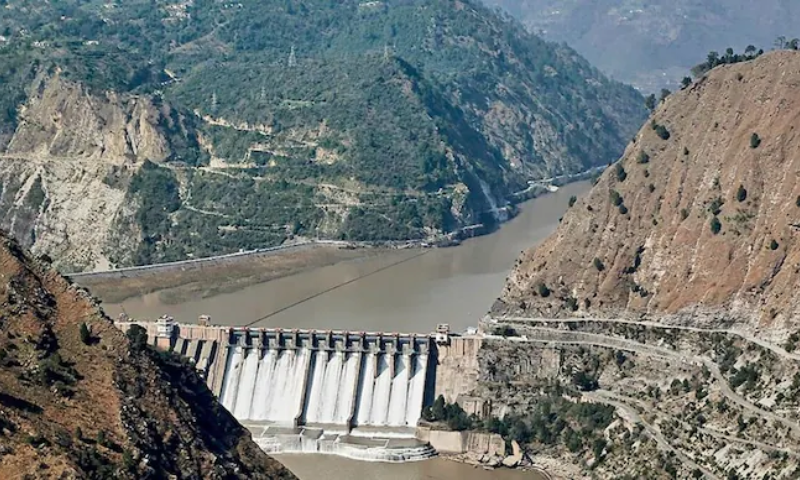
Three sources familiar with the matter said India’s state-run hydropower company NHPC, along with local authorities, began a “reservoir flushing” process last Thursday at the Salal and Baglihar dams — a move not permitted under the treaty. This marks the first such operation since the dams became operational in 1987 and 2009, respectively.
“Flushing removes silt buildup to improve power generation efficiency,” one source explained, adding that power output had dropped due to Pakistan’s previous objections to such operations.
The three-day operation, which involved releasing water from the dams into the Chenab River, was not communicated to Pakistan, further escalating concerns. Residents downstream reported a noticeable drop in water levels during the operation.
India’s Ministry of Water Resources and NHPC did not respond to Reuters requests for comment.
The suspension of the 1960 treaty — which allocates river rights and requires data sharing and flood alerts — allows India to unilaterally proceed with previously restricted activities. “Now we can pursue our projects at free will,” said Kushvinder Vohra, former head of India’s Central Water Commission.
The move raises fears of broader regional instability, with Pakistani experts warning that upstream manipulation of water flows could severely impact Pakistan’s agriculture and energy sectors.
India and Pakistan have previously clashed over projects like the Kishenganga and Ratle dams, with disputes currently pending before the Permanent Court of Arbitration in The Hague.