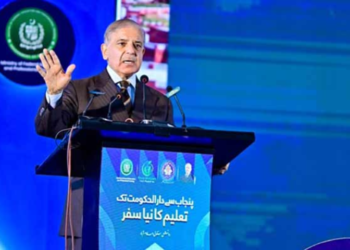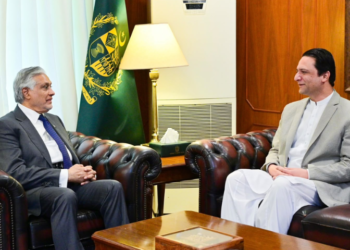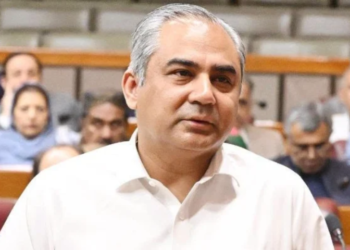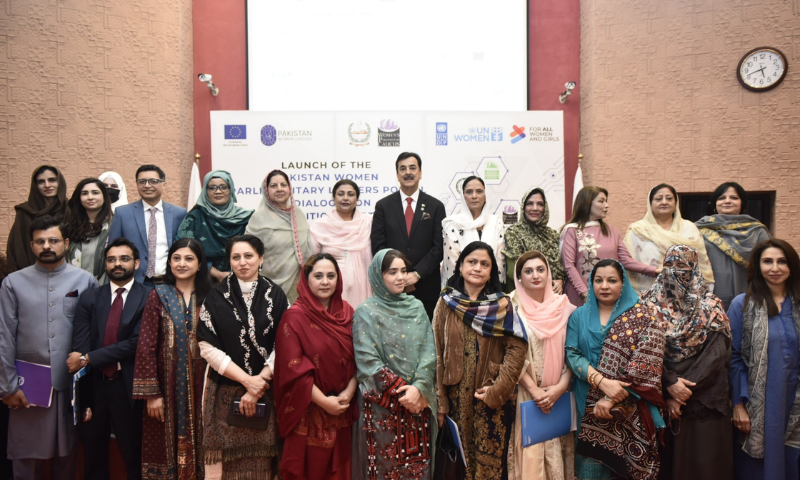
Islamabad, March 6, 2026: Ahead of International Women’s Day on March 8, the Women’s Parliamentary Caucus (WPC) of the National Assembly of Pakistan hosted the launch of the Women Parliamentary Leaders’ Portal along with a dialogue on women’s political participation at the Pakistan Institute for Parliamentary Services (PIPS) in Islamabad, in collaboration with UN Women and the European Union.
Speaking at the event, WPC Secretary Dr. Shahida Rehmani, MNA, said that while Pakistan has made significant progress in women’s parliamentary representation through the constitutional quota system, the next step is ensuring meaningful and effective participation. She said the caucus is engaging parliamentarians, experts and civil society to strengthen the quota framework and promote reforms enabling women to contribute more effectively to democratic governance.
Dr. Rehmani also announced the launch of the Pakistan Women Parliamentary Leaders’ Portal, a digital platform aimed at improving coordination among national and provincial women’s parliamentary caucuses. The portal will highlight women parliamentarians’ legislative contributions and provide a space for knowledge sharing, policy dialogue and citizen engagement.
The ceremony’s chief guest, Syed Yousaf Raza Gilani, emphasized that democracies thrive only when women participate equally in decision-making. He noted that inclusive representation is both a democratic imperative and a national necessity, adding that sustainable development depends on the political and economic empowerment of women.
Recalling his tenure as prime minister, Gilani highlighted several legislative reforms introduced during that period, including the Protection against Harassment of Women at the Workplace Act, 2010, the Acid Control and Acid Crime Prevention Act, 2010, the Prevention of Anti-Women Practices Act, 2011, and the Women in Distress and Detention Fund (Amendment) Act, 2011. He also referenced initiatives such as the Benazir Income Support Programme and the establishment of the Women’s Parliamentary Caucus, which helped strengthen women’s socio-economic and political participation.
Paying tribute to pioneering women leaders including Fatima Jinnah, Shaista Ikramullah, and Benazir Bhutto, Gilani said women’s presence in parliament is essential for a vibrant democracy. “Opportunity must be determined not by gender, but by merit and determination. Women of Pakistan are not waiting—they are shaping the future and defining democracy,” he added.
Minister of State for Law and Justice Barrister Aqeel Malik highlighted the important role women have played in Pakistan’s democratic journey. He also acknowledged leaders such as Maryam Nawaz, noting that women parliamentarians actively serve their constituencies, participate in party structures and contest elections, demonstrating that their role extends beyond reserved seats.
The event also featured a panel discussion titled “Strengthening Women’s Political Participation in Pakistan,” moderated by National Assembly Special Secretary Syed Shamoon Hashmi. Panelists included Begum Ishrat Ashraf, Shaista Pervaiz, Dr. Nafisa Shah, Tanzila Um-e-Habiba, Ghazala Gola, Naeema Kishwer Khan, and Samina Khalid Ghurki.
Speakers stressed the need for financial and political support for women legislators, greater inclusion at all levels of governance and the removal of structural barriers that hinder women’s participation in politics. They also emphasized empowering women from middle- and lower-middle-class backgrounds to take part in collective decision-making.
During the discussion, Dr. Nafisa Shah also expressed concern over reports of the killing of schoolgirls in Iran and called for international action to protect women and children worldwide.
According to organizers, the Pakistan Women Parliamentary Leaders’ Portal will serve as a long-term institutional resource supporting knowledge sharing and coordination between federal and provincial legislators. Key features include legislative mapping of pro-women laws, policy gap analysis, mentorship programs, online courses and initiatives to promote gender-responsive budgeting. The bilingual portal is also designed to be accessible to visually impaired users.
The event was attended by MNAs Kiran Haider and Shahnaz Saleem Malik, as well as senior officials including Mohamed Yahya (UN Resident Coordinator), Philipp Oliver (Deputy Chief of Mission, EU Delegation), and Jamshed Kazi of UN Women, along with representatives of civil society, youth and media.