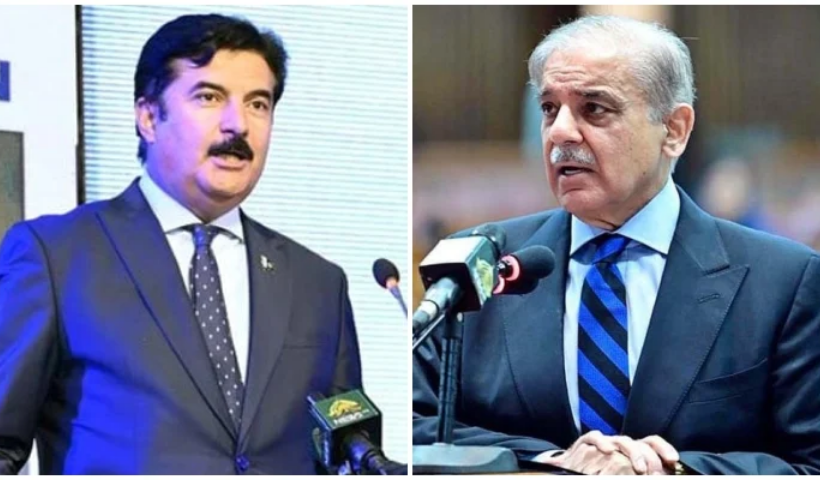
Peshawar/Islamabad, October 27, 2025: Khyber Pakhtunkhwa (KP) Governor Faisal Karim Kundi on Monday urged Prime Minister Shehbaz Sharif to intervene against what he termed “unconstitutional restrictions” imposed on the inter-provincial movement of wheat to the province.
The move comes amid an escalating dispute between Punjab and KP, with the latter accusing the Punjab government of choking wheat supplies through a permit-based regime. The Sindh government and flour millers have also criticised Punjab’s curbs, calling them unconstitutional and damaging to food security.
In a post on X (formerly Twitter), Governor Kundi said he had written to the prime minister, seeking his “immediate intervention to lift the unconstitutional restrictions.” He said the limitations not only affected KP’s food security but also violated the spirit of cooperative federalism guaranteed by the Constitution.
“Such limitations not only affect the province’s food security but also go against the spirit of cooperative federalism enshrined in our Constitution,” Kundi said, expressing confidence that the matter would be resolved under the prime minister’s leadership.
Sharing the letter on X, Kundi described the restrictions as a “serious concern,” stressing that KP is a wheat-deficient province that depends heavily on inflows from Punjab to meet daily needs. He cited Article 151 of the Constitution, which ensures the freedom of trade, commerce, and movement between provinces.
The letter warned that disruptions in supply could cause artificial shortages, soaring prices, and public hardship, while also encouraging illegal and informal transport of wheat through alternate routes — leading to market distortions and “uncontrollable price escalation.”
Kundi appealed for the “uninterrupted and legally protected movement of wheat” into KP, assuring the premier of his confidence in the federal government’s commitment to safeguard constitutional rights.
In a separate letter to Defence Minister Khawaja Asif, Governor Kundi requested the restoration of daily and international flights from Peshawar, especially to the Gulf and Middle East, citing hardships faced by overseas Pakistanis and traders.
“The suspension of these flights has caused considerable hardship for overseas Pakistanis, entrepreneurs, and their families,” Kundi said, adding that a single private airline currently operating on the Peshawar–Karachi route was exploiting a “monopoly” through high fares and limited seats.
He urged the government to issue directions for restoring both domestic and international services, expressing hope that Pakistan International Airlines (PIA) would “once again ascend to its past glory.”
The wheat movement row has deepened over recent weeks. Following flood-related supply pressures, the Punjab government tightened inter-provincial wheat and flour transport through a permit regime, saying the measure aimed to curb hoarding and price spikes within the province.
However, KP and Sindh governments have condemned the policy as unconstitutional, claiming it violates Article 151 and a recent national wheat policy that guarantees free movement of goods across provinces.
Punjab Information Minister Azma Bokhari, however, denied that any formal ban was in place, dismissing the allegations as “baseless propaganda.” She said the government was merely monitoring “unusual” wheat movement to ensure stable prices within Punjab.
Earlier this month, the KP Food Department warned that the restrictions were disrupting supply chains and driving up prices. KP’s Food Secretary, in a letter to his Punjab counterpart dated October 23, said the province required 14,500 tonnes of wheat per day, but current allocations of 2,000 tonnes were “insufficient.”
KP consumes around 5.3 million tonnes of wheat annually, producing only 1.5 million tonnes locally, with the rest sourced mainly from Punjab. The Flour Mills Association has cautioned that a prolonged blockade could lead to severe shortages and unrest.
On September 7, the KP Assembly passed a unanimous resolution condemning Punjab’s “restrictions” on wheat movement, claiming flour prices had surged by 68 per cent in some areas. Around the same time, Governor Kundi and Chief Minister Sohail Afridi both termed Punjab’s move a “violation of national unity and constitutional freedoms.”
In response, the Prime Minister’s Office announced earlier this month that under the new national wheat policy, there would be no restrictions on inter-provincial movement of wheat and flour.
Despite that assurance, reports suggest that checkpoints and permit controls continue in Punjab, leaving tensions unresolved between the two provinces as food security concerns deepen in KP.