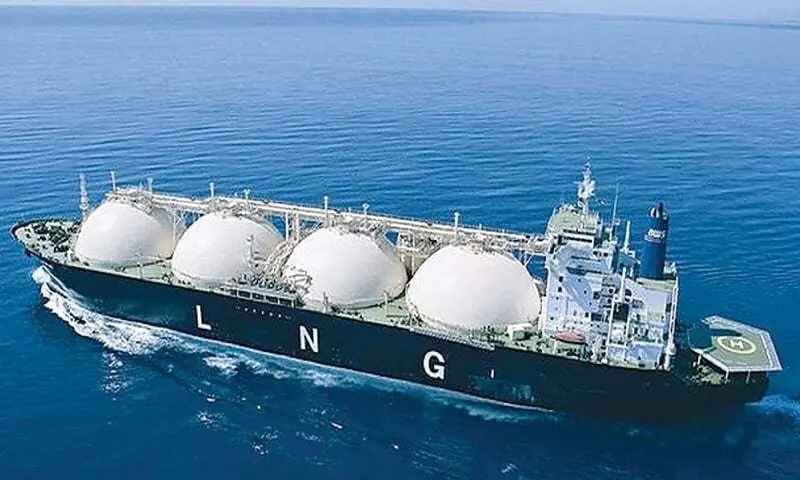
Islamabad, April 23, 2026: Pakistan LNG Limited has issued its first spot liquefied natural gas (LNG) tender since December 2023, as the country grapples with supply disruptions triggered by the ongoing geopolitical crisis in the Middle East.
The development comes amid widespread energy constraints following the US-Israel conflict with Iran and the subsequent disruption of maritime energy flows through the Strait of Hormuz.
According to a tender notice issued on Thursday, Pakistan LNG Limited is seeking bids for three LNG cargoes of approximately 140,000 cubic metres each. Deliveries are scheduled between April 27–30, May 1–7, and May 8–14 at Port Qasim. The bidding process will close on April 24.
Federal Minister for Energy Awais Leghari said the urgent LNG procurement is aimed at meeting rising electricity demand and reducing dependence on costlier fuel sources such as diesel and furnace oil.
He noted that uncertainty remains over additional LNG supplies from long-term supplier Qatar, adding that the government is still awaiting clarity on future shipments.
The tender follows recent nationwide power shortages, where reduced hydropower generation and LNG supply constraints led to widespread outages. Officials said the crisis exposed vulnerabilities in the country’s fuel supply chain during periods of peak demand.
Supply Chain Disruptions Linked to Regional ConflictPakistan has reportedly not received LNG cargoes loaded after the escalation of the Middle East conflict on February 28, when maritime traffic through the Strait of Hormuz was severely disrupted due to heightened tensions.
Qatar, which supplies a major share of Pakistan’s LNG imports, relies heavily on safe passage through the same shipping route. In 2024, it accounted for the bulk of Pakistan’s 6.64 million metric tons of LNG imports, according to industry data.
Amid the crisis, SOCAR has indicated readiness to supply LNG to Pakistan under an existing framework agreement signed in 2025, allowing expedited procurement through SOCAR Trading upon request from Islamabad.
Meanwhile, Pakistan had previously cancelled 21 LNG cargoes scheduled for 2026–27 under a long-term contract with Italian energy company Eni, anticipating slower demand growth and increased reliance on renewable energy sources. However, recent disruptions have tested that strategy.
The crisis has also impacted global energy markets. Restrictions in the Strait of Hormuz, which previously handled nearly 20% of global LNG flows, have contributed to sharp increases in Asian LNG spot prices.
Benchmark prices have surged to multi-year highs, recently recorded at around $16.05 per million British thermal units (mmBtu), reflecting a nearly 54% rise since February.
Energy analysts warn that continued supply constraints could force demand reduction across Asia, while keeping prices elevated and increasing pressure on import-dependent economies like Pakistan.
Despite growing reliance on domestic generation and renewable energy expansion, Pakistan remains exposed to external energy shocks. Officials say LNG continues to play a critical role in meeting peak summer demand and preventing further electricity shortages.
The latest emergency tender underscores the country’s ongoing struggle to balance energy security with volatile global supply conditions amid an increasingly unstable geopolitical environment.