Peshawar, December 1, 2025: Nearly 40,000 people in Khyber-Pakhtunkhwa (K-P) are currently living with HIV/AIDS, while 15 to 20 new cases are being reported daily, provincial health officials revealed on Monday, coinciding with World AIDS Day.
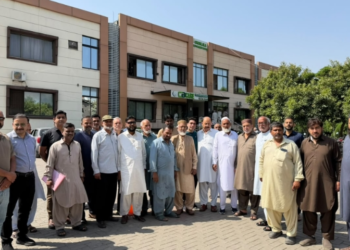
Speaking at a press conference at the Peshawar Press Club, Dr. Tariq Hayat Taj, Director of the Provincial AIDS Control Program, said that around 9,800 HIV patients are officially registered in the province. However, he stressed that the actual number is significantly higher, as many people avoid testing due to social stigma and discriminatory attitudes.
“Due to the harsh attitudes in society, many patients are afraid to undergo a test,” Dr. Tariq said, warning that this reluctance is allowing the virus to spread silently.
Dr. Tariq highlighted unsafe practices, such as repeated use of syringes, illegal street clinics, and quack doctors, as major contributors to rising HIV cases. He urged the Health Regulatory Authority to take decisive action against unlicensed health service providers.
He reassured the public that HIV is no longer untreatable, noting that patients in K-P receive free lifelong treatment and medicines from the provincial government.
According to United Nations estimates, about 330,000 people across Pakistan live with HIV, with K-P accounting for approximately 40,000 cases. During vaccination drives in high-risk areas such as Iqbal Plaza in Peshawar, 197 transgender individuals tested positive.
Dr. Tariq emphasized that the virus spreads not only through sexual contact but also via infected needles, unsterilized equipment in barbershops and salons, and other unsafe practices.
“In K-P, roughly 60% of HIV patients are men, 30% women, and 10% transgender individuals. Drug users remain the most vulnerable group, followed by transgender communities and sex workers,” he said, warning that HIV is now spreading beyond traditionally high-risk groups.
UNICEF Health Specialist Dr. Inamullah Khan urged the public to treat people living with HIV with dignity, “These patients deserve compassion, not discrimination. Society must not isolate them.”
Assistant Director of the HIV/AIDS Program, Abbas Durrani, highlighted that many Pakistanis returning from Gulf and African countries show signs of HIV infection and advised citizens working abroad to avoid risky behaviour.
Officials stressed the importance of early detection and preventive measures, noting that lifelong medication is crucial for managing the disease.
“People must get themselves tested and adopt preventive measures so they do not regret later,” Dr. Tariq concluded.