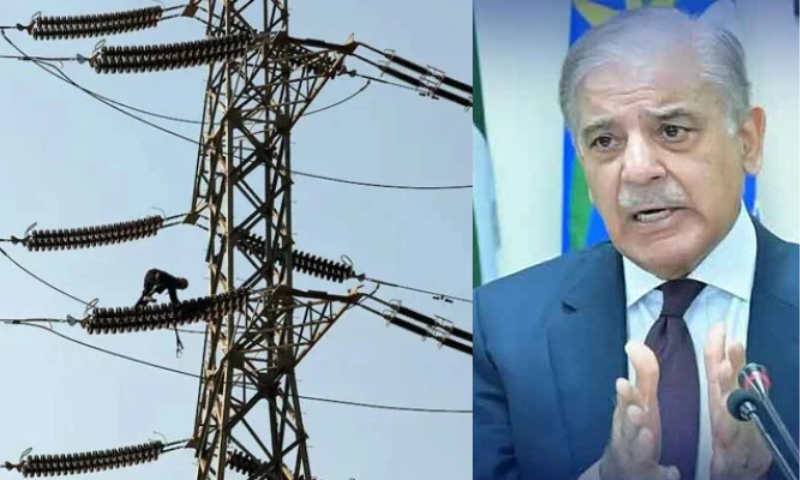
Islamabad, February 11, 2026: The National Electric Power Regulatory Authority (Nepra) on Wednesday announced revisions to domestic electricity fixed charges and industrial tariffs, while Prime Minister Shehbaz Sharif took notice of changes to solar consumer regulations, directing a review of the new net-billing rules.
Under Nepra’s latest decision, fixed charges have been imposed on domestic consumers using up to 300 units per month, covering both protected and non-protected categories. Previously, fixed charges applied only to non-protected consumers exceeding 300 units.
- Protected consumers: Rs200 for up to 100 units, Rs300 for up to 200 units.
- Non-protected consumers: Rs275 for up to 100 units, Rs300 for up to 200 units, Rs350 for up to 300 units.
Higher consumption slabs have seen incremental changes, with some reductions for users above 600 units. Lifeline consumers using up to 100 units remain exempt.
Nepra also reduced electricity rates for industrial consumers by Rs4.4 per unit. Domestic consumers in the 301–400 unit slab will get Rs1.53 per unit relief, while those in 401–500 units will see Rs1.25 per unit reduction. Cuts of Rs1.40, Rs0.91, and Rs0.49 per unit were announced for 501–600, 601–700, and above 700 units, respectively. The federal government will issue a formal notification after reviewing Nepra’s decision.
Meanwhile, the regulator’s new Prosumer Regulations 2025 have replaced the existing net-metering system with net-billing for all solar consumers. Under the new framework:
- Existing prosumers will be moved to net-billing, with export units credited for one month instead of three.
- New prosumers will receive five-year contracts, and exported units will be purchased at Rs10 per unit versus Rs26 under prior arrangements.
- Import units from Discos will be billed separately at Rs37–55 per unit, depending on consumption slabs.
- Solar installation limits are capped at 50% of the original sanctioned load.
The changes have sparked widespread concern among stakeholders, including senators across political lines, citing that the regulations could undermine a decade of citizen-led solar energy progress.
Responding to the controversy, Prime Minister Shehbaz Sharif took immediate notice and directed the Power Division to file a review appeal before Nepra, emphasizing that the burden of 466,000 solar users should not fall on 37.6 million domestic grid consumers. He also urged the Power Division to formulate a comprehensive strategy to safeguard existing consumer contracts.
The PM issued directives during a high-level meeting attended by Deputy PM Ishaq Dar, Power Minister Awais Leghari, Economic Affairs Minister Ahad Cheema, Information Minister Attaullah Tarar, Minister of State for Finance Bilal Azhar Kiyani, and PM’s Adviser Muhammad Ali.
Earlier, Power Minister Awais Leghari defended Nepra’s move, stating that changing regulations is the regulator’s legal duty and aimed at reducing consumer burdens. He stressed that clarity in policy, rather than populist reactions, is necessary for sustainable electricity management.
Nepra said the new prosumer regulations aim to integrate distributed generation into the national grid, provide clearer procedures, and strengthen technical requirements while protecting system stability, though critics argue the measures reduce incentives for solar adoption and impose heavier costs on domestic consumers.
This dual development reflects ongoing tensions between promoting renewable energy adoption, maintaining grid stability, and balancing the financial burden on ordinary electricity consumers.