Colombo, February 14, 2026: On the eve of one of world cricket’s most anticipated encounters, captains of Pakistan and India kept the focus firmly on cricket — while deliberately maintaining suspense over whether the teams would shake hands — ahead of their blockbuster T20 World Cup 2026 match in Colombo on Sunday.
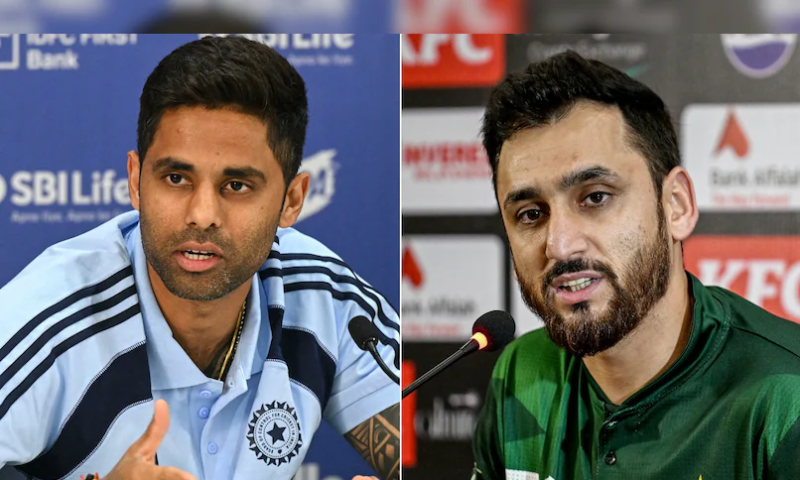
At separate pre-match media briefings, India captain Suryakumar Yadav and Pakistan skipper Salman Agha echoed similar tones: play hard, respect the spirit of the game, and let the moment unfold naturally.
When repeatedly asked about the handshake — a sensitive topic since the controversy during the 2025 Asia Cup — Suryakumar chose to keep everyone guessing. Smiling broadly, he said the decision would be revealed “in 24 hours,” insisting that speculation should wait until match day.
“We have come here to play cricket and we will play good cricket,” he said. “What is important tomorrow is the game. We’ll see at the toss.”
The Indian captain acknowledged the unique pressure of an India-Pakistan contest, admitting there would be “nerves and butterflies,” but stressed that his team would start from scratch despite India’s dominant recent record.
“You have to start from zero,” he said. “If you carry history with you, it can lead to complacency. Treat it as a fresh league game, stay relaxed, take good calls.”
Suryakumar also praised Pakistan’s performances in the tournament so far, noting that he had watched their wins against the Netherlands and the USA and felt they were playing “good cricket.” While Pakistan are based in Colombo for the World Cup, he downplayed any major advantage, pointing out India’s familiarity with local conditions after previous outings at the same venue.
Earlier, Pakistan captain Salman Agha struck a measured and conciliatory note, saying he hoped the match would be played in the “spirit of cricket,” particularly in light of last year’s controversy when handshakes and the trophy presentation were overshadowed by politics at the Asia Cup.
“What I expect doesn’t matter,” Agha said. “But the game should be played the way it has been played since cricket started. The rest is up to them.”
The upcoming match at the R Premadasa Stadium, scheduled under lights and already sold out, will be the first India-Pakistan meeting since India defeated Pakistan three times — including the final — at the 2025 Asia Cup in Dubai. That tournament saw cricket pushed into the background after India declined handshakes and later skipped the trophy ceremony due to the presence of Mohsin Naqvi, then serving as PCB chairman and Asian Cricket Council president.
Politics again briefly intruded earlier this month when Pakistan announced, and then reversed, a boycott of the February 15 match following negotiations involving the International Cricket Council and the Pakistan Cricket Board. With the issue settled, Agha said he expected sportsmanship to take center stage.
Asked directly whether Pakistan would shake hands if India were willing, Agha smiled and replied: “We will find out tomorrow.”
Acknowledging the magnitude of the rivalry, he said the atmosphere would be electric, with thousands of fans from both countries expected to fill the stadium despite an uncertain weather forecast.
“This game’s magnitude has always been bigger and will continue to be bigger,” he said.
Statistically, Pakistan face an uphill task. They have beaten India only once in T20 World Cup history — in 2021 — and Agha himself has lost all three matches he has captained against India. Still, he stressed learning over lamenting.
“You can’t change history, but you can learn from it,” he said. “Each match is a new day. We will try to put up a good performance and win.”
He also rejected the idea that Pakistan enjoy a competitive edge by being based in Colombo throughout the tournament. “On the ground, you have to play good cricket and execute plans. Just being based here doesn’t mean you will win.”
As the cricketing world counts down to Sunday night, one question remains deliberately unanswered: will the captains shake hands? For now, both sides insist that the real contest — bat versus ball — deserves top billing.