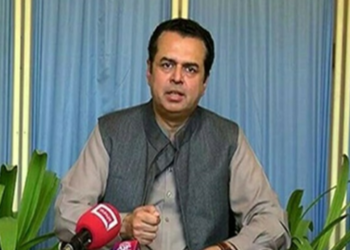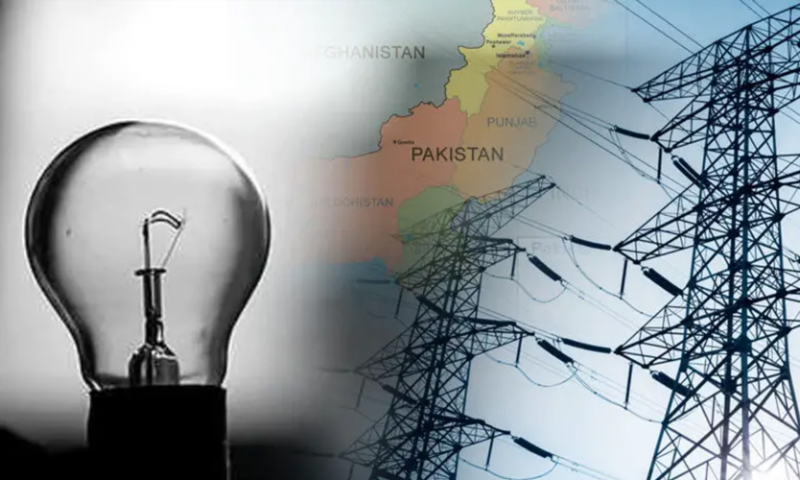
Islamabad, May 1, 2026: Federal Minister for Power Awais Ahmed Khan Leghari on Friday announced that electricity load management had ended across the country following the arrival of fresh liquefied natural gas (LNG) supplies, while cautioning that reliance on expensive fuels could increase financial pressure on consumers.
Addressing a press briefing, the minister said Pakistan received LNG shipments a day earlier, enabling authorities to restore normal electricity supply across the national grid.
He expressed confidence that, barring any unexpected technical faults in the transmission system, consumers should not face further power outages.
The minister was referring to the arrival of the LNG carrier Seapeak Magellan, which docked at the Pakistan GasPort terminal and began injecting re-gasified LNG (RLNG) into the national network.
According to reports, the vessel carried around 140,000 cubic metres of LNG and berthed at the terminal operated by Pakistan GasPort Consortium Limited on Thursday morning.
The cargo, arranged by TotalEnergies at a reported cost of $18.40 per mmbtu, was the first LNG shipment to arrive in Pakistan since a US-origin cargo reached the country several weeks ago.
Government sources said efforts are also under way to arrange another LNG cargo between May 10 and 12 to further stabilise supplies.
Leghari said the government was forced to procure costly LNG after gas supplies from Qatar were disrupted due to the ongoing conflict in the Middle East.
He described the recent power outages as a temporary challenge caused mainly by gas shortages, noting that consumers had faced loadshedding over the past 13 to 14 days due to supply constraints.
However, he said timely government measures helped restore balance in the electricity system.
Highlighting improvements in power generation, the minister said hydropower output had increased to nearly 6,000 megawatts from around 1,000 megawatts earlier, significantly easing pressure on the grid.
He added that water releases from dams were being managed according to provincial requirements and decisions by relevant authorities.
Leghari also noted that furnace oil and diesel-based power plants had been operated to bridge the electricity shortfall.
He warned that complete elimination of loadshedding through expensive fuel-based generation would have sharply increased electricity costs for consumers.
“The government will make every possible effort to protect consumers from costly electricity,” he said.
The minister clarified that Pakistan’s actual electricity generation currently stands at approximately 32,000 megawatts, rejecting perceptions that generation capacity had reached 46,000 megawatts.
He expressed optimism that uninterrupted power supply could be maintained if transmission lines remained fault-free and said improved planning would help prevent future loadshedding.