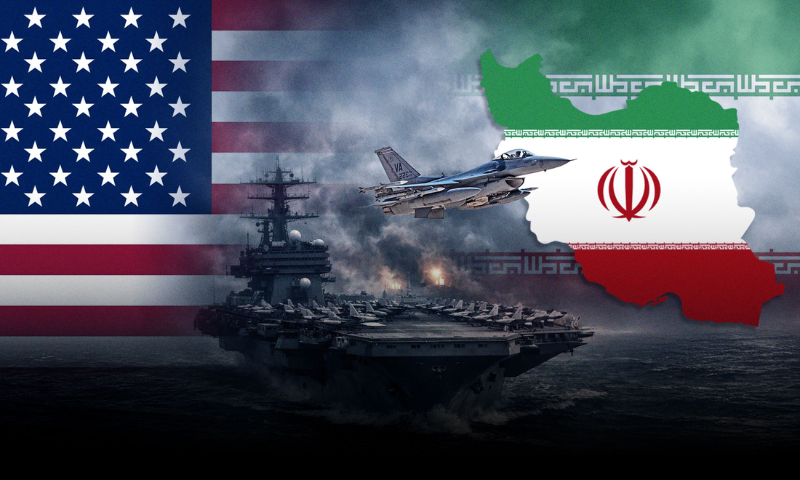
Washington/Tehran, May 2, 2026: U.S. President Donald Trump declared on Friday that hostilities with Iran had “terminated” under an ongoing ceasefire, even as tensions between the two countries remained high and negotiations over a permanent settlement appeared deadlocked.
In a formal letter to congressional leaders, Trump said there had been no exchange of fire with Iran since the ceasefire took effect and argued that the pause in fighting gave his administration additional authority to continue military operations without seeking fresh approval from Congress.
“The hostilities that began on February 28, 2026, have terminated,” Trump wrote, attempting to bolster his claim that the White House is not bound by the 60-day deadline under the 1973 War Powers Resolution.
The law requires a U.S. president to either end military operations within 60 days, obtain congressional authorization, or request a limited extension. Trump, however, described the law as unconstitutional, echoing arguments previously made by presidents from both Republican and Democratic administrations.
Congressional Democrats sharply rejected Trump’s interpretation, arguing that a ceasefire does not legally suspend the War Powers Resolution and pointing to the continued deployment of U.S. naval forces blockading Iranian oil exports as evidence that hostilities are still ongoing.
Senator Jeanne Shaheen, the top Democrat on the Senate Foreign Relations Committee, said Trump still lacked “a strategy or way out for this poorly planned war,” calling the 60-day deadline “a clear legal threshold.”
The conflict, which erupted following a U.S.-Israeli attack on Iran on February 28, has killed thousands, caused billions of dollars in damage, and disrupted global energy markets. The blockade of the Strait of Hormuz has severely affected oil and liquefied natural gas shipments, fueling higher consumer prices worldwide.
Despite Trump’s declaration, the U.S. president acknowledged in his letter that Iran continued to pose a “significant” threat to the United States and its armed forces. He also received a briefing on Thursday regarding potential fresh military strikes aimed at forcing Tehran back to the negotiating table.
Speaking to reporters outside the White House, Trump issued stark warnings to Tehran, saying Washington had two options: negotiate a deal or “blast the hell out of them and finish them forever.”
“I prefer not to on a human basis, but that’s the option,” he said.
Trump also dismissed concerns about America’s military inventory, insisting the United States remained “stocked and locked and loaded” with more than double the missile stockpile it had at the start of the conflict.
He further reiterated that Washington would never allow Iran to obtain nuclear weapons.
“It will be a terrible thing in the future if they were ever allowed to have a nuclear weapon,” Trump said. “It’s not going to happen.”
Meanwhile, diplomatic efforts to end the war remain stalled despite ongoing mediation by Pakistan.
Iranian state media reported that Tehran had submitted a fresh peace proposal to U.S. officials through Pakistani mediators. A Pakistani official confirmed that the proposal had been forwarded to Washington, although details of the offer were not disclosed publicly.
Trump said the Iranian proposal contained terms he “can’t agree to.”
“They want to make a deal. I’m not satisfied with it, so we’ll see what happens,” he said, while warning that military action could resume if diplomacy failed.
Iranian Foreign Minister Abbas Araghchi said Tehran remained open to diplomacy provided Washington abandoned what he called its “threatening rhetoric” and “expansionist approach.”
Araghchi confirmed that Pakistan was currently the only official mediator in the negotiations and said Iran had sent new proposals aimed at ending the conflict. He also held consultations with foreign ministers from Saudi Arabia, Qatar, Turkey, Egypt, Iraq and Azerbaijan in an effort to prevent further escalation.
Iranian officials continued to reject Washington’s justification for the war, describing the U.S.-led campaign as an “act of aggression” rather than self-defence.
Iranian Foreign Ministry spokesperson Esmaeil Baghaei questioned American claims that the attacks were conducted in collective self-defence alongside Israel.
“Self-defence against what?” Baghaei asked, arguing that Iran had not launched any attack that could legally justify military action against it.
Araghchi also accused Washington of misleading the public about the economic cost of the war, claiming the conflict had already cost the United States nearly $100 billion while pushing global energy prices sharply higher.
Although a ceasefire has largely held since April 8, analysts warn that the situation remains extremely fragile, with fears growing that any collapse in negotiations could trigger a fresh escalation across the Middle East.