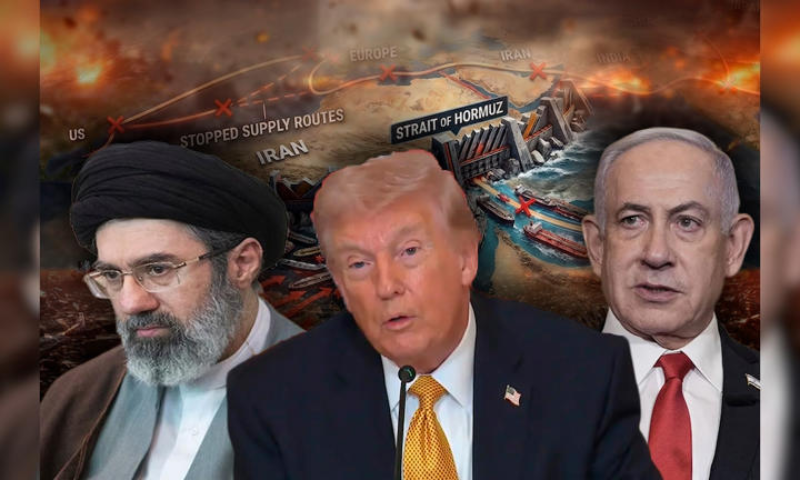
Tehran/Washington, May 1, 2026: Iran on Friday sharply criticised the United States over its military campaign against Tehran, rejecting Washington’s justification of “self-defence” and warning of severe consequences if attacks resume, amid escalating tensions surrounding the Strait of Hormuz.
According to Al Jazeera, Iranian Foreign Ministry spokesperson Esmaeil Baghaei used social media platform X to challenge a US State Department document that described American military action as collective self-defence alongside Israel.
The US document stated that Washington had acted “at the request of and in the collective self-defence of its Israeli ally, as well as in the exercise of the United States’ own inherent right of self-defence.”
“Self-defence against what?” Baghaei questioned in his post.
“Was there any ‘armed attack’ by Iran to justify ‘self-defence’? Definitely not,” he said, calling the US action “an act of aggression against the nation of Iran.”
Meanwhile, Iranian Foreign Minister Abbas Araghchi accused the Pentagon of understating the economic cost of the war launched jointly by the administration of Donald Trump and Israeli Prime Minister Benjamin Netanyahu on February 28.
“The Pentagon is lying,” Araghchi wrote on X, claiming the conflict had already cost the United States nearly $100 billion — four times higher than official estimates.
He further alleged that the indirect economic burden on American households had risen sharply, saying the monthly cost for US families was continuing to increase.
France plans ‘defensive’ Hormuz mission
Amid growing concerns over disruptions in the Strait of Hormuz, French Foreign Minister Jean-Noel Barrot announced that France is preparing to launch a “strictly defensive” international maritime mission in the strategic waterway once conditions permit.
Barrot said the blockade of the Strait of Hormuz “must stop,” stressing that international waterways cannot be obstructed under international law.
He noted that rising fuel prices in Europe were directly linked to instability in the Strait, adding that France had introduced measures to shield households and businesses from the impact of soaring energy costs.
According to the French minister, the mission would focus on escorting ships and conducting mine-clearing operations to help restore maritime traffic as quickly as possible.
He clarified, however, that France would not participate in any US-led military coalition in the region, saying Paris remained committed to its own independent initiative.
CENTCOM briefs Trump on new strike options
US media outlet Fox News reported that the commander of United States Central Command (CENTCOM), Admiral Brad Cooper, briefed President Trump on potential “final blow” strike options against Iran during a Situation Room meeting.
The report said the proposed plans include a “short and powerful wave of strikes” targeting Iran’s remaining military infrastructure, leadership and missile assets if Washington decides to resume combat operations.
Fox News also reported that the Pentagon is considering deploying advanced weapons systems, including the hypersonic missile system known as “Dark Eagle,” which can reportedly strike targets up to 2,000 miles away.
Lebanon PM vows recovery, reclaiming occupied land
Separately, Lebanese Prime Minister Nawaf Salam pledged to reclaim “every inch” of occupied territory and continue economic recovery efforts in a Labour Day message to workers.
Addressing the country’s worsening financial crisis, Salam acknowledged the severe hardships faced by citizens, including unemployment, inflation and declining purchasing power.
He vowed that the government would continue efforts to improve living conditions, restore stability and advance economic reforms.
According to a recent report by the Food and Agriculture Organization and the World Food Programme, nearly 1.24 million people in Lebanon are expected to face acute food insecurity between April and August 2026 due to worsening violence and displacement.
Iran demands accountability from Arab states
Iran’s ambassador to the United Nations, Amir-Saeid Iravani, also called for accountability and reparations from six Arab countries that Tehran accuses of facilitating US-Israeli military operations.
In a letter to the UN, Iravani said Qatar, Bahrain, Saudi Arabia, the UAE, Kuwait and Jordan should be held responsible for what he described as internationally wrongful acts against Iran’s sovereignty.
He claimed the continued failure of the United Nations Security Council to address the conflict threatens international peace and security.
Iran warns of ‘painful’ response
Iran further warned that any renewed US attacks would trigger “long and painful strikes” against American positions.
Tehran also reaffirmed its stance on the Strait of Hormuz, where disruptions continue to affect nearly 20 percent of global oil and gas supplies, fuelling concerns over rising energy prices and a possible global economic slowdown.
Reuters reported that despite a ceasefire being in place since April 8, Iran continues to restrict movement through the strategic waterway in response to what it describes as a US naval blockade targeting Iranian oil exports.
Meanwhile, the United Arab Emirates advised its citizens against travelling to Iran, Lebanon and Iraq due to the deteriorating regional security situation.
President Trump reiterated on Thursday that Iran would not be allowed to acquire nuclear weapons and expressed hope that fuel prices would fall sharply once the conflict ends.