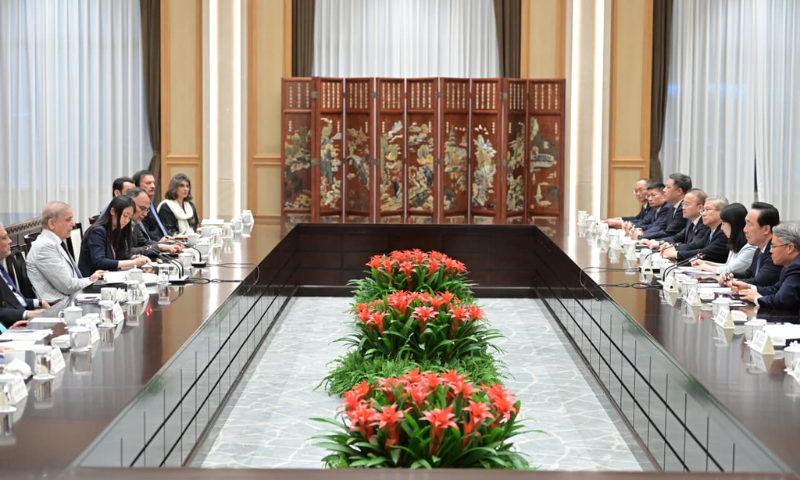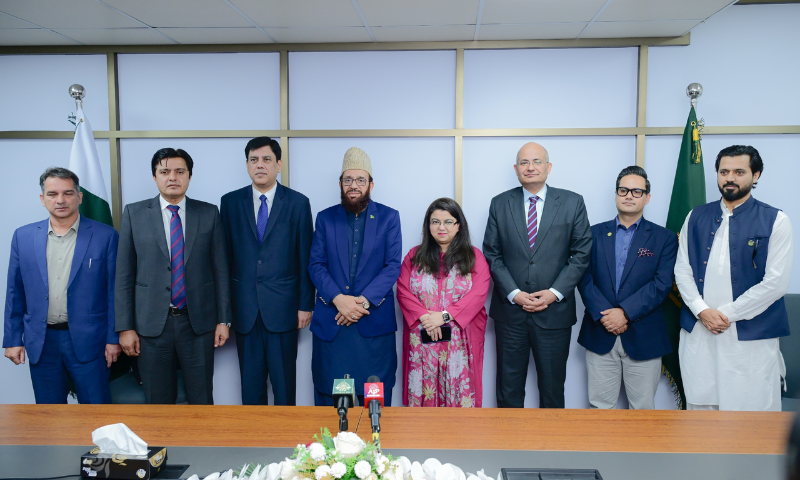
Islamabad/Makkah, May 23, 2026: In line with Prime Minister Shehbaz Sharif’s “Digital Pakistan” vision, the National Information Technology Board (NITB) has formally taken control of the digitalization of Pakistan’s Hajj operations, with Pakistan and Saudi Arabia agreeing to establish a landmark “Digital Corridor” aimed at modernizing Hajj management systems.
Confirming the development from Makkah, Muhammad Awais, Program Manager at NITB, said the world-class digital corridor would enable real-time sharing of pilgrims’ data with Saudi Arabia’s central Hajj systems, including the Nusuk and Mashaer platforms.
The integration is expected to significantly improve Pakistan’s Hajj operations through advanced technology while enhancing coordination among key institutions, including National Database and Registration Authority (NADRA), the Directorate General of Immigration & Passports, designated banks, and airlines.
Muhammad Awais said that, on the directives of the prime minister, an NITB team was currently stationed in Saudi Arabia as observers. He added that the initiative was being implemented under the guidance of Federal Minister for IT & Telecom Shaza Fatima Khawaja and Secretary IT Zarrar Hasham Khan, while the project was being led by NITB CEO Faisal Iqbal Rattiyal to modernize all existing Hajj operational procedures.
As part of the digital transformation, authorities have launched the “Khuddam-ul-Hujjaj Performance Management System” (KPMS), a comprehensive monitoring framework featuring advanced mobile applications and centralized dashboards.
The KPMS system allows live tracking of Hajj welfare staff, seasonal duty staff, and local assistants serving pilgrims in Makkah, Madinah, Jeddah, and Madinah Airport. It also includes a mechanism for obtaining instant feedback from pilgrims.
Officials said that under the Federal Cabinet-approved Hajj Policy and the prime minister’s directives, technical assessments and capacity-building measures would continue during Hajj 2026 to facilitate a complete transition of both government and private Hajj schemes to the centralized digital module by Hajj 2027.
To implement the long-term strategy, a formal five-year strategic agreement was signed between Mohammad Bakhsh Sangi and Dr. Khalid Rafique.