The Hague, August 31, 2026: The Permanent Court of Arbitration (PCA) has ruled that the Indus Waters Treaty (IWT) between Pakistan and India remains fully in force, rejecting India’s unilateral decision to place the agreement in abeyance and ordering restrictions on construction work at the Ratle hydroelectric project in Indian Illegally Occupied Jammu and Kashmir.
In a unanimous decision, the Hague-based Court of Arbitration found that none of the grounds cited by India could justify the suspension or termination of the 1960 water-sharing agreement.
The court ruled that India remained bound by its obligations under the IWT, including provisions governing the design and operation of hydroelectric projects on the western rivers allocated largely to Pakistan.
The ruling comes amid heightened tensions between the two nuclear-armed neighbours after India announced in April 2025 that it was placing the treaty in abeyance. Pakistan rejected the move, maintaining that the IWT contained no provision allowing either side to unilaterally suspend its operation.
PCA rejects India’s grounds for suspension
The court examined the possible legal grounds for India’s action under the treaty as well as customary international law.
It found that there was no rule allowing a state to unilaterally terminate or suspend a treaty on the basis of sovereignty, as argued by India.
The PCA identified three highly restricted circumstances under which a state could potentially suspend or terminate a treaty unilaterally: a material breach by another party, a fundamental change of circumstances, and the effect of armed conflict.
India had argued that Pakistan violated the treaty’s cooperative spirit by refusing to enter negotiations aimed at modifying the agreement. The court rejected the argument, finding that the IWT did not oblige Pakistan to enter such negotiations.
It also found that Pakistan had, in fact, been willing to discuss possible treaty modifications with India.
The court rejected India’s argument that alleged cross-border terrorism constituted a material breach of the treaty, observing that the IWT does not regulate terrorism or the use of force but specifically governs rights and obligations relating to the Indus waters.
The PCA further noted that it had found no evidence that the alleged terrorism had prevented India from constructing hydroelectric projects on the western rivers. India had continued to build and develop such projects, including in recent years.
Even assuming India’s allegations were true, the court concluded, they would not establish a material breach of the treaty by Pakistan.
Climate change, energy needs not sufficient grounds
The PCA also examined India’s arguments concerning a fundamental change of circumstances, including demographic changes, the need for clean energy, advances in dam construction technology, increased cross-border terrorism and climate change.
The court concluded that none of these circumstances met the legal requirements necessary to invoke the doctrine of a fundamental change of circumstances under international treaty law.
It also found that the IWT was designed to remain operational even during an armed conflict and that the circumstances did not justify its suspension.
The court further rejected the possibility of India justifying its action as a countermeasure against an alleged prior violation of international law by Pakistan, finding that the requirements for a lawful countermeasure had not been met.
Restrictions imposed on Ratle project
The PCA’s decision also addressed Pakistan’s application for interim measures concerning the Ratle Hydroelectric Plant (RHEP) and the Kishenganga Hydroelectric Plant (KHEP).
The court unanimously ordered measures preventing India from concreting the Ratle dam wall and power intake structure above specified levels until 90 days after the World Bank-appointed neutral expert issues a final decision.
The court also imposed a reporting requirement concerning the Ratle project’s construction schedule, extending until shortly after the neutral expert’s final decision.
Two other measures sought by Pakistan were not granted.
The PCA noted that proceedings concerning the Kishenganga and Ratle projects were also before the neutral expert, who is expected to issue a final decision in July 2027 on whether the projects comply with the Indus Waters Treaty.
The IWT gives India control over the eastern rivers — Ravi, Beas and Sutlej — while allocating the western rivers — Indus, Jhelum and Chenab — largely to Pakistan. The treaty also establishes mechanisms for information sharing and resolution of disputes.
Pakistan welcomes ruling, India rejects it
Pakistan welcomed the PCA’s findings, with the Information Ministry saying Islamabad took note of the court’s press release and welcomed its determination that India remained bound by and must comply with its obligations under the treaty.
Pakistan also welcomed the decision concerning the Ratle project and the interim measures imposed by the court.
The government said it would carefully examine the detailed award and decision following their publication and assess how they could help restore engagement between the two countries under the treaty.
India, however, rejected the ruling, maintaining that it did not recognise the Court of Arbitration’s jurisdiction over the matter.
India’s Ministry of External Affairs said the “so-called Court of Arbitration” had no jurisdiction to rule on what it described as India’s sovereign decisions.
India did not participate by filing written or oral submissions in response to Pakistan’s application. The PCA nevertheless considered India’s positions to the extent they could be established through public statements, official communications and its conduct outside the proceedings.
Long-running dispute over Indus waters
Pakistan initiated arbitration proceedings concerning the western rivers in August 2016. The World Bank subsequently paused the process of appointing the chairman of the Court of Arbitration and the neutral expert in December that year. The pause was lifted in 2022, after which a neutral expert was appointed.
Following India’s April 2025 decision to place the treaty in abeyance, the PCA issued a supplemental award on competence on June 27, 2025, holding that India’s decision could not limit the court’s jurisdiction over the dispute.
The court at that stage did not determine whether the treaty itself remained in force.
Pakistan subsequently filed an application on March 4 seeking a determination on the treaty’s status in light of India’s decision.
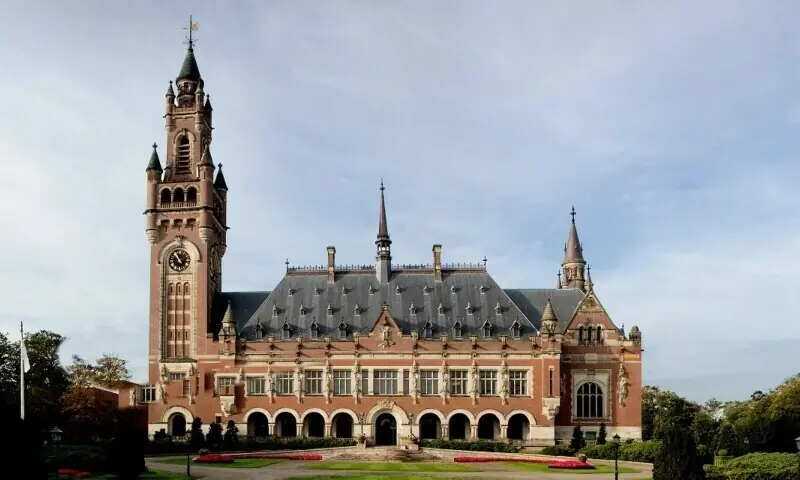
India was invited to indicate whether it would participate in the proceedings but did not respond. The court then directed Pakistan to submit a detailed written memorial and held a hearing at the Peace Palace in The Hague from April 26 to 28.
The latest ruling represents a significant development in the longstanding water dispute between Pakistan and India and reinforces the treaty’s continued legal status despite New Delhi’s unilateral attempt to place it in abeyance.