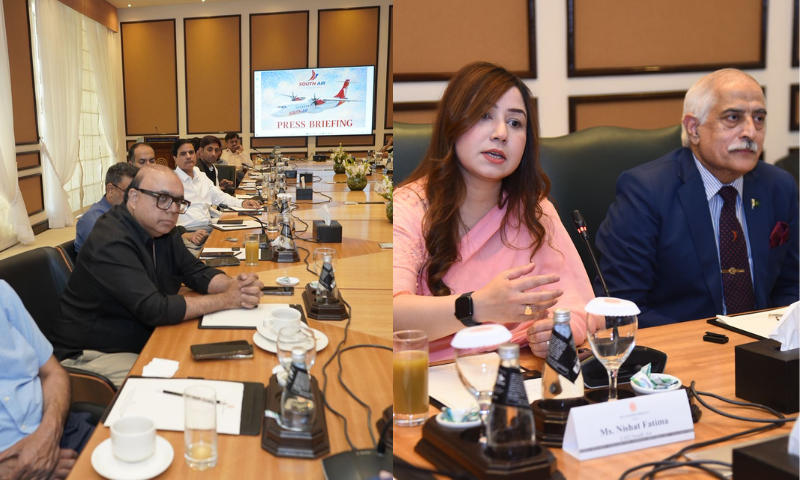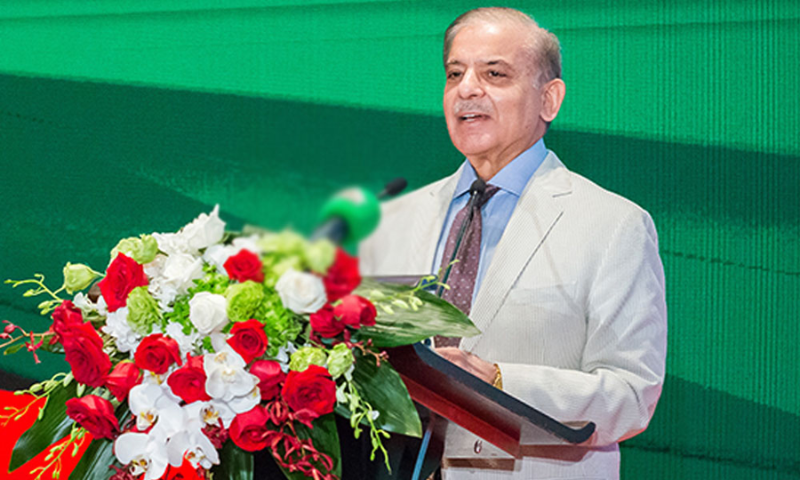
Hangzhou, May 24, 2026: Prime Minister Shehbaz Sharif on Sunday identified agriculture, information technology, special economic zones (SEZs), and mines and minerals as four major sectors with immense potential for enhanced cooperation between Pakistan and China.
The prime minister was addressing the Pakistan-China Business-to-Business Investment Conference in Hangzhou during his four-day official visit to China.
Highlighting Pakistan’s agricultural potential, PM Shehbaz said the country was fundamentally an agrarian economy and stressed the need for collaboration in high-quality seeds, mechanisation, modern farming practices, and improving per-acre crop yields.
Referring to the 1,000 Pakistanis who received agricultural training in China last year, he said they had returned home and were contributing positively to the sector.
The premier said Pakistan and China had signed memorandums of understanding worth billions of dollars, adding that around 30 percent of those MoUs had already been converted into formal agreements.
Noting that China imports nearly $100 billion worth of agricultural products annually, he said Pakistan’s share remained minimal but could significantly increase with cooperation between the two countries.
“In the next five to seven years, we expect that we can increase our agricultural product trade to China by about $10 billion,” he said, adding that the target was achievable with Chinese support.
The prime minister also highlighted the potential of special economic zones, particularly Karachi’s SEZ spread over more than 6,000 acres.
He assured Chinese investors that Pakistan would provide all essential infrastructure and facilities to encourage joint ventures between Chinese and Pakistani businesses.
“You will be offered red carpet treatment,” he told investors, adding that land would be provided on long-term leases under attractive terms and conditions.
PM Shehbaz said Pakistan sought to replicate successful SEZ models across the country with Chinese cooperation.
Pointing to rising labour costs in China and its transition toward higher industrialisation, the premier encouraged Chinese companies to establish joint ventures in Pakistan in sectors such as textiles, leather, and manufacturing for exports to third countries.
“This will be a roaring success in times to come,” he remarked.
The prime minister also underscored the vast potential in information technology and artificial intelligence, while inviting Chinese investors to explore Pakistan’s significant reserves of minerals and gemstones.
He stressed that Pakistan was looking for “expertise, experience, and investments — not loans, aid or handouts.”
“Handouts and aid never made a nation vibrant, never made a nation stand on its own feet,” he said.
PM Shehbaz also praised Chinese President Xi Jinping for his leadership and reaffirmed the enduring friendship between the two countries.
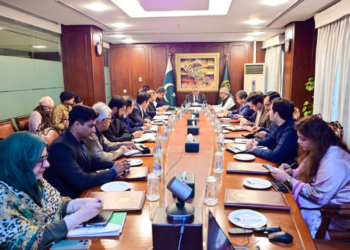
The conference focused on cooperation in IT and telecommunications, battery energy storage systems, and agriculture, with several agreements and memorandums of understanding expected to be signed between Pakistani and Chinese companies.
The business forum was organised under the second phase of the China-Pakistan Economic Corridor initiative.
During the visit, the prime minister is also scheduled to meet executives of leading Chinese firms and visit the headquarters of Alibaba, where cooperation agreements between the company and the Government of Pakistan are expected to be signed.
Meanwhile, Deputy Prime Minister and Foreign Minister Ishaq Dar arrived in Beijing on Sunday along with Planning Minister Ahsan Iqbal.
Dar was received at the airport by Sun Haiyan, Vice Minister of the International Department of the Communist Party of China Central Committee.
In a post on X, Dar said he would participate as chief guest at the 2nd Pakistan-China Political Parties Forum and the 4th CPEC Political Parties Joint Consultation Mechanism alongside IDCPC Minister Liu Haixing.
He said representatives from 12 Pakistani political parties, including Pakistan Muslim League (N), would attend the forum.
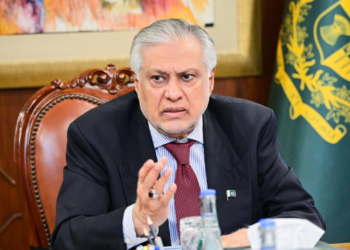
Addressing the Pakistan-China B2B Investment Conference earlier, Dar said more than 500 companies from both countries were participating in the event and described the business community as the driving force behind bilateral cooperation.
He added that Pakistan had achieved economic stabilisation over the past four years and was now moving on an upward economic trajectory despite external challenges.
Dar also highlighted the success of a joint venture between Servis Group and Long March Tyres, saying the partnership was on track to become a billion-dollar enterprise within five years.