Islamabad, May 24, 2026: South Air, a newly launched regional airline awaiting final regulatory approval to begin operations in Pakistan, has expressed concern over continued delays in the clearance process despite completing all operational, technical, and financial requirements.
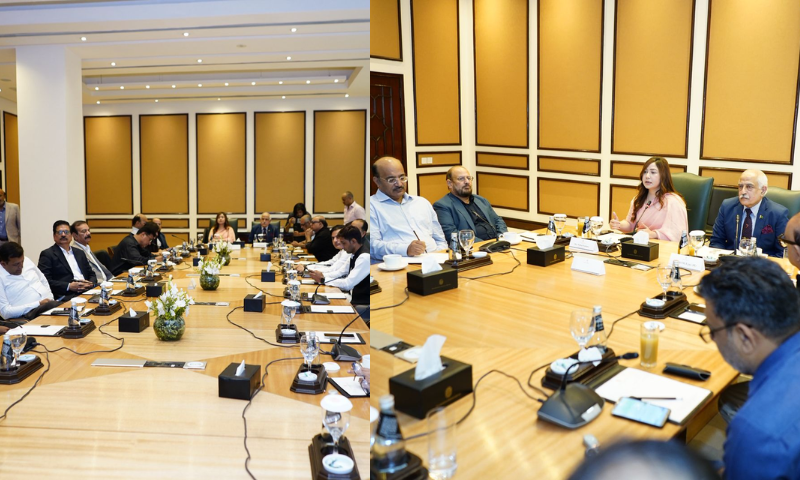
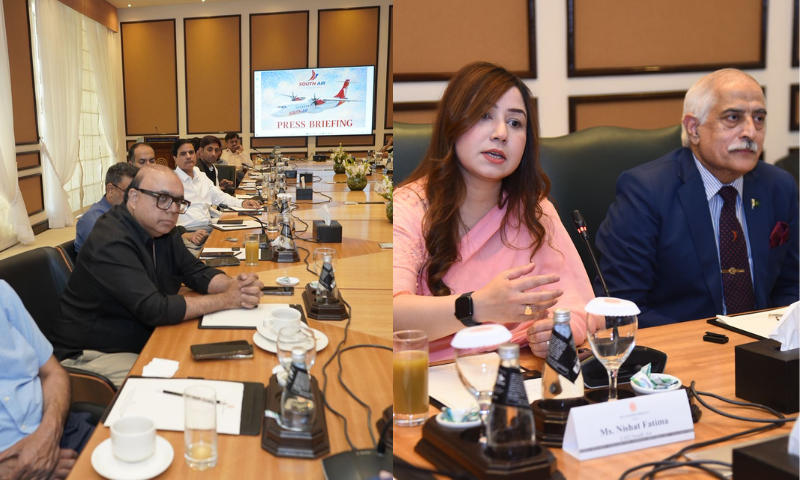
At a press conference held in Islamabad, South Air Chief Executive Officer Nishat Fatima and Chief Operating Officer Air Vice Marshal (R) Aijaz Malik said the airline was fully prepared to commence commercial flights aimed at improving air connectivity in underserved regions of the country.
The management said two aircraft had already been stationed at Jinnah International Airport for several weeks, while two additional aircraft were ready to arrive from France once the Civil Aviation Authority grants final approval.
Established under the Multan-based SOS Group, South Air plans to operate regional routes connecting Balochistan, South Punjab, and interior Sindh with major cities.
In its initial phase, the airline intends to launch operations for Gwadar, Turbat, and Panjgur, along with daily flights to Sehwan Sharif and Dera Ismail Khan.
The airline’s management said significant investment had already been made in the venture, warning that delays in regulatory approval were increasing operational costs, including aircraft parking charges, lease rentals, and employee expenses.
They said that prolonged delays raised concerns about the ease of doing business and investor confidence in Pakistan’s aviation sector.
“If an airline that has fulfilled every legal, technical and operational requirement is still unable to commence services on schedule, it inevitably raises concerns about the ease of doing business and investor confidence in Pakistan,” the officials said.
The officials emphasized that regional air connectivity should not be viewed solely as a commercial activity but as a key driver of economic integration and national development.
They said that globally, aviation plays a critical role in boosting tourism, trade, and regional growth, but in Pakistan the sector continues to face bureaucratic delays and regulatory bottlenecks.
Referring to Balochistan, they noted that although the province is considered strategically important and central to the China-Pakistan Economic Corridor, several key districts still lack reliable air connectivity.
The airline urged the Civil Aviation Authority to adopt a transparent, predictable, and investor-friendly regulatory framework to support new entrants and improve regional connectivity across the country.