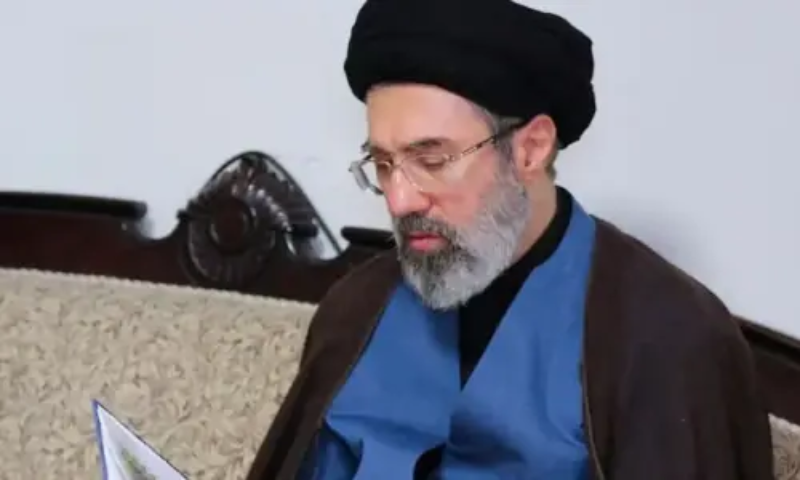
Tehran, June 28, 2026: Iran’s Supreme Leader, Ayatollah Seyyed Mojtaba Khamenei, has called on the country’s judiciary to pursue legal action over what he described as the extensive human and material losses caused by the United States and Israel during the conflicts with Iran over the past year, even as tensions across the Middle East continued to escalate despite a recently signed interim peace agreement.
In a message issued to mark Judiciary Week and the anniversary of the killing of Ayatollah Mohammad Beheshti and his companions, Khamenei said the deaths of those killed during the conflicts, along with the physical, psychological, economic and spiritual damage inflicted on Iran and its people, should form the basis of hundreds of legal cases in domestic and international courts.
He alleged that the United States and Israel were responsible for war crimes, including attacks on civilians, medical facilities and public infrastructure, and called on the judiciary to seek legal redress against what he termed “international criminals and aggressive powers.”
Khamenei said protecting the rights of the Iranian people extended beyond individual legal disputes and included defending the country’s collective rights against foreign aggression. He added that strengthening the rule of law, combating corruption and ensuring justice would reinforce public confidence in Iran’s judicial system.
Fighting resumes despite interim agreement
The remarks came as violence flared across the region despite the 14-point interim memorandum of understanding (MoU) signed between Iran and the United States to halt hostilities and pave the way for broader negotiations on Iran’s nuclear programme and regional security.
Iran’s Islamic Revolutionary Guard Corps (IRGC) claimed responsibility for missile and drone attacks targeting US military facilities in Kuwait and Bahrain early Sunday, saying the strikes were a response to alleged US violations of the ceasefire agreement.
A US official confirmed that American bases had come under attack but said there were no reported US casualties or significant damage. Kuwait said its air defences intercepted two ballistic missiles, while Bahrain reported that an Iranian strike damaged a residential building in Muharraq province without causing casualties.
The United States said it had launched fresh strikes against Iranian military surveillance, communications, air defence, drone storage and mine-laying facilities after accusing Tehran of attacking commercial shipping in the Strait of Hormuz.
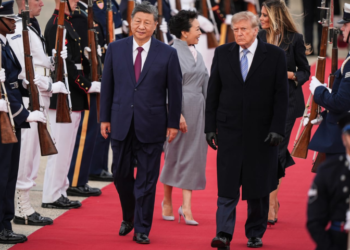
President Donald Trump warned that Washington could intensify military action if Iran failed to honour the ceasefire, declaring that the United States would “complete the job” if necessary.
Gulf states condemn attacks
Qatar strongly condemned the Iranian missile and drone attacks on Bahrain and Kuwait, describing them as violations of the sovereignty of both Gulf states and breaches of international law. Doha urged all parties to pursue dialogue, reduce tensions and build on the gains achieved through the Islamabad memorandum of understanding.
Kuwait also condemned the attacks as a direct threat to its national security, while Bahrain called on the United Nations Security Council to convene an emergency session and hold Iran accountable for the strikes.
Iran insists Strait of Hormuz remains under its control
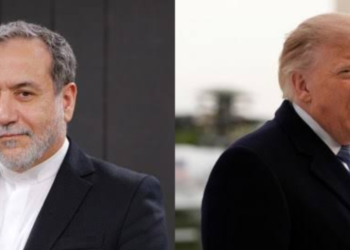
Speaking during a visit to Baghdad, Iranian Foreign Minister Abbas Araghchi said the Strait of Hormuz would remain under Iran’s “total oversight and management” for the next 30 days, adding that full maritime capacity would be restored once obstacles were removed.
He also urged the United States to pressure Israel to end its military operations in Lebanon and withdraw from occupied areas, arguing that these steps were required under the interim agreement.
Araghchi thanked Iraq for supporting Iran during the conflict and reiterated that Tehran considered itself solely responsible for managing navigation through the strategically vital Strait of Hormuz.
Israel continues operations in Lebanon
Meanwhile, the Israeli military said it had killed Hezbollah militants armed with rocket-propelled grenades and destroyed a rocket launcher in southern Lebanon’s Nabatieh area, describing the strikes as necessary to remove threats to its forces.
The renewed exchanges have raised concerns that the fragile ceasefire could unravel, despite ongoing diplomatic efforts aimed at stabilising the region and preventing a broader conflict.