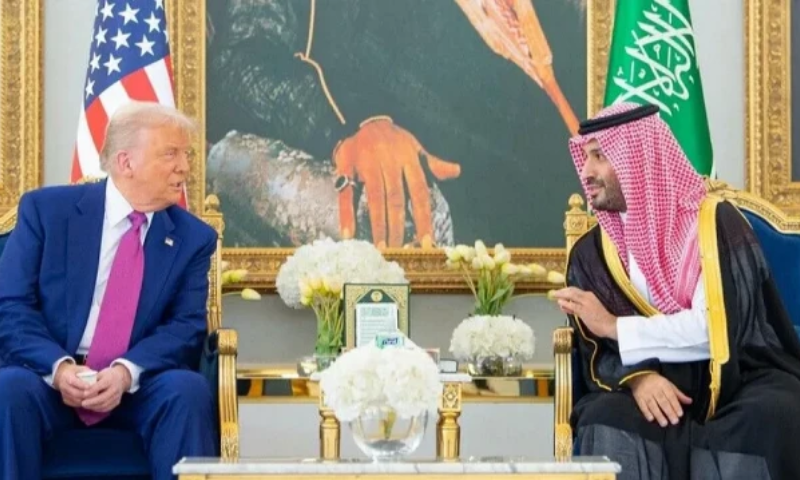
Tehran/Washington/Riyadh, August 2, 2026: Saudi Crown Prince Mohammed bin Salman urged US President Donald Trump to pursue diplomacy and prevent the Middle East from sliding into a broader conflict, as Washington paused plans for fresh military strikes on Iran amid renewed hopes for a negotiated agreement.
According to the Saudi Press Agency (SPA), the crown prince stressed during a telephone conversation with Trump that all possible efforts should be made to reduce tensions and prioritize dialogue to achieve diplomatic solutions.
He warned that preventing further escalation was essential to preserving regional and international security and stability. The two leaders also reviewed bilateral cooperation and discussed ways to further strengthen Saudi-US relations.
The diplomatic outreach came as Trump announced he would hold off on launching fresh attacks on Iran, saying he had agreed to delay military action after receiving requests from Iran and other Middle Eastern countries to allow time for negotiations.
In a post on Truth Social, Trump said he had agreed to cancel the planned attack, provided a rapid agreement could be reached to halt Iran’s nuclear ambitions and secure the immediate reopening of the Strait of Hormuz.
“Based on this request, I have agreed, for the future benefit of the world and likewise the survival of a successful and prosperous Iran, to cancel the attack, subject to being able to rapidly make a deal,” Trump wrote, adding that Israel supported the commitment. Israeli authorities did not immediately issue a public response.
US media reports, including Axios and The Associated Press, said Saudi Crown Prince Mohammed bin Salman had expressed concern over possible US military escalation during his conversation with Trump and urged restraint. According to the reports, Saudi Arabia feared that strikes on Iran’s energy infrastructure could trigger retaliatory attacks against oil and gas facilities across the Gulf.
Meanwhile, Iran reiterated that it regarded all threats from its adversaries as serious.
Acting Defence Minister Majid Ibn al-Reza said Tehran would not be caught off guard and would continue strengthening its military readiness, deterrence and defence capabilities in response to any threats, even those made as part of psychological warfare.
US Secretary of State Marco Rubio argued that recent American military strikes had significantly weakened Iran’s military capabilities and increased Tehran’s willingness to negotiate.
Speaking to Fox News, Rubio claimed US attacks had severely damaged Iran’s air force, navy, missile defence systems and weapons production facilities, although he acknowledged Iran still retained missile and drone capabilities.
Rubio said Washington was now negotiating “from a position of strength” and suggested the military campaign had opened the door for discussions on Iran’s nuclear programme and the future of the Strait of Hormuz.
Iranian Foreign Minister Abbas Araqchi, however, warned that any new military action by the United States or Israel would be met with a decisive and proportionate response.
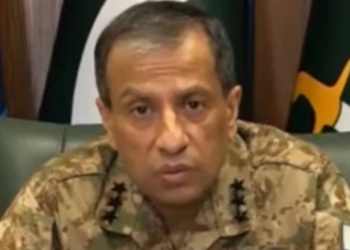
During separate telephone conversations with Pakistan’s Chief of Army Staff and Chief of Defence Forces Field Marshal Syed Asim Munir, Turkish Foreign Minister Hakan Fidan and Saudi Foreign Minister Prince Faisal bin Farhan, Araqchi discussed the consequences of further escalation and reaffirmed Iran’s readiness to respond to any aggression.
Iranian officials also warned against attacks on the country’s energy infrastructure.
Nournews, a media outlet affiliated with Iran’s Supreme National Security Council, reported that any US strikes on Iranian oil or energy facilities would prompt retaliatory attacks against oil fields in Saudi Arabia and the United Arab Emirates, as well as gas infrastructure in Qatar and Israel.
Iranian parliamentarian Hassan Ghashghavi maintained that Tehran would continue to control shipping arrangements through the Strait of Hormuz regardless of military developments, accusing Washington of publicly threatening military action while privately seeking negotiations.
Majidreza Hariri, president of the Iran-China Chamber of Commerce and Industry, argued that the United States would hesitate to target Iran’s energy infrastructure because of the potential regional consequences, saying Iran’s decentralized electricity network would be difficult to disable through aerial attacks.
The Strait of Hormuz remains at the centre of international concern after conflict between the United States, Israel and Iran disrupted maritime traffic through one of the world’s most important energy corridors.
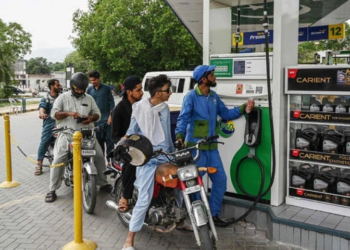
Oil markets remain under pressure, with Brent crude recording a sharp rise during July amid fears of prolonged disruption to global energy supplies. Shipping through both the Strait of Hormuz and the Bab el-Mandeb has also faced increasing security risks following threats by Yemen’s Houthi movement and recent maritime incidents near Oman.
The latest diplomatic contacts signal renewed efforts to avoid a wider regional conflict, although deep differences between Washington and Tehran continue to cast uncertainty over the prospects for a lasting agreement.