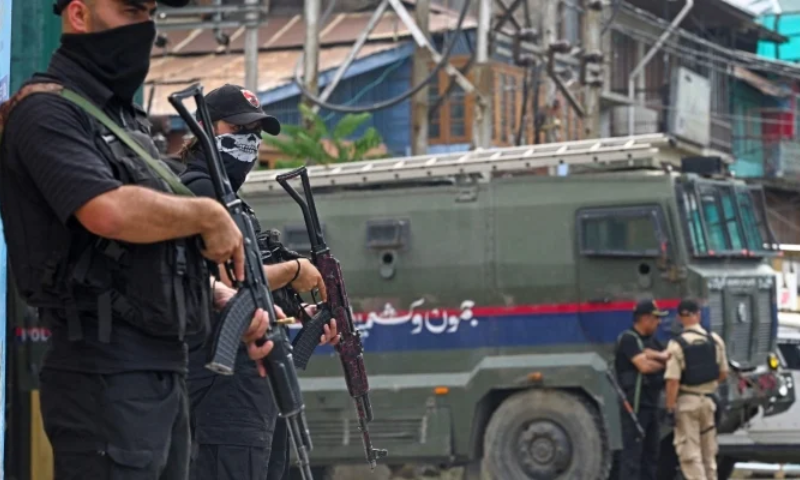
New Delhi, August 15, 2026: India’s Independence Day was marked by protest demonstrations, shutdowns and boycott calls in Indian Illegally Occupied Jammu and Kashmir (IIOJK) and several northeastern states, with various political and regional groups observing the occasion as a “Black Day.”
According to media reports, calls for complete shutdowns and boycotts were issued by political and community groups in IIOJK, as well as by Sikh and northeastern organisations, highlighting continuing political and regional grievances within India.
The developments also coincided with the absence of senior opposition leaders, including Congress President Mallikarjun Kharge and Leader of the Opposition Rahul Gandhi, from the official Independence Day ceremony led by Prime Minister Narendra Modi. Their absence was reportedly linked to political differences and disputes over seating arrangements.
Several insurgent and nationalist organisations in Assam, Nagaland, Manipur and Arunachal Pradesh called for shutdowns and boycotts of official Independence Day celebrations.
In Nagaland, nationalist groups observed August 14 as their 80th Independence Day, recalling the Naga National Council’s declaration of independence in 1947.
Naga political groups have continued to assert a distinct historical and political identity, including demands concerning sovereignty, a separate flag and constitution. They have also referred to the 1951 Naga plebiscite as a basis for their claim to self-determination.
Reports said videos circulated on social media showing young people protesting against the Indian national flag, while senior Naga leader Thuingaleng Muivah reiterated opposition to compromising on issues of sovereignty, the Naga flag and a separate constitution.
The Naga Students’ Federation also opposed the mandatory singing of “Vande Mataram”, citing concerns related to religious freedom and freedom of conscience.
In Manipur, several umbrella organisations, including the Coordination Committee representing six groups, the Socialist Revolutionary Party and the Alliance for Socialist Unity Kangleipak, reportedly enforced a 12-hour general strike.
Black flags were displayed in several areas during the shutdown, according to reports.
In Assam and neighbouring border areas, organisations including ULFA (Independent) and the NSCN also called for shutdowns, describing Indian administrative control as a form of “colonial occupation”.
Indian authorities deployed additional security personnel around sensitive installations and areas in Upper Assam and border regions of Arunachal Pradesh following the boycott calls.
In IIOJK, calls for a shutdown and boycott of Independence Day celebrations were also reported, reflecting longstanding political opposition to Indian rule in the disputed territory.
The protests and boycott calls across Kashmir and northeastern India have renewed debate over New Delhi’s claims of national unity and integration.
Analysts cited in the reports argued that widespread black-flag displays, non-participation and civil resistance indicate that national cohesion cannot be achieved solely through security deployments, military displays or official ceremonies.
They said lasting unity requires political consent, respect for regional and cultural identities and meaningful engagement with communities expressing grievances, rather than relying on coercive measures or forced assimilation.