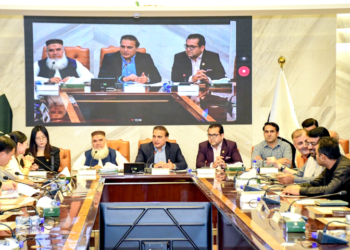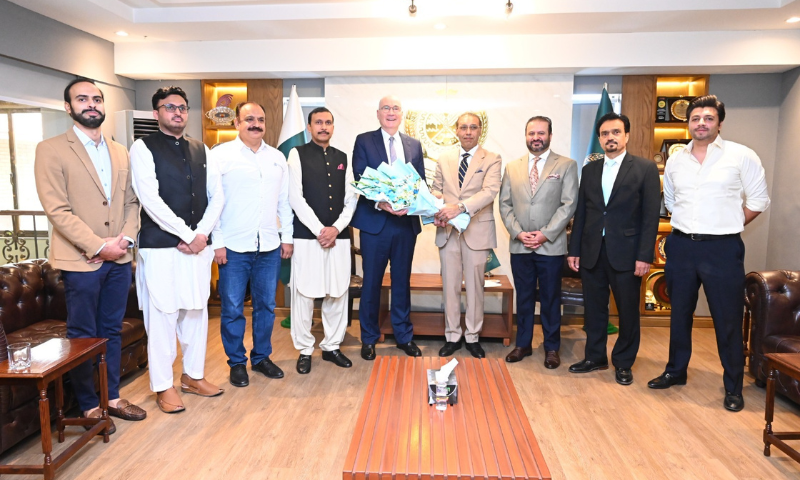
Rawalpindi, August 27, 2026: Australian High Commissioner to Pakistan Timothy Kane on Thursday visited the Rawalpindi Chamber of Commerce and Industry (RCCI), where discussions focused on expanding bilateral trade, investment and people-to-people ties between Pakistan and Australia.
RCCI President Usman Shaukat, along with Vice President Fahad Barlas, welcomed the Australian envoy during his visit. RCCI Director Trade and Education Azhar Shah also attended the meeting.
President Shaukat briefed the High Commissioner on the chamber’s major events and upcoming activities, highlighting its efforts to promote trade, investment and business linkages.
He identified pharmaceuticals, information technology, gems and mining, agriculture and livestock, education and vocational training as key sectors offering significant opportunities for increased cooperation between the two countries.
Speaking at the meeting, High Commissioner Kane emphasised the longstanding people-to-people ties between Australia and Pakistan and highlighted the potential for stronger bilateral collaboration in food security, water management, climate resilience and education.
Kane noted that more than 22,000 Pakistani students are currently enrolled in Australia, describing the figure as a reflection of the strong educational and people-to-people connections between the two countries.
He also highlighted more than four decades of cooperation between Australia and Pakistan in the agricultural sector, underscoring the depth and continuity of bilateral collaboration in an area of importance to both countries.
The meeting provided an opportunity for the business community and Australian diplomatic representatives to explore avenues for expanding economic engagement, developing commercial linkages and promoting cooperation in emerging areas of mutual interest.
The RCCI leadership expressed its interest in strengthening engagement with Australian businesses and institutions to facilitate greater trade and investment opportunities for Pakistani enterprises.
The discussions also underscored the potential for enhanced cooperation beyond traditional economic sectors, particularly in education, skills development, climate resilience and sustainable management of natural resources.