Islamabad, September 8, 2026: The Senate Sub-Committee on Devolution has called for a fresh review by the Council of Common Interests (CCI) of the proposed privatisation of power distribution companies (DISCOs), while directing the federal government to implement the constitutional framework of provincial autonomy and transfer devolved functions to the provinces.
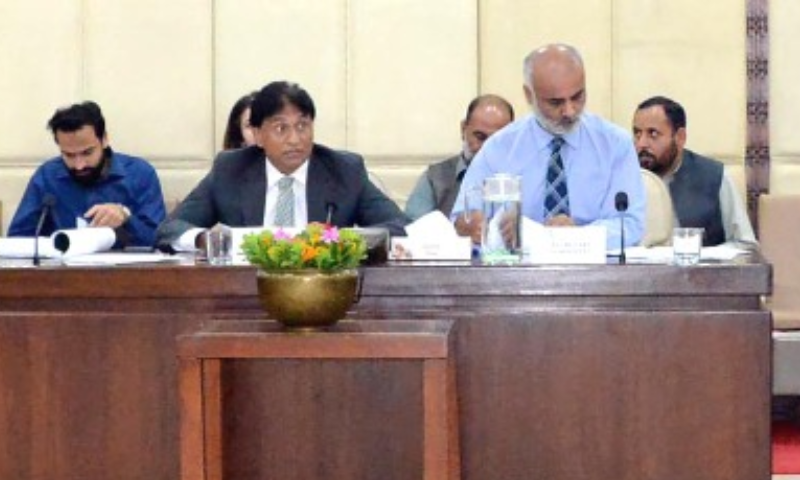
The sub-committee, convened by Senator Zamir Hussain Ghumro, met at Parliament House on Tuesday and examined the proposed privatisation of DISCOs, the continued existence of federal ministries dealing with devolved subjects, provincial control over police and media functions, ownership of oil and gas resources and the status of the Capital Administration and Development Division (CAAD).
The meeting was attended by Senators Jan Muhammad Buledi and Poonjo Bheel, along with senior officials from the Ministry of Information and Broadcasting, Establishment Division, Cabinet Division, Privatization Division and Power Division.
The convener expressed serious displeasure over the absence of the Secretary Cabinet Division and warned that continued absence of responsible officials from parliamentary proceedings could result in the matter being reported to the Prime Minister.
The committee examined the proposed privatisation of power distribution companies and questioned the rationale for transferring distribution services to private entities, particularly in areas where recovery rates were already high.
Officials informed the committee that recovery rates stood at 100 per cent in Islamabad, 98 per cent in Faisalabad and 99 per cent in Lahore.
The committee was also informed that the federal government was pursuing privatisation of power distribution companies falling within its jurisdiction and that the matter had previously been considered by the CCI in 2011.
Senator Ghumro argued that power distribution should be dealt with in accordance with the constitutional scheme of devolution and provincial autonomy. Referring to Article 157 of the Constitution, he said provincial governments had constitutional responsibilities relating to electricity distribution, tariffs, consumption taxes, transmission lines, power houses and grid stations.
The committee recommended that the proposed privatisation of DISCOs be placed before the CCI afresh for consideration and an appropriate decision.
Senator Jan Muhammad Buledi observed that the 2011 CCI decision could not be treated as conclusive because the CCI had been reconstituted several times since then.
The sub-committee also examined the continued existence of federal ministries and institutions dealing with subjects devolved to the provinces following the 18th Constitutional Amendment.
Senator Ghumro said several ministries and functions had been recreated at the federal level despite earlier decisions aimed at implementing constitutional devolution.
The committee rejected the Cabinet Division’s explanation that such ministries had been retained for coordination and international commitments. It recalled that the same justification had already been rejected during its previous proceedings.
The committee said 24 federal ministries and institutions dealing with provincial matters and subjects falling within the CCI domain could be abolished and directed the Cabinet Division to bring the matter to the Prime Minister’s notice and submit a fresh compliance report.
Senator Ghumro said the federal government was spending around Rs19 trillion against total tax and non-tax revenue of approximately Rs20 trillion, arguing that retaining unnecessary federal institutions was placing an unsustainable burden on public finances.
He warned that any continued deviation from the constitutional devolution framework would amount to misuse of authority and wastage of public funds.
The committee proposed retaining at the Centre only ministries dealing with genuinely federal subjects, including Defence, Foreign Affairs, Finance, Commerce, Communications, Maritime Affairs, Science and Technology, Law and Justice and Parliamentary Affairs, in line with the Federal Legislative List.
The government was directed to implement the proposed devolution framework and submit a compliance report within two weeks.
The committee also questioned the role of the Establishment Division in the promotion and service affairs of police officers serving in the provinces.
Senator Ghumro said police was exclusively a provincial subject after the omission of Entry No. 16 relating to police from the erstwhile Concurrent Legislative List.
The committee directed the Establishment Division to transfer all relevant police matters to the provinces and submit a compliance report within two weeks.
The sub-committee was informed by representatives of all four provincial governments that they required broadcasting and telecasting functions.
The committee directed the Ministry of Information and Broadcasting to examine the transfer of broadcasting and telecasting powers to the provinces in accordance with Article 159 of the Constitution.
It also called for the transfer of print media-related functions, including those associated with the Audit Bureau of Circulations (ABC), to the provinces, arguing that the relevant entry had been omitted from the Concurrent Legislative List.
The ministry assured the committee that there was no complaint regarding the provision of advertisements to Dawn newspaper. The committee sought a compliance report within two weeks.
The committee also took up the issue of equal and joint ownership of mineral oil and natural gas by the provinces and the federal government under Article 172(3) of the Constitution.
Senator Ghumro expressed concern that commitments made during previous proceedings had not been adequately implemented and alleged that provinces had not received due representation on relevant boards or their appropriate share in ownership and profits.
He said a letter had previously been issued to the provinces regarding representation on boards of directors and allocation of shares in oil and gas companies, including Pakistan Petroleum Limited (PPL).
However, the committee noted that a recent letter regarding the constitution of PPL’s board did not invite nominations from the provinces.
The committee termed the development a violation of assurances given to the parliamentary forum as well as the constitutional provisions governing joint ownership of natural resources.
Taking serious notice of the matter, the committee said a breach of privilege could be initiated against the Secretary and Special Secretary concerned.
The status of the Capital Administration and Development Division also came under discussion.
Senator Ghumro noted that CAAD had been established through a notification on March 31, 2011, and that following its abolition, federal ministries and departments had assumed responsibility for education, health and other public services in Islamabad.
He expressed concern over the performance of the federal government in providing public services to residents of the capital and recommended consideration of restoring CAAD.
The committee was also informed that the CCI Secretariat had moved a summary seeking a meeting and reconstitution of the Council in accordance with the committee’s directions, but the summary was still pending with the Prime Minister.
The sub-committee decided to send a fresh letter to the Prime Minister regarding the transfer of CCI-related matters to its permanent secretariat, where divisions and departments could be created with accountability to Parliament.
The committee was also briefed by the Managing Director of Thar Coal on the operational status of coal-based power plants.
Members were informed that six Thar coal power plants were currently operational. Four were operating entirely on Thar coal, while the remaining two were using Thar coal for 33 per cent and 20 per cent of their fuel requirements respectively.
The committee decided to summon the Thar Coal Energy Board and the chief executive officer of the relevant Thar power plant at its next meeting for a detailed briefing.
The sub-committee reiterated that the constitutional framework of federalism, provincial autonomy and devolution must be implemented in its true spirit, stressing that all provinces should receive their constitutionally guaranteed rights, representation and ownership.