

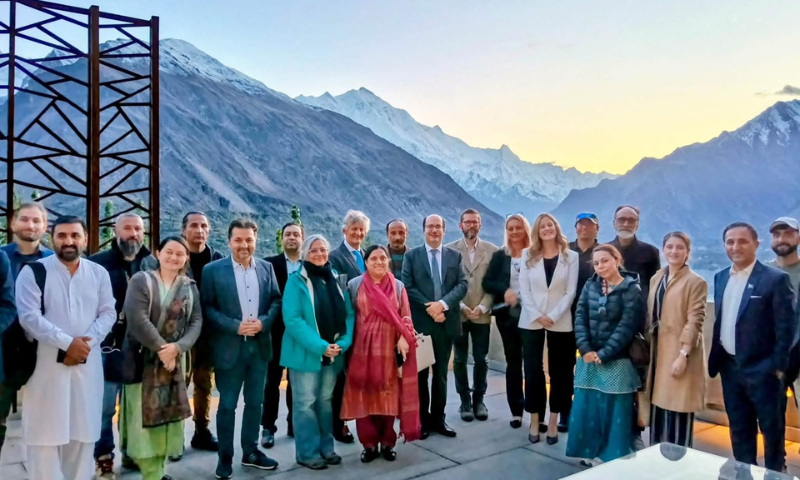
Karimabad, October 18,2026: A photography exhibition featuring historic images of Hunza captured by renowned Hungarian-British archaeologist and explorer Sir Marc Aurel Stein between 1900 and 1930 offered visitors a rare glimpse into the valley’s cultural heritage, landscapes and transformation over the past century.
Held in Karimabad on October 16, the exhibition brought archival photographs from the Stein Collection, preserved at the Library of the Hungarian Academy of Sciences, to the public, showcasing Hunza as it appeared more than a century ago.
A major highlight was the presentation of Stein’s historical photographs alongside contemporary images captured by local photographers Ejaz Karim and Sohrab Ullah Baig. The comparative displays allowed visitors to observe changes in the valley’s landscapes and settlements over time while appreciating the natural beauty that continues to define the region.
The exhibition also featured rare portraits of Hunza’s residents taken by Stein, providing valuable insights into the appearance, lifestyles and cultural identity of local communities during the early decades of the 20th century, when photography was far less accessible than it is today.
The initiative was made possible through the support of Máté Rottár, Executive Head of the Department of the Oriental Collection at the Library and Information Centre of the Hungarian Academy of Sciences. He digitised the historical photographs and made them available for presentation in Karimabad, helping bring the valuable archival collection to a wider audience.
The exhibition offered residents and visitors an opportunity to explore Hunza’s past through the work of an internationally recognised explorer and compare historical records with contemporary views of the valley.
By bringing archival and modern photography together, the exhibition highlighted the importance of preserving historical collections and documenting cultural heritage for future generations. It also demonstrated how Hunza has evolved over the decades while retaining much of its distinctive character and cultural identity.