Narowal, August 28, 2025: Prime Minister Muhammad Shehbaz Sharif on Thursday underscored the urgent need for building new water storage infrastructure to minimise the devastating impact of flash floods and safeguard lives and livelihoods, as torrential monsoon rains and river overflows continue to inundate vast swathes of Punjab.
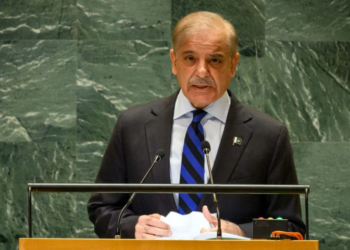
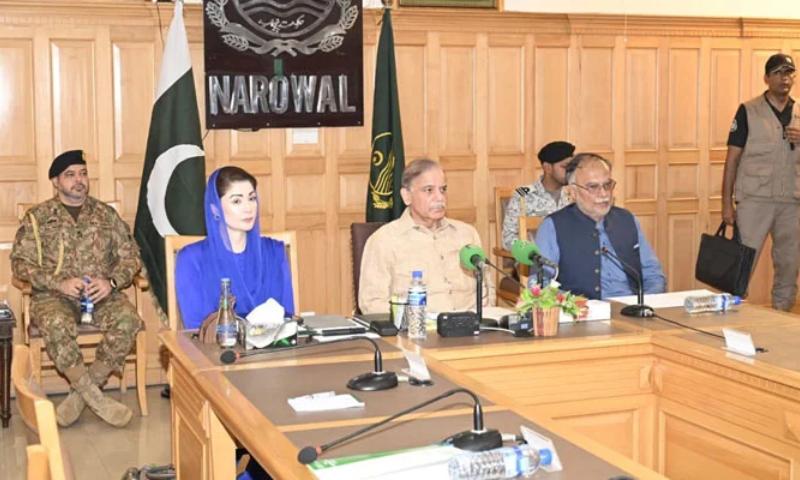
Speaking at a high-level review meeting during his visit to flood-hit Narowal, the prime minister said that increasing storage capacity was now “the need of the hour” and urged that work on dams and reservoirs must begin without further delay. “Without wasting any more time, we should start work in this regard. We will have to generate the resources by ourselves,” he said, stressing the importance of speeding up projects such as the Diamer-Bhasha Dam.
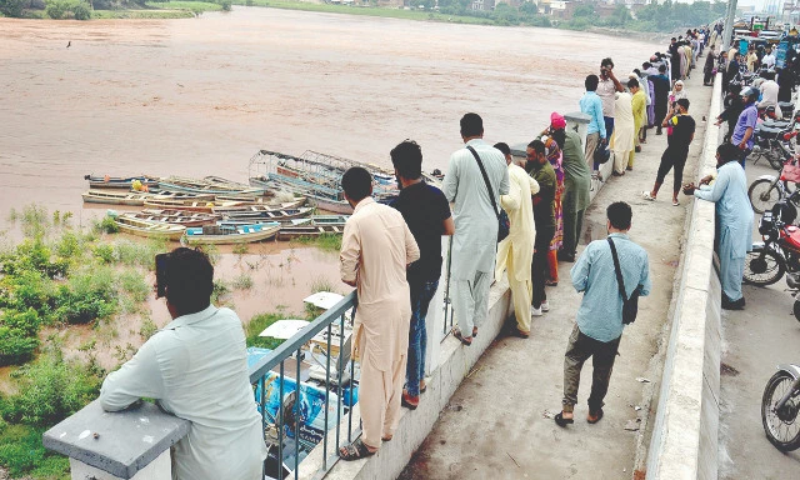
Pakistan is reeling from weeks of torrential rains that have unleashed flash floods, swelled rivers, and filled dams, with more than 800 deaths reported nationwide since late June. The National Disaster Management Authority (NDMA) said that over 210,000 people have been evacuated from low-lying villages along the Ravi, Sutlej, and Chenab rivers.
Officials confirmed that at least 45 people have died across Punjab in recent days, including five members of a family in Sambrial, Sialkot. Dozens remain missing, while more than 600,000 people have been affected, 769 villages submerged, millions of acres of farmland destroyed, and 35,000 livestock lost.
The worsening crisis follows India’s release of excess water from its eastern rivers this week. New Delhi issued three flood warnings for Pakistan in four days — two for the Ravi and one for the Sutlej — raising inflows that have inundated towns and villages downstream.
PM Shehbaz expressed deep sorrow over the loss of lives and property, noting that while floods first struck northern Pakistan, they are now wreaking havoc across the plains of Punjab. He praised the coordinated response of Punjab Chief Minister Maryam Nawaz, NDMA, PDMA, the Pakistan Army, and civil departments for “minimising losses through timely evacuations and relief efforts.”
Chief Minister Maryam Nawaz, addressing the meeting, confirmed that over 50,000 people were rescued through joint operations and that swift evacuations had minimised livestock losses. She said more than 200km of roads have been damaged and ordered immediate restoration of temporary routes to maintain connectivity.
Maryam also announced the activation of field hospitals, diversion of 1,000 mobile clinics to affected areas, and ensured vaccine availability with a focus on women, children, and the elderly. Relief operations are being reinforced through 263 relief camps and 161 medical camps set up across the province.
In Narowal, floodwaters entered the historic Gurdwara Darbar Sahib Kartarpur, submerging its grounds. The chief minister directed authorities to drain the site urgently. Over 150 pilgrims and staff trapped earlier were rescued with the assistance of emergency teams.
The NDMA chief, Lt. Gen. Inam Haider, briefed the prime minister on the flood situation, warning that sustained inflows in the Ravi, Chenab, and Sutlej rivers pose continuing threats to downstream districts in the coming days.
Recalling the devastating 2022 floods that ravaged Sindh and Balochistan, PM Shehbaz warned that Pakistan — among the ten countries most vulnerable to climate change — must adopt short-, medium-, and long-term strategies to confront recurring disasters. “Robust decision-making and resilience-building are essential if we are to protect our people from future catastrophes,” he said.