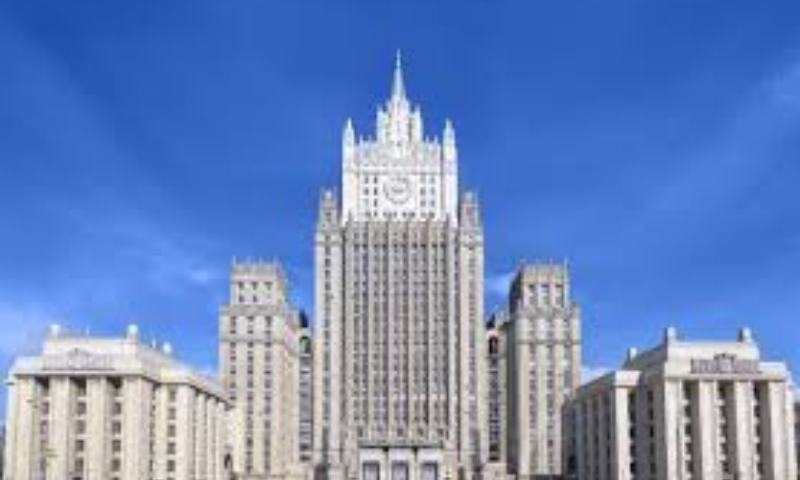
Moscow, December 31,2025: Russia on Wednesday outlined the key outcomes of its foreign policy in 2025, highlighting what it described as decisive steps to strengthen the foundations of a just multipolar world order based on international law and cooperation among states.
According to an official overview, Moscow focused during the year on safeguarding its vital national interests abroad, with particular emphasis on the Commonwealth of Independent States (CIS) and the broader Eurasian region.
The year 2025 also marked the 80th anniversary of the Great Victory in World War II. Together with like-minded international partners, Russia reaffirmed its commitment to the inviolability of the post-war world order and the principles enshrined in the UN Charter, viewed as an indivisible and interdependent whole. Within the CIS, 2025 was declared the Year of Peace and Unity in the Fight against Nazism.
At Russia’s initiative, a solemn session of the UN General Assembly was held at UN headquarters in New York in May to commemorate the victims of World War II. In December, the General Assembly adopted an annual resolution on combating the glorification of Nazism and neo-Nazism, co-sponsored by 44 countries.
Russia said its comprehensive partnership and strategic interaction with China received a strong boost in 2025, supported by active leader-level diplomacy between President Vladimir Putin and President Xi Jinping, including reciprocal visits to Moscow in May and Beijing in September.
Following the inauguration of a new US administration in January, political dialogue between Moscow and Washington was restored at the highest level. During the Russia–US summit held in Anchorage on August 15, understandings were reportedly reached that could serve as a basis for resolving the Ukraine conflict by addressing what Russia describes as its root causes, including NATO expansion and issues related to the rights of Russian and Russian-speaking populations.
Relations with North Korea entered what Russia termed a new phase, with the Democratic People’s Republic of Korea providing allied assistance in the liberation of the Kursk Region from Ukrainian militants and contributing to the restoration of peaceful life there, in line with the Comprehensive Strategic Partnership Treaty.
A new stage in Russia–Iran relations was also marked by the signing of a Comprehensive Strategic Partnership Treaty in January, which entered into force in October.
Moscow reported tangible progress in supporting Eurasian integration processes. Within the Collective Security Treaty Organisation (CSTO), priority tasks were identified for implementing the collective security strategy, steps were taken to strengthen the combat readiness of collective forces, and an anti-narcotics strategy through 2030 was approved.
At the United Nations, Russia and other members of the Group of Friends in Defence of the UN Charter successfully advanced initiatives leading the General Assembly to proclaim December 14 as the International Day for the Elimination of Colonialism in all its Forms, and December 4 as the International Day for Combatting Unilateral Coercive Measures.
Russia also highlighted measures aimed at protecting Orthodox Christianity and other traditional religions, which it said created favourable conditions for the resettlement of foreign nationals — including from countries with unfriendly governments — under a presidential decree on humanitarian support for individuals sharing traditional Russian spiritual and moral values.
In addition, efforts to counter what Moscow described as the spread of untruthful information about Russia in foreign print and social media were intensified, including through cooperation with international partners within the International Fact-Checking Network.
Concluding the review, Russia said its firm defence of national interests in relations with countries pursuing hostile policies had forced them to recognise the impossibility of inflicting a “strategic defeat” on Russia and led to the adoption of proposals calling for an immediate cessation of hostilities in the Ukrainian theatre of operations.