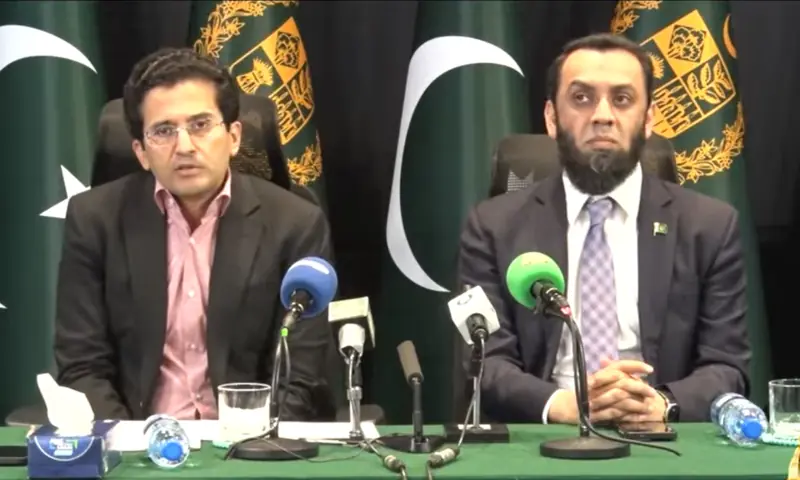
Islamabad, July 17, 2026: The federal government has decided to introduce a daily fuel pricing mechanism in response to volatile international oil markets triggered by the renewed conflict between the United States and Iran, Petroleum Minister Ali Pervaiz Malik announced on Friday.
Addressing a joint press conference with Information Minister Attaullah Tarar, Malik said the Oil and Gas Regulatory Authority (Ogra) would now determine petrol and diesel prices on a daily basis based on international market trends.
“The Cabinet and the prime minister have decided to authorize Ogra to fix fuel prices daily according to movements in the global market,” he said.
Under the new mechanism, Ogra will also publish the pricing formula and the factors influencing daily fuel prices to enhance transparency.
The government has already been revising petroleum prices on a weekly basis since early March following disruptions in global oil supplies caused by the escalating US-Iran conflict. It also introduced targeted fuel subsidies in April to cushion the impact on vulnerable consumers.
Malik acknowledged that the new pricing system could place an additional burden on consumers but said it was necessary to ensure transparency and reflect international market realities.
He said the daily price revisions would be based on a seven-day average of international oil prices, adding that the move was part of broader energy sector deregulation aimed at reducing government intervention in fuel pricing.
The petroleum minister said the government remained committed to providing relief whenever international oil prices declined.
He noted that diesel prices had fallen from a peak of around Rs520 per litre to nearly Rs300, while petrol prices had also witnessed significant reductions when global crude prices eased. He added that petroleum and carbon support levies on petrol and diesel remained below previous levels.
Malik said Prime Minister Shehbaz Sharif had constituted a committee under his leadership to formulate Pakistan’s post-war energy pricing and energy security framework. The committee has already held four meetings and is expected to present its recommendations to the federal cabinet next week.
He said the government was also examining the feasibility of establishing strategic petroleum reserves to strengthen Pakistan’s long-term energy security and reduce dependence on imports. International consultants are assisting in evaluating the country’s storage capacity, investment requirements and possible partnerships with regional energy suppliers.
Highlighting efforts to boost domestic energy production, Malik announced that Turkish Petroleum would resume oil and gas exploration activities in Pakistan in October following Prime Minister Shehbaz Sharif’s recent visit to Türkiye, marking the company’s return after two decades.
Information Minister Attaullah Tarar said Ogra would formally publish the daily pricing formula and reiterated that the government understood the impact of higher fuel prices on the public.
He attributed the surge in international oil prices to the worsening regional security situation but said Pakistan had managed to avoid fuel shortages by maintaining strategic reserves and taking timely policy measures.
Tarar said the government had reduced its development budget to provide Rs129 billion in fuel subsidies during the peak of the crisis, ensuring that consumers were protected from the full impact of international price increases.
Rejecting criticism over petroleum levies, he said the current levy remained at or below pre-war levels and stressed that the government had made conscious efforts to reduce the burden on consumers.
The information minister also emphasized the need for Pakistan to accelerate the transition towards electric vehicles and electric motorcycles to reduce the country’s oil import bill and improve energy security.
He said the government had directed regulatory authorities, including Ogra and the Federal Investigation Agency (FIA), to prevent profiteering, hoarding and market manipulation by oil marketing companies, adding that action had recently been taken against a company found involved in hoarding petroleum products.
Meanwhile, the All Pakistan Petrol Pump Owners’ Association rejected the proposed deregulation policy, warning that it could launch protests and a nationwide strike next week if the government failed to withdraw the decision.
Association Vice Chairman Noman Ali Butt urged the government to consult petrol pump owners and other stakeholders before implementing the new pricing system, saying nearly 15,000 fuel stations across the country would be affected.
Global oil markets have remained volatile after renewed fighting between the United States and Iran disrupted shipping through the Strait of Hormuz, one of the world’s most critical oil transit routes, pushing international crude prices sharply higher.