Tehran, August 14, 2026: Transit through the strategically vital Strait of Hormuz has fallen to near-standstill after two more vessels were attacked while passing through the waterway, as the United States warned that it could maintain its naval blockade of Iran indefinitely and Tehran insisted that commercial shipping would not resume without its approval.
The latest escalation has intensified concerns over global energy supplies and the prospects for a diplomatic settlement to the conflict, with the Strait of Hormuz remaining a major source of leverage for Iran and a critical chokepoint for international oil and liquefied natural gas shipments.
Two vessels belonging to the state-owned Abu Dhabi National Oil Company were attacked while transiting the strait on Thursday evening, according to the United Arab Emirates’ state news agency WAM. The UAE government blamed Iran for the attacks, although Tehran had not immediately issued a response.
Shipping activity through the narrow waterway has declined dramatically since the conflict began. According to ship-tracking company Kpler, only nine vessels passed through the strait on Thursday, compared with five on Wednesday and an August daily average of around 12.
No visible crossings were recorded early Friday, although some vessels may have passed through with their tracking transponders switched off.
The current traffic levels are a fraction of the more than 130 vessels that crossed the Strait of Hormuz each day before the war launched by the United States and Israel against Iran in February.
“Alongside the threat to energy infrastructure in the region, Iran’s ability to restrict shipping through the strait is its main source of leverage in negotiations,” said Torbjorn Solvedt, principal Middle East analyst at risk intelligence firm Verisk Maplecroft.
The United States has signalled that it is prepared for a prolonged confrontation.
US Defence Secretary Pete Hegseth said the US Navy could maintain its blockade of Iranian ports and shipping routes indefinitely by rotating vessels in and out of the region.
“Indefinitely, the United States Navy can maintain a blockade like that because we’ll rotate ships in and out,” Hegseth told reporters during a visit to Panama.
US Treasury Secretary Scott Bessent also warned that Washington was preparing additional economic measures against Tehran.
He said the United States would announce further measures aimed at imposing unprecedented economic pressure on Iran.
The escalating pressure comes as President Donald Trump faces domestic concerns over the economic consequences of the conflict, particularly rising fuel prices, while the war continues to put pressure on his administration ahead of the US midterm elections in November.
Benchmark Brent crude futures were trading at around $87 a barrel, while US West Texas Intermediate crude was around $81 a barrel.
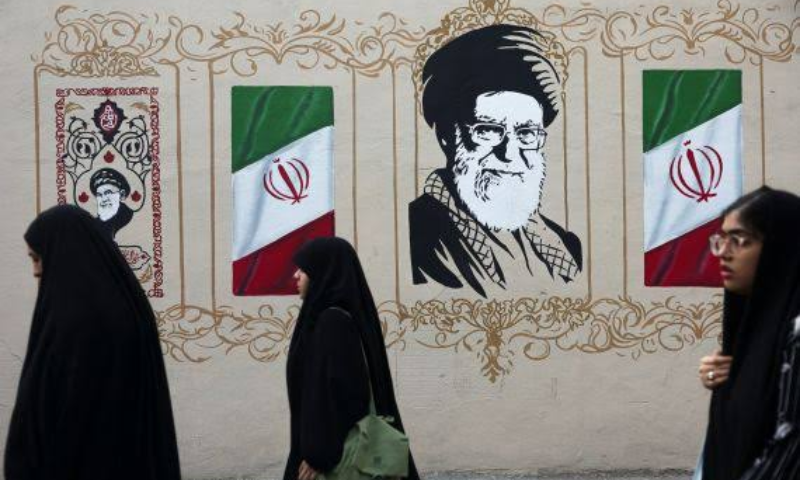
Tehran has repeatedly rejected US claims that Washington has “total control” of the Strait of Hormuz.
Iranian military officials have insisted that the waterway remains under Iranian management and that no commercial vessel or oil tanker can safely pass without the permission and supervision of Iranian forces.
Iran has also said that the strait will not be fully reopened until its conditions are met, including the removal of economic sanctions and the release of frozen Iranian assets.
An Iranian parliamentary committee on Thursday approved a plan for the waterway that reportedly includes restrictions on the transit of US, Israeli and other vessels or equipment deemed hostile by Tehran.
The Iranian position has raised concerns among energy-importing countries, particularly in Asia, which depend heavily on Gulf supplies.
India’s imports of Russian crude surged to a record level in July, while Asian refineries have also moved to secure additional US crude supplies amid uncertainty over future shipments from the Gulf.
Before the conflict, the Strait of Hormuz carried roughly one-fifth of global oil and liquefied natural gas flows, making any prolonged disruption potentially damaging to energy markets and the wider global economy.
The latest attacks come amid a deepening diplomatic impasse between Washington and Tehran.
A senior Iranian source said there had been no progress in efforts to revive and implement a June agreement aimed at ending military operations and establishing a framework for a longer-term settlement.
The agreement had envisaged an immediate end to military operations and a 60-day period, extendable by mutual consent, for negotiations on issues including Iran’s nuclear programme and the lifting of US sanctions.
However, the arrangement subsequently broke down, with Washington accusing Tehran of failing to fulfil commitments concerning the reopening of the Strait of Hormuz, while Iran accused the United States of violating its own obligations, including the lifting of its blockade of Iranian ports and the release of frozen assets.
Iranian officials have also rejected reports that the 60-day period could be extended, arguing that the agreement had already been violated and therefore there was no remaining period to extend.
The disruption to shipping is already increasing costs for international companies and adding pressure to global energy markets.
German shipping giant Hapag-Lloyd has reported around $600 million in additional costs during the second quarter as a result of the Middle East conflict, including higher bunker fuel, insurance, storage, rerouting and inland transportation expenses.
The company said the disruption to the Strait of Hormuz had significantly increased operating costs, although strong Asian exports and improved US demand helped offset some of the impact.
Meanwhile, concerns about the conflict spreading beyond Iran and the Gulf have increased after reports that Yemen’s Houthi movement targeted a Saudi Aramco refinery with drones on Thursday.
Global economists have warned that a prolonged conflict could sharply reduce global economic growth and potentially push some economies into recession.
With the Strait of Hormuz accounting for a major share of global energy shipments, continued attacks and restrictions could further disrupt oil and gas supplies, raise transportation and insurance costs and intensify inflationary pressures worldwide.
For now, the central issue remains whether Washington and Tehran can restore a diplomatic process capable of reopening the waterway. Until then, the sharp decline in shipping traffic through Hormuz is likely to remain one of the most visible and economically consequential consequences of the conflict.