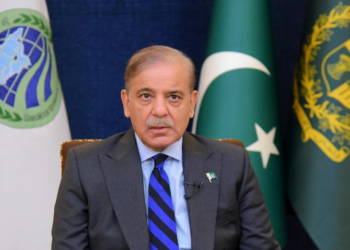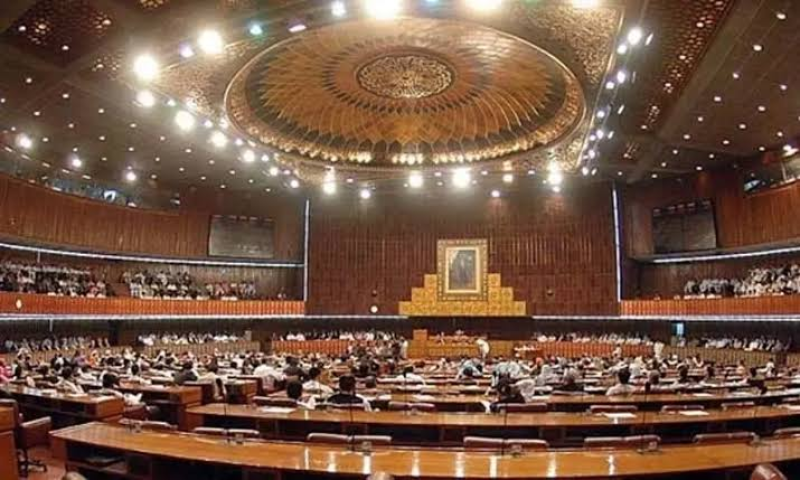
Islamabad, August 20, 2026: The National Assembly on Thursday passed two key pieces of legislation relating to Pakistan’s military and nuclear command structure amid an opposition walkout and objections from the Pakistan Peoples Party (PPP), a major ally of the ruling Pakistan Muslim League-Nawaz (PML-N).
Defence Minister Khawaja Asif presented the Defence Forces of Pakistan Act, 2026 and amendments to the National Command Authority Act, 2010, after which opposition lawmakers staged a walkout from the House.
PPP Chairman Bilawal Bhutto-Zardari also objected to the manner in which the legislation was brought before the House, although PPP lawmakers subsequently voted in favour of both bills.
Speaking on the floor of the National Assembly, Bilawal said he supported the legislation but disagreed with the way it had been presented without adequately consulting the ruling coalition partners.
“I personally apologise for what is happening to you,” Bilawal said, referring to Prime Minister Shehbaz Sharif, the ruling allies and the opposition. He questioned why legislation that was not inherently controversial was being made controversial through the manner in which it was introduced.
“The legislation is not controversial, but why is such legislation being made controversially?” he asked.
The two bills had not been included in the National Assembly’s agenda for Thursday. They were approved earlier in the day by the federal cabinet at a meeting chaired by Prime Minister Shehbaz Sharif.
The prime minister was present in the National Assembly when the bills were introduced and left the House after their approval.
The session was subsequently adjourned until 11am on Friday.
According to a statement issued by the Prime Minister’s Office following the cabinet meeting, the legislation had been prepared as a continuation of changes introduced through the 27th Constitutional Amendment.
The Defence Forces of Pakistan Act, 2026 seeks to provide the legal framework for administrative matters relating to the office of the Chief of Defence Forces (CDF) and the Defence Forces Headquarters.
The amendments to the National Command Authority Act, 2010, meanwhile, have been described by the government as necessary to bring the existing law into line with the new constitutional and military command structure established after the 27th Amendment.
The 27th Constitutional Amendment, enacted in November 2025, significantly reshaped Pakistan’s higher defence architecture by abolishing the office of Chairman Joint Chiefs of Staff Committee and creating the position of Chief of Defence Forces, a position concurrently held by the Chief of Army Staff.
Field Marshal Asim Munir became the country’s first Chief of Defence Forces following the constitutional changes.
The amendment also created the position of Commander of the National Strategic Command (CNSC), a four-star post responsible for the operational integration of Pakistan’s strategic forces.
Last month, Prime Minister Shehbaz Sharif promoted Lieutenant General Syed Aamer Raza to the rank of general and appointed him as the country’s first CNSC.
The changes necessitated amendments to the National Command Authority Act, 2010, which continued to reflect the military command structure that existed before the 27th Constitutional Amendment.
New Defence Forces Headquarters
The Defence Forces of Pakistan Act, 2026 provides for the establishment of a Defence Forces Headquarters to serve as the headquarters of the armed forces.
Under the legislation, the headquarters will operate under the command of the Chief of Defence Forces, who will serve as the principal military adviser to the prime minister on national security, defence and matters relating to the armed forces.
The CDF will exercise operational command and control of the armed forces and will be responsible to the federal government for matters concerning command and control.
The legislation assigns the CDF powers and functions relating to multidomain integration, operational cohesion, coordination and oversight of matters having joint, tri-services and strategic implications for the armed forces and Pakistan’s national security.
The CDF will also have specified powers concerning personnel serving under the armed forces laws, including matters relating to retirement, release, resignation, discharge and retention in service, subject to constitutional provisions governing certain appointments.
The law further allows the federal government and the CDF to issue instructions and amend relevant rules and regulations to ensure implementation of its provisions.
Where difficulties or inconsistencies arise in implementing the legislation, the president may issue an order to remove such difficulties.
Speaker suspends proceedings over absence of officials
Earlier in the day, National Assembly Speaker Ayaz Sadiq suspended proceedings for 15 minutes after several ministers and parliamentary secretaries were absent during question hour.
The speaker expressed displeasure over the absence of officials and questioned whether parliamentary proceedings were being taken seriously.
“If you are not going to take parliamentary business seriously, then there is no point in holding the question hour,” he remarked.
He particularly criticised the absence of an official from the Ministry of Inter-Provincial Coordination and directed that the ministry’s secretary be summoned along with other relevant officials.
The speaker warned that if officials continued to remain absent, a privilege motion could be moved against the minister for Parliamentary Affairs and the concerned official.
The proceedings were suspended to allow the officials concerned to arrive before the House resumed its business.