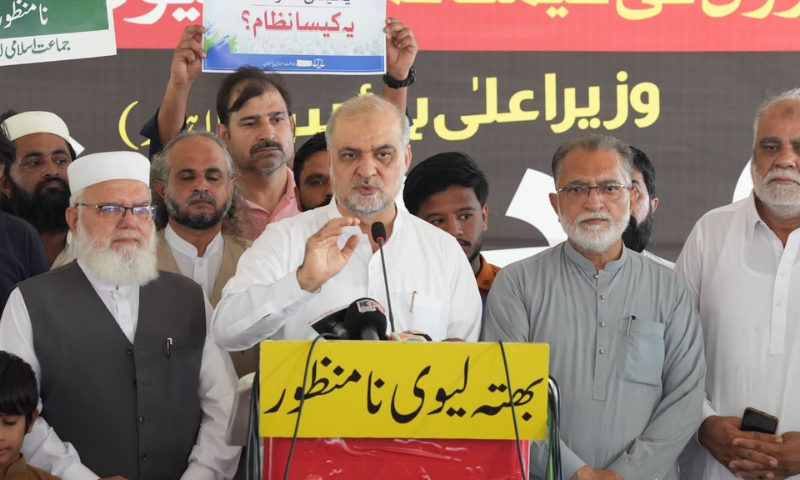
Lahore, August 23, 2026: Jamaat-e-Islami (JI) Pakistan Emir Hafiz Naeemur Rehman on Sunday announced a nationwide shutter-down strike after 12th Rabi ul Awal as the party’s sit-ins in provincial capitals against the petroleum levy entered their eighth day.
Addressing a press conference in Lahore, Hafiz Naeem said the JI’s campaign was progressing “in the best possible manner” and demanded that the federal government reduce petroleum product prices.
The JI chief said the country could not make progress in the presence of flour and sugar mafias, while farmers were also facing difficulties in obtaining fertiliser at affordable prices.
“Government officials are driving expensive vehicles with our money,” he said, criticising what he described as excessive government spending.
Hafiz Naeem said the party would launch a nationwide shutter-down strike after Eid Milad un Nabi, making it clear that its protest campaign would not end merely on government assurances.
He said negotiations would no longer be conducted on the basis of government requests for protesters to end their sit-ins in return for promises to meet their demands.
“The sit-in will end only when the government implements our demands in practical terms,” he said.
The announcement comes as JI supporters continue sit-ins in major provincial capitals over rising petroleum prices and the impact of fuel costs on household budgets and the wider economy.
The protests began on August 16 outside the Punjab chief minister’s residence in Lahore and at governor houses in Karachi, Quetta and Peshawar. The demonstrations have focused primarily on the petroleum levy, fuel prices and the broader cost-of-living crisis.
The 12th of Rabi ul Awal, which falls on August 26 this year, marks Eid Milad un Nabi (PBUH), commemorating the birth of Prophet Muhammad (PBUH).
The federal government is facing growing pressure over successive fuel price increases and their impact on inflation. The pressure has intensified after authorities shifted from a 15-day fuel price review mechanism to a daily system amid volatility in international oil prices following renewed hostilities in the Middle East.
The fuel price dispute has also prompted separate protests and demands from transporters and petroleum dealers.
Earlier this week, the All Pakistan Goods Transport Alliance suspended its nine-day nationwide strike for 40 days after receiving assurances from the federal and Sindh governments on key demands, including petroleum pricing.
The Pakistan Petroleum Dealers Association had also issued a 72-hour ultimatum to the government earlier this month, calling for the resolution of outstanding issues and implementation of commitments made by the petroleum minister.