Dubai, September 3, 2026: The conflict between the United States and Iran intensified on Thursday as Washington confirmed that 18 people had been killed in recent US strikes on Iran, while Tehran launched missile and drone attacks against US military positions in Kuwait and the United Arab Emirates and warned that any further American attack would trigger an “asymmetric” and “multi-layered” response.
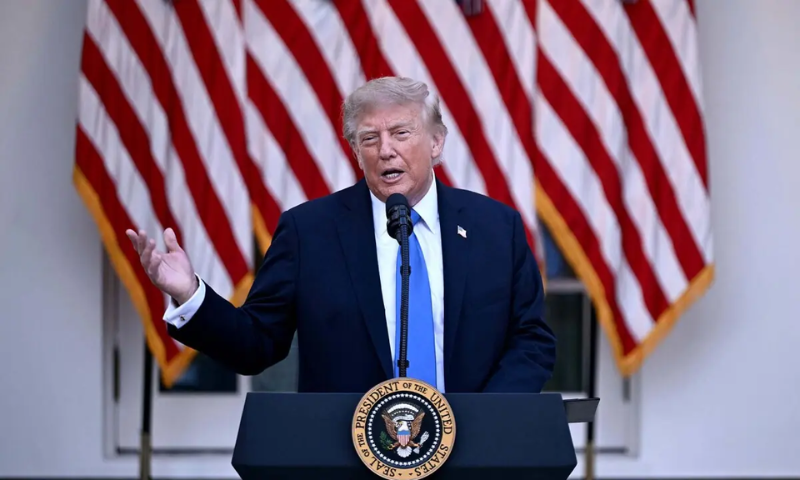
US President Donald Trump confirmed the death toll in a post on Truth Social, clarifying earlier remarks by US Commerce Secretary Howard Lutnick, who had said that no one had been killed.
Trump said Lutnick had been referring to Venezuela when making the earlier statement.
Iranian authorities separately reported casualties from the latest US attacks. The Iranian Health Ministry said at least 18 people had been killed and 142 injured in US airstrikes between the evenings of August 30 and September 2.
The reported Iranian fatalities included four people in Sirik, seven in Khuzestan, four members of the Islamic Revolutionary Guard Corps Aerospace Force in Kermanshah and three Basij members on Lavan Island. Iranian officials also said at least 50 people were wounded when a wedding gathering in Sirik was hit.
Iran’s state-run IRNA separately reported that an Iranian Navy serviceman, Amirhossein Salimzadeh, was killed while on duty during US attacks in Khuzestan on September 1.
The Iranian Navy also said six naval personnel were killed in US attacks in the south of the country on September 1, according to the semi-official ISNA news agency.
Iran’s First Vice President Mohammad Reza Aref warned Washington that Tehran had changed its security calculations and defence doctrine following the latest US attacks.
“The recent US crimes against the Iranian nation have changed our security calculations and defence doctrine,” Aref said in a post on X.
He warned that Iran’s future response would be “asymmetric” and “multi-layered”, with the objective of depriving any aggressor of security.
Aref also warned of economic repercussions for the United States, saying Washington should consider the consequences for its fuel supplies.
“The Americans should think about stockpiling gasoline and fuel; dark months await the American economy,” he said.
Iran’s military said it carried out missile and drone attacks against US military installations in Kuwait and the United Arab Emirates early Thursday as part of the 31st phase of its Operation Saeqeh.
The Iranian army claimed missiles and attack drones targeted satellite communications systems, equipment warehouses and fighter jet hangars at Ahmed Al Jaber Air Base in Kuwait.
It also said US troop positions and radar systems at Al Minhad Air Base in the UAE were targeted by missiles and drones.
Iranian officials vowed to continue military operations in response to US attacks on Iranian territory.
Kuwait confirmed that its air-defence systems were responding to missile and drone threats from Iran.
“Kuwaiti air defences are currently responding to hostile missile and drone threats,” the General Staff of the Kuwaiti Armed Forces said, urging the public to follow official safety instructions.
Kuwait’s Foreign Ministry condemned the Iranian strikes as a direct threat to the country’s security and stability and a serious violation of international law.
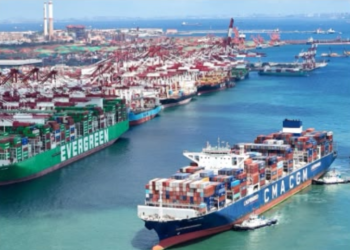
The Strait of Hormuz has emerged as the central flashpoint in the widening conflict, with Iran maintaining that the strategic waterway cannot be reopened without Tehran’s consent.
Ebrahim Azizi, chairman of Iran’s parliamentary National Security and Foreign Policy Commission, said the strait would not be opened without Iranian approval, arguing that Tehran had demonstrated its ability to make its threats credible.
Iranian military officials also claimed that additional naval mines had been laid in the waterway.
Ebrahim Zolfaghari, spokesman for Iran’s Khatam al-Anbiya Central Headquarters, said additional mines had been deployed along what he described as illicit routes south of the Strait of Hormuz during an overnight operation.
Zolfaghari mocked Trump’s suggestion that the waterway could be renamed the “Trump Strait”, saying the US military could apparently only rename the strait “using Photoshop”.
He also sarcastically suggested that Washington could use Photoshop to get oil tankers through the passage.
The latest claims come amid conflicting assertions over control of the strategic waterway. US Central Command has previously said transit routes had been cleared of sea mines and dismissed reports of tankers striking mines as disinformation.
Trump has also claimed that the United States now controls the Strait of Hormuz and said all mines had been removed, while warning of a “zero tolerance policy” towards any new mine-laying.
Iran has maintained deliberate ambiguity over the location of minefields, saying only Iranian forces know their exact positions.
The United States has simultaneously stepped up efforts to keep commercial shipping moving through the strategic waterway.
According to a CNN report, US forces escorted 40 commercial vessels carrying approximately 18 million barrels of oil through the Strait of Hormuz on Tuesday, marking a wartime high for the operation.
US officials cited by the network said American forces struck nearly 60 Iranian military targets around the waterway during the operation, including air-defence systems, radar installations, maritime assets, mine-laying capabilities and communications facilities.
Several Iranian anti-ship cruise missiles were also reportedly destroyed.
Before the conflict began more than six months ago, approximately 20 million barrels of oil passed through the Strait of Hormuz each day. US Energy Secretary Chris Wright said more than 17 million barrels passed through the waterway on Monday.
US military officials are reportedly anticipating additional strikes around the strait in the coming days, arguing that Iranian forces have demonstrated an ability to rebuild their military capabilities rapidly.
Trump has declared US dominance over the waterway, saying, “We now control the Strait of Hormuz.”
Iran, however, has rejected the claim and maintained that the strait will remain closed or heavily restricted until Washington meets conditions linked to an interim agreement reached in June.
The Iranian Red Crescent Society has called on the International Criminal Court to investigate a US missile strike that reportedly hit a wedding gathering in the southern town of Kuhestak.
According to Al Jazeera, the attack killed at least four people and wounded dozens.
Iranian officials have portrayed the incident as part of the civilian toll from the latest US military campaign, while the call for an international investigation is likely to further intensify diplomatic and legal pressure on Washington.
Despite the military escalation and mounting economic pressure, Iran has continued to generate substantial oil revenues.
The semi-official Fars News Agency reported that more than $1 billion in oil-related foreign currency entered Iran during the first 11 days of the period ending September 2.
Citing documents reviewed by its reporters, Fars said the funds had been added to the country’s foreign exchange reserves, potentially strengthening the Central Bank’s ability to meet foreign currency requirements.
The agency also reported that oil sales during the first five months of Iran’s current fiscal year had generated revenue equivalent to more than 80 per cent of the oil income projected in the 2026-27 budget.
Iran’s fiscal year runs from March 21, 2026, to March 20, 2027.
The figures follow data released by Iran’s Oil Ministry in late August indicating that $7.5 billion in foreign currency generated from oil sales during the first four months of the fiscal year had been transferred to the Central Bank.
Amid the escalating military confrontation, Trump is reportedly considering whether to declare the war with Iran over, according to a Wall Street Journal report.
The report said Trump had discussed the possibility with senior advisers and favoured ending the war while maintaining intense economic pressure on Tehran.
According to the report, Trump believes continued economic pressure could force Iran to dismantle its nuclear programme or lead to the collapse of its government.
At the same time, however, the Pentagon is reportedly extending US military deployments in the Middle East, suggesting that Washington is preparing for the conflict to continue.
The US military is maintaining approximately 50,000 troops and 19 warships in the region, including two aircraft carriers and 13 guided-missile destroyers, according to the report.
The conflicting signals have raised questions over Washington’s longer-term strategy as military operations continue alongside discussions about a possible political exit from the conflict.
The latest escalation follows renewed US strikes on Iranian targets and Iranian retaliation against American military positions across the Middle East.
Iran has targeted or threatened US forces in Kuwait, Jordan, the United Arab Emirates, Bahrain and Iraq’s autonomous Kurdistan region, while the United States has intensified operations around the Strait of Hormuz.
The conflict has also affected commercial shipping, with two oil tankers coming under attack in incidents that remain unclaimed. A Saudi shipping company previously reported that two Filipino sailors were killed in one of the attacks.
Iranian security official Mohsen Rezaei has warned that Tehran has adopted a “new strategy” in the war that would, he said, “shatter” the foundations of the United States.
With Washington claiming military control of the Strait of Hormuz and Tehran threatening further restrictions and mine-laying, the strategic waterway remains at the centre of the confrontation.
The latest developments have raised fears that continued military escalation could disrupt one of the world’s most important energy corridors, deepen regional instability and further increase pressure on global oil markets.