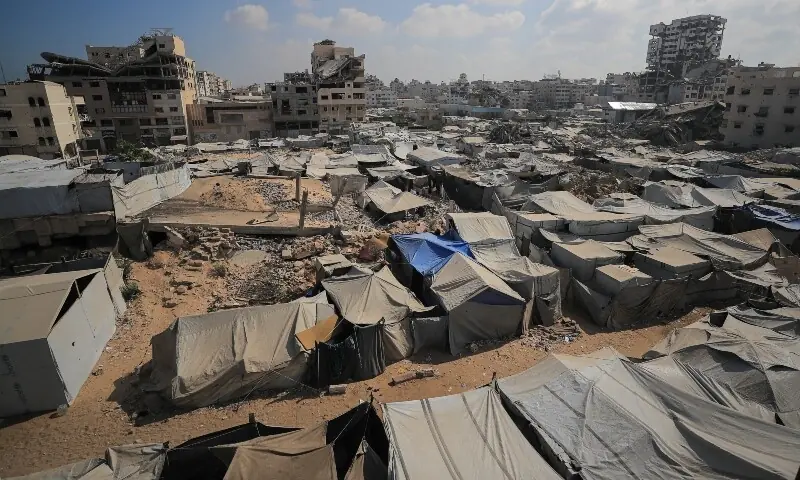
Gaza, September 4, 2026: Two Israeli ministers have revived proposals for the mass removal of Palestinians from the Gaza Strip, reigniting fears among Palestinians that Israel could ultimately seek to forcibly displace the territory’s more than two million residents.
The proposals were put forward this week by far-right Security Minister Itamar Ben-Gvir and Defence Minister Israel Katz, both political allies of Prime Minister Benjamin Netanyahu, as Israel prepares for a general election on October 27.
Their remarks have renewed concerns over the prospect of a new mass displacement of Palestinians despite US-led diplomatic efforts aimed at ending the conflict and establishing a framework for a lasting settlement.
Ben-Gvir, leader of the far-right Jewish Power party, outlined a seven-year plan on Thursday for what he described as the “voluntary emigration” of Gaza’s population.
He said he would seek the establishment of a ministry responsible for emigration in the next Israeli government.
Ben-Gvir’s party said Turkey, Ethiopia and the Democratic Republic of Congo were among the countries being considered as potential destinations for Palestinians leaving Gaza.
Ismail Al-Thawabta, director of Gaza’s government media office, rejected the proposal, saying Palestinians were deeply attached to their land and would not be intimidated by such threats.
The comments came days after Defence Minister Israel Katz, a member of Netanyahu’s Likud party, said there could be “no real solution for Gaza in the end without this migration”.
Speaking at an online conference hosted by Israeli newspaper Yedioth Ahronoth on Wednesday, Katz said Israel was prepared to facilitate the movement of Palestinians “by sea, by air, by every way possible”, while acknowledging that Egypt was unwilling to receive them.
Netanyahu’s office did not immediately comment on the remarks.
The latest calls have revived Palestinian fears of a new “Nakba”, the Arabic term for the mass displacement of Palestinians during the 1948 war surrounding the establishment of Israel.
The Gaza Strip forms a central part of Palestinian aspirations for an independent state in territories captured by Israel during the 1967 Middle East war.
Israel’s defence ministry established an office in 2025 tasked with overseeing what it described as voluntary emigration from Gaza, following comments by US President Donald Trump suggesting that Palestinians in the territory could be permanently relocated.
Trump subsequently backed away from the proposal following strong opposition from Arab countries and widespread international criticism. Israel was also reported to have explored several African countries as possible destinations for resettled Palestinians.
Netanyahu has said he supports what his government calls “voluntary emigration” from Gaza, while arguing that demands by far-right ministers to re-establish Jewish settlements in the territory are unrealistic.
Israeli officials have repeatedly denied plans to forcibly transfer Gaza’s population.
The renewed debate comes as Netanyahu faces a potentially difficult election campaign. Opinion polls have suggested that his coalition could lose power, although analysts caution that Netanyahu remains a formidable political contender.
The October election will be the first Israeli general election since the Hamas-led attack on Israel on October 7, 2023, triggered the devastating Israeli military campaign in Gaza.
A US-backed ceasefire reached in October 2025 halted large-scale fighting, but Israeli strikes have continued and negotiations over a permanent political settlement have made limited progress.
According to Gaza health authorities, more than 73,000 Palestinians have been killed since the beginning of the Israeli military campaign in October 2023.
A United Nations inquiry has concluded that Israel committed genocide in Gaza, citing killings, the siege and destruction in the territory and arguing that these actions were carried out with an intent to destroy Palestinian life in the enclave.
Israel has rejected the genocide allegations as politically motivated and maintains that its military campaign is directed against Hamas rather than Gaza’s civilian population. Israel is currently defending itself against a genocide case before the International Court of Justice.
The latest controversy also followed an incident involving Ben-Gvir, who posted an AI-generated video depicting Palestinian prisoners entering a prison facility on a conveyor belt and emerging emaciated and distressed.
The minister later deleted the video after it attracted millions of views on X. His office did not immediately respond to requests for comment.
In a displacement camp in Gaza City, Palestinians expressed defiance in response to the latest proposals, with some residents saying they believed the statements were partly aimed at influencing the upcoming election.
Residents stressed that they considered Gaza their homeland and rejected any proposal to leave.
“We will die on the land of Gaza,” said 52-year-old Mohammed Abu Al-Qumbuz, adding that generations of his family had been born and raised there.
“We were born on it, our children grew up on it, so it is very difficult to think of leaving,” he said.