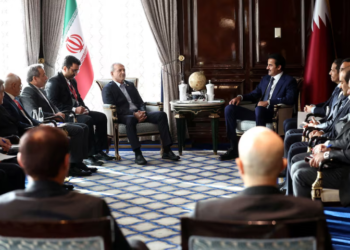

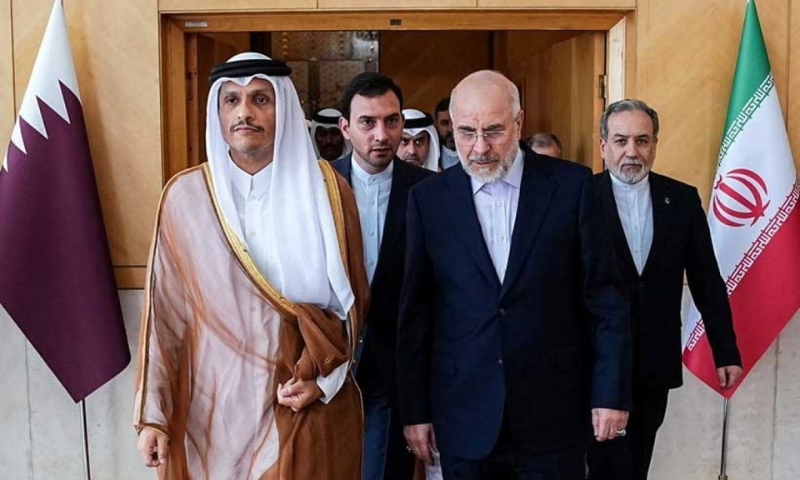
Tehran, October 30, 2026: Qatari mediators returned to Tehran on Friday in a renewed diplomatic effort to negotiate an agreement to end the US-Iran conflict, with the initiative reportedly being coordinated with Washington, Al Jazeera reported.
The latest diplomatic push follows a report by The Wall Street Journal on Wednesday that US Vice President JD Vance had sent a letter to Iranian security chief Mohsen Rezaei in an attempt to revive stalled negotiations.
A senior Iranian official told the semi-official Fars News Agency on Thursday that Tehran had received the message but had not yet responded.
Iran blames US blockade for insecurity in Strait of Hormuz
Iran’s representative to the United Nations Security Council, Gholamhossein Darzi, has accused the United States and Israel of causing maritime insecurity in the Persian Gulf and the Strait of Hormuz through their ongoing military operations and what Tehran describes as an illegal naval blockade.
Speaking at a Security Council meeting, Darzi rejected Western attempts to hold Iran responsible for disruptions in the strategic waterway, insisting that Tehran had upheld freedom of navigation as a responsible coastal state for decades.
“The responsibility for any disruption, obstruction, or other interference with maritime navigation in the Persian Gulf and the Strait of Hormuz lies directly with the aggressors and those who facilitate or assist their act of aggression against Iran,” he said.
The Iranian envoy maintained that the Strait of Hormuz had remained entirely open and secure until February 28, 2026, when the United States and Israel launched what he described as a war of aggression against Iran, targeting civilian and maritime infrastructure, ports and vessels.
He termed the US military enforcement of the blockade a violation of Iran’s sovereignty and territorial integrity and a breach of Article 2(4) of the UN Charter, which prohibits the threat or use of force against the political independence of any state.
Darzi also warned of the humanitarian consequences of the blockade, saying it threatened civilian access to food, medicine, fuel and other essential supplies.
Iran condemns UK over human rights allegations
Iranian Foreign Ministry spokesperson Esmaeil Baghaei on Friday criticised what he described as attempts by the United Kingdom to misuse the Special Rapporteurship on the Situation of Human Rights in Iran to hold Tehran responsible for alleged crimes committed by the United States and Israel.
Baghaei said such efforts amounted to a deliberate attempt to whitewash aggression, atrocities and unilateral coercive measures.
IRGC reports interception of two tankers south of Hormuz
Iran’s Islamic Revolutionary Guard Corps (IRGC) Navy said on Friday that two oil tankers had been stopped in waters south of the Strait of Hormuz after allegedly ignoring radio warnings and attempting to use an unauthorised route through the strategic waterway.
The announcement came amid reports of a separate attack on an oil tanker in the Strait of Hormuz involving limpet mines.
Reuters reported that a small boat had attached two explosive devices to the hull of a tanker on Thursday, triggering a fire in its engine room and temporarily disabling the vessel.
The United Kingdom Maritime Trade Operations (UKMTO) confirmed that the crew were safe, the fire had been extinguished and there had been no environmental impact. The vessel was continuing towards its next port of call.
The incident occurred approximately 25 nautical miles northeast of Oman’s Khasab.
Three maritime security sources identified the targeted vessel as the Panama-flagged tanker Louise 1. It was reportedly the first known successful attack using limpet mines in the area since the US-Iran conflict began in February.
Maritime risk management group Marisks warned that the apparent ability of a small boat to approach a moving tanker, attach explosive devices and withdraw posed a significant security concern, particularly in the Strait’s congested shipping lanes.
The group described the tactic as inexpensive, low-tech and effective. The identity of those responsible for the attack remained unclear.
Vance rules out prolonged war with Iran
US Vice President JD Vance has ruled out the possibility of an indefinite military conflict with Iran, expressing confidence that President Donald Trump would achieve Washington’s objectives.
Speaking to Fox News on Thursday, Vance said the administration was committed to avoiding another prolonged military engagement.
“If you’re worried about another forever war, Donald Trump is never going to let this be a forever war,” he said.
Vance added that the United States would accomplish its objectives before shifting its attention to other priorities.
US reportedly deploys military aircraft to Israel
The United States has reportedly transferred 10 military cargo aircraft to Israeli air bases in the southern Negev region amid preparations for a possible military strike against Iran, Israeli public broadcaster KAN reported on Thursday.
According to the broadcaster, the aircraft landed at Ovda and Nevatim air bases, while additional US military aircraft were reportedly sent to bases in Jordan, Saudi Arabia and Qatar.
The planes were said to have departed from Fort Bliss in Texas, which hosts major US air defence facilities, including installations associated with interceptor missiles and air defence systems.
There was no immediate confirmation from Washington regarding the reported deployments, and the nature of the cargo remained unclear.
An Israeli official told KAN that the two countries were closely coordinating their military preparations, although no final decision had been made regarding a possible operation.
The broadcaster also reported that Washington had warned Gulf countries about the possibility of a short, limited military campaign against Iran.
Separately, the United States reportedly transferred a Patriot missile defence system from Texas to reinforce air defences in the Gulf region. US troops stationed at regional bases had also been instructed to leave as a precaution against possible escalation.
The report added that American forces were replenishing weapons stockpiles, with an additional aircraft carrier and Marine Corps unit expected to arrive in November. The reinforcements would reportedly join around 20 US warships already operating in the Middle East.
UK maritime agency confirms tanker attack in Strait of Hormuz
The UK Maritime Trade Operations centre confirmed on Thursday that a tanker had caught fire following an attack approximately 25 nautical miles northeast of Khasab, Oman.
According to the agency, a small boat approached the vessel from its port side and attached two explosive devices to its hull above the waterline. The subsequent explosions caused a fire in the engine room, temporarily disabling the tanker.
UKMTO later confirmed that the fire had been extinguished, the crew were safe and the vessel was continuing to its destination.
The agency advised ships operating in the area to exercise caution and report suspicious activity as investigations continued.
Iran claims interception of hostile fighter jet near Hormuz
Iran’s Islamic Revolutionary Guard Corps Aerospace Force reportedly intercepted a hostile fighter jet near Qeshm Island in the Strait of Hormuz on Thursday, Iranian media reported.
The Tasnim and Mehr news agencies, citing sources, said Iranian forces had intercepted the aircraft and forced it to withdraw from the area.
However, the reports did not identify the aircraft’s origin or model, and no official confirmation was immediately available.
Separately, Fars News Agency reported explosions near the Strait of Hormuz, including in waters off Sirik and Qeshm Island.
Local sources cited by the agency said residents had witnessed flashes of light and heard sounds in the sky, prompting speculation that air defence systems had been activated.
Preliminary reports suggested that some of the sounds were linked to warning shots fired at vessels allegedly operating without authorisation in the waterway.
CENTCOM chief briefs Trump on possible renewed strikes
The head of the US military’s Central Command (CENTCOM), Admiral Brad Cooper, briefed President Donald Trump on military options concerning Iran during a White House meeting on Thursday, The Wall Street Journal reported.
The meeting reportedly focused on possible steps Washington could take as it considers resuming major combat operations against Iran.
Defence Secretary Pete Hegseth, Chairman of the Joint Chiefs of Staff General Dan Caine and other senior administration officials also attended the meeting, according to the newspaper, which cited US officials and people familiar with the discussions.
The briefing followed a separate White House meeting on Wednesday involving the military leadership and Vice President JD Vance, as Washington continues to assess its options amid escalating regional tensions.