
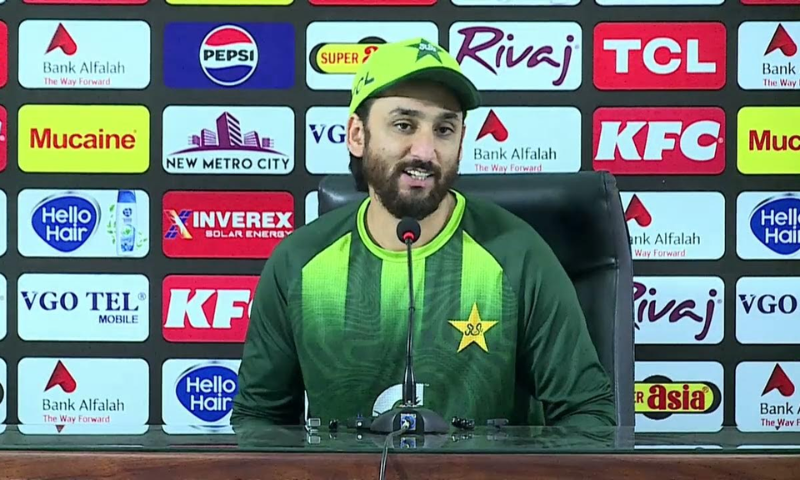
Lahore, October 30,2026: Pakistan batter Salman Ali Agha believes the team is yet to produce a complete performance in the ongoing One-day International tri-nation series and hopes the final against Sri Lanka on Saturday will provide an opportunity to put things right.
Pakistan’s top order has struggled for runs throughout the series, contributing to an inconsistent batting campaign. Speaking at a press conference ahead of the final, Salman acknowledged the lack of runs from the top-order batters but expressed confidence that they could regain form.
“Sometimes all of your players don’t score runs. Our top order isn’t scoring runs at the moment, like they used to,” he said, adding that the players concerned had been key performers for Pakistan over the past few years.
“They haven’t performed like that in this series, but tomorrow is the final and we hope that they will.”
Salman backed Babar Azam and Fakhar Zaman, describing the two as Pakistan’s outstanding ODI players over the past decade and saying they were “second to none”.
“They know themselves what they need to do and what they need to work on,” he said.
He added that Fakhar had often delivered in knockout matches and high-pressure situations, expressing hope that the left-hander would produce a big performance in the final.
Salman said the team regularly discussed the need to post totals above 300, stressing that batters must convert starts of 50 or 60 runs into substantial hundreds to help Pakistan achieve competitive scores.
Pakistan’s inconsistent top order has been one of several concerns during the series, even in matches the hosts have won.
Salman said head coach Mike Hesson consistently emphasized the importance of playing the “perfect game”, in which a team performs well in all three departments — batting, bowling and fielding.
He admitted Pakistan had yet to deliver such a performance, with batting collapses, inconsistent bowling spells and lapses in the field affecting their overall displays.
Reflecting on Sunday’s victory over England, Salman said Pakistan should have won the match more comfortably, rather than relying on a remarkable last-wicket partnership between Shadab Khan and Haris Rauf.
The 32-year-old also praised the contributions of young players Arafat Minhas, Hassan Nawaz and Saad Baig, describing them as “amazing and very talented players” who represent the future of Pakistan cricket.
Asked how Pakistan would approach Sri Lanka’s strong record at Gaddafi Stadium, Salman said performances on the day mattered more than statistics.
“More than stats, it is how you play on the day that decides who will win,” he said. “Whichever team plays well will win.”
Responding to criticism over his perceived relaxed approach, Salman insisted that representing Pakistan was a responsibility he took seriously.
“I am playing for Pakistan, how is it possible that I will not be serious about it? I am part of the eleven people representing a population of 25 crore,” he said.
He recalled making his international debut at the age of 28 or 29 after spending 10 years in domestic cricket, saying he fully understood the effort required to reach the national side.
Salman acknowledged, however, that his shot selection in recent matches had not been up to the mark.
“Yes, you can say that my shot selection in the last three games has not been what it should be, and I admit that and I am working on it,” he said.
On the question of how much time out-of-form players should be given, Salman said they needed a reasonable number of matches to overcome difficult periods and regain confidence.
“ To make runs in international cricket and be consistently successful is not an easy thing to do,” he said, adding that young players brought into the side should be given sufficient opportunities to settle at the highest level.