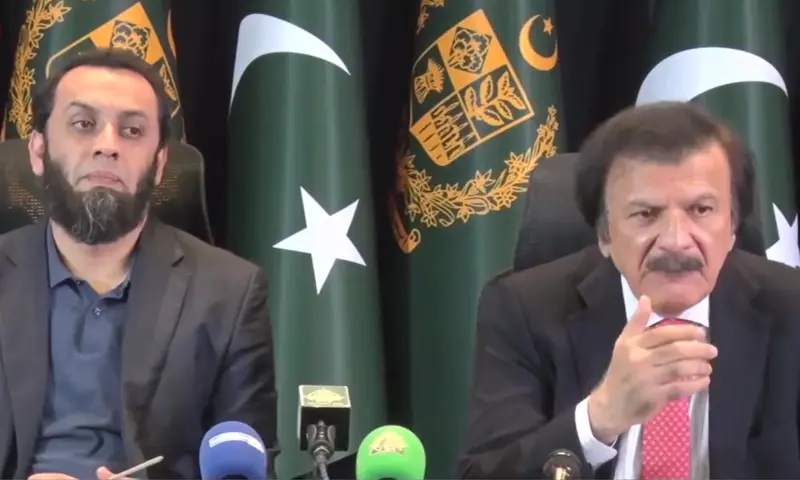
Islamabad, November 7,2026: The federal government on Saturday unveiled a new automobile policy aimed at making vehicles more affordable, promoting electric mobility, strengthening local manufacturing and encouraging exports, with a particular focus on middle- and lower-middle-income consumers.
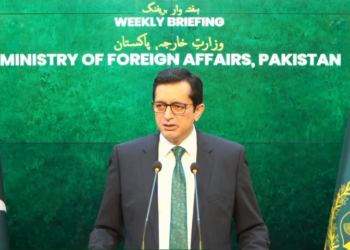
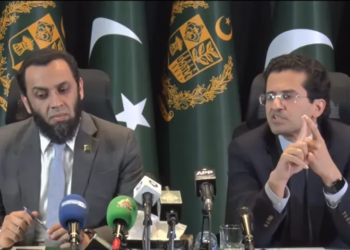
Information Minister Attaullah Tarar and Adviser to the Prime Minister on Industries and Production Haroon Akhtar Khan announced the policy at a press conference in Islamabad, saying the process of securing cabinet approval had begun.
Akhtar said Prime Minister Shehbaz Sharif had devoted considerable time to the formulation of the policy, which was developed after extensive work and consultations. He said the government wanted to address speculation surrounding the new framework before proceeding with its formal approval.
The policy is based on six key pillars: affordable vehicles, particularly for middle- and lower-middle-income groups; promotion of exports; localisation; vehicle safety; electric vehicles (EVs); and transparency.
Vehicle prices expected to decline gradually
Akhtar said the government expected vehicle prices to decrease as production costs came down under a revised tariff framework. The policy envisages gradual reductions in duties on completely built units (CBUs), assembly plants and vehicle components over five years, leading to more competitive tariff structures.
“You will see that prices of cars will come down,” he said, adding that the prime minister had specifically directed the government to reduce manufacturing costs. He clarified that the expected reductions would apply to vehicles other than luxury models.
He said the government’s broader tariff policy was designed to lower production costs and reduce the import bill for raw materials.
Localisation and export targets made central
The adviser said localisation had been made mandatory, with specific targets to be assigned to manufacturers. The policy also introduces a reward-and-penalty mechanism to encourage vehicle exports and greater domestic production.
Under the proposed framework, manufacturers achieving export targets would qualify for a five per cent Duty Drawback of Local Taxes and Levies (DLTL), with an additional 10 per cent incentive linked to increased exports.
However, the incentives would be conditional on manufacturers meeting both their export and local manufacturing targets. Companies failing to achieve the stipulated targets could face penalties and would not qualify for the export rebate.
Akhtar said the prime minister wanted the policy to generate employment through expanded manufacturing facilities and greater industrial activity in the country.
New safety standards aligned with UN codes
On vehicle safety, Akhtar said the policy incorporates 45 additional safety standards in line with the United Nations WP.29 regulations.
He said the adoption of these standards would bring locally manufactured and used vehicles in line with internationally recognised safety requirements and improve the quality and safety of vehicles available in Pakistan.
A major component of the policy is the promotion of electric mobility. Akhtar said the government’s target of shifting 30 per cent of all new vehicles sold in Pakistan to electric power by 2030 could be achieved earlier than planned.
He outlined proposed sales tax rates of one per cent for fully electric vehicles, six per cent for range-extended electric vehicles (REEVs) and nine per cent for hybrid electric vehicles. These proposed tax concessions, however, remain subject to approval by the International Monetary Fund (IMF).
He added that EVs priced up to $50,000 would be exempt from capital value tax, withholding tax and federal excise duty. Vehicles above that price threshold would be treated as luxury items and taxed under the applicable normal regime.
The government also plans to expand the State Bank of Pakistan’s vehicle financing facility for electric vehicles. Under the proposed arrangement, financing of up to Rs10 million would be available for EVs, compared with the existing limit of Rs3 million for ordinary cars, while the repayment period would be extended from three to five years.
Incentives planned for charging infrastructure
Akhtar said the government would encourage investment in EV charging stations by addressing the gap between the cost of establishing infrastructure and the expected initial demand from consumers.
He said the government would provide funding to bridge the viability gap, enabling businesses to invest in charging facilities while encouraging consumers to shift towards electric vehicles.
Sales tax on equipment used for charging stations has been reduced to one per cent, while customs duty has been abolished, he added.
The adviser said the government, while operating under an IMF programme, intended to keep the proposed incentives revenue-neutral. He explained that revenue would be generated from internal combustion engine vehicles above 1,000cc, while cars below that capacity, commonly used by lower- and middle-income households, would remain exempt from the proposed additional burden.
The revenue would also support export rebates and research and development initiatives.
EV sales show significant growth
Highlighting the growth of electric mobility, Akhtar said sales of electric two-wheelers had increased to 240,000 in fiscal year 2025-26, compared with 60,000 in FY2024-25.
He linked the expansion to the New Energy Vehicle (NEV) Policy 2025-30, introduced last year, and said the government intended to accelerate the transition through incentives, improved infrastructure and support for local manufacturing.
Addressing the press conference, Information Minister Attaullah Tarar said protectionist policies pursued over several decades had increased import duties and supported local manufacturers but had failed to encourage sufficient innovation and value addition in the automobile industry.
He described the growing use of electric motorcycles and scooters as a need of the time, particularly in view of Pakistan’s rising oil import bill and the pressure of fuel costs on consumers.
Tarar said the new policy would not change the existing framework for ordinary petrol-powered vehicles below 1,000cc, which remain widely used by ordinary citizens.
In a post on X, the minister said the policy had been developed following consultations with stakeholders, analysis of technical data and a review of international models.
He said the framework would promote innovation, value addition and localisation in the domestic automobile industry, create employment opportunities and help Pakistan develop its vehicle export potential.
Tarar added that encouraging electric vehicles would help reduce carbon emissions and the country’s oil import bill, while incentives for charging infrastructure would support the transition.
He described the policy as a significant step towards providing citizens with affordable, high-quality and environmentally friendly transportation.