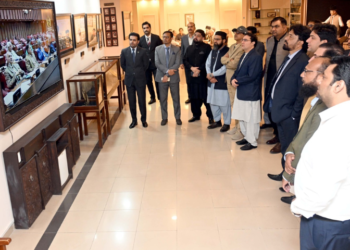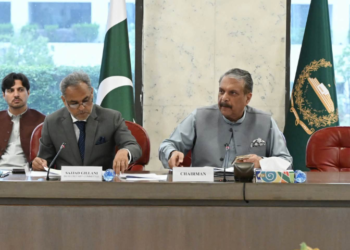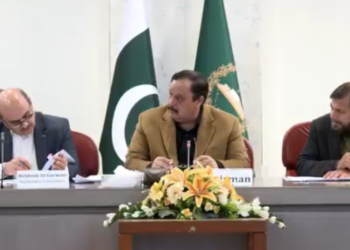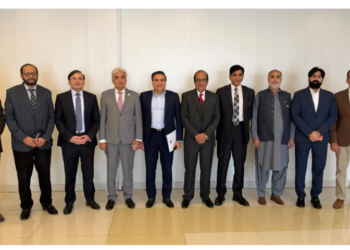

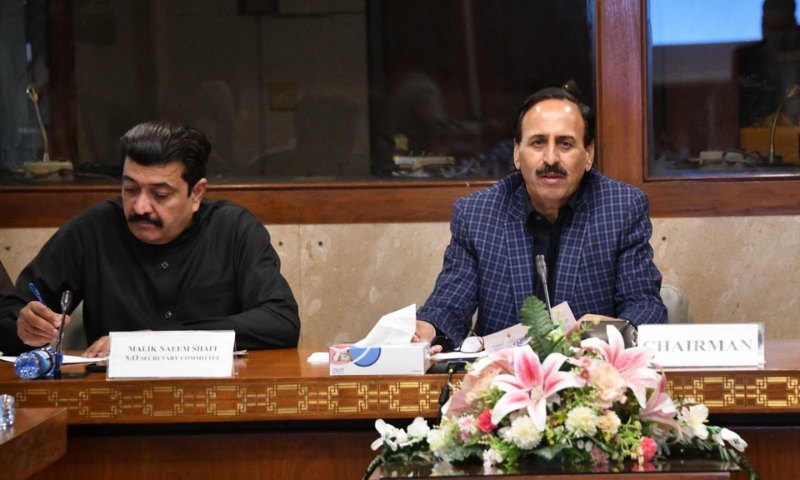
Islamabad, November 12, 2026: The National Assembly Standing Committee on Inter-Provincial Coordination has called on the Pakistan Football Federation (PFF) to improve sports infrastructure and promote football activities across Balochistan, beyond the provincial capital Quetta.
The committee, which held its 16th meeting on Thursday under the acting chairmanship of Dr. Mahreen Razzaq Bhutto, MNA, was informed that the PFF had remained non-functional for approximately eight years before FIFA intervened and conducted elections, subsequently recognizing their results.
A PFF representative informed the committee that the federation’s constitution had been shared with FIFA for review. FIFA had identified certain amendments to bring it in line with international requirements and standards, which were expected to be formally communicated to the federation by the end of December 2026.
The PFF plans to amend its constitution and ensure full compliance with FIFA requirements during the first quarter of 2027. The committee was also informed that FIFA’s financial assistance and grants to the federation were linked to compliance with its international standards, including constitutional requirements.
The representative further informed the committee that a football academy was planned for establishment in Quetta, adjacent to Ayub Complex. The proposed site already had the necessary infrastructure, requiring only certain modifications. The project had been shared with FIFA for consideration and support.
The committee emphasized the need to extend sports development beyond Quetta and directed the PFF to take necessary measures to improve sports facilities and promote football-related activities in other districts of Balochistan.
The committee also received a detailed briefing from the Controller of the Department of Tourist Services (DTS) on the regulatory framework governing travel agencies, tourist guides, hotels and restaurants.
The committee was informed that three amendment bills relating to the relevant laws had been passed by the Senate on June 10, 2026, and the National Assembly on October 27, 2026, before being forwarded for presidential assent.
The DTS representative explained that following the 18th Constitutional Amendment, legislative and administrative powers relating to these sectors had largely devolved to the provinces, while the federal regulatory framework continued to apply to the Islamabad Capital Territory (ICT).
He highlighted the need to strengthen the DTS as the dedicated regulatory authority for ICT within its legal mandate.
Regarding sports, the committee was informed that more than 80 per cent of sports funding and related powers had devolved to the provinces following the constitutional amendment, with the federal government primarily facilitating coordination between provincial governments and sports boards.
The representative also informed the committee that Rs6 billion had been allocated for the upcoming South Asian Federation (SAF) Games, while funding for other international sporting events would continue to support the promotion and development of sports in the country.
On tourism, the committee was informed that separate tourism authorities had been established by provincial governments following devolution, requiring tourists and tourism operators to fulfil registration requirements with the respective provincial authorities. This arrangement had created certain administrative difficulties compared to the previous federal registration mechanism.
The committee was further informed that tour operators and travel agencies were registered under the Travel Agencies Act, while the minimum educational qualification for licensed tour operators and tourist guides was FA, along with mandatory training requirements.
The committee directed the Department of Tourist Services to provide complete audit details of government-run travel agencies operating under public-sector entities.
It also expressed concern over language barriers faced by foreign tourists and directed the department to submit a comprehensive list of registered tourist guides, including details of their language proficiency, to ensure visitors could receive assistance in their respective languages.
The department was also directed to provide complete details of registration fees collected from tourism companies and fines imposed on them during the last five years.
Regarding Hajj and Umrah operators, the committee was informed that they also operated under the Travel Agencies Act. While the Ministry of Religious Affairs dealt with matters relating to the government Hajj scheme, the DTS exercised regulatory oversight over private Hajj and Umrah operators. Complaints against these operators could be entertained by both the ministry and the department.
During the meeting, Dr. Mahreen Razzaq Bhutto, Convener of the Sub-Committee, presented its report, which was appreciated and adopted by the committee. The committee directed the ministry to ensure implementation of the recommendations contained in the report.
MNAs attending the meeting included Babar Nawaz Khan, Anjum Aqeel Khan, Waseem Qadir, Sardar Muhammad Yaqoob Khan Nasar, Syeda Shehla Raza and Khushal Khan Kakar, along with officials of the ministry and its attached departments.