
Wellington, November 25,2026: India captain Shubman Gill has called for the return of saliva use on cricket balls, arguing that the International Cricket Council’s (ICC) ban has made it increasingly difficult for bowlers to maintain the ball and generate reverse swing.
Gill made the remarks after India failed to bowl out New Zealand on a placid Basin Reserve pitch in Wellington on Monday, renewing the debate over ball management and the balance between bat and ball in Test cricket.
The use of saliva to shine the ball was prohibited by the ICC in 2020 during the Covid-19 pandemic on health grounds. Gill believes the restriction has served its purpose and should now be reconsidered.
“There was a rule that you can’t put saliva on the ball to make it shine,” he told reporters.
“It’s been seven to eight years and I still don’t understand why they are not allowing it. If you’re not able to maintain the ball, especially on wickets like these, it makes the job of the bowlers very difficult.”
The ICC has no plans to lift the ban, maintaining that saliva use is unhygienic. The Marylebone Cricket Club (MCC), which is responsible for the Laws of Cricket, has also retained its support for the restriction.
In a 2022 statement, the MCC said the ban had “little or no impact” on swing and had removed grey areas involving fielders consuming sugary sweets to alter their saliva.
Reverse swing and the art of ball management
Reverse swing, popularised by Pakistan fast-bowling greats Wasim Akram and Waqar Younis, allows an older ball to move sharply and late in flight, often in the opposite direction to conventional swing.
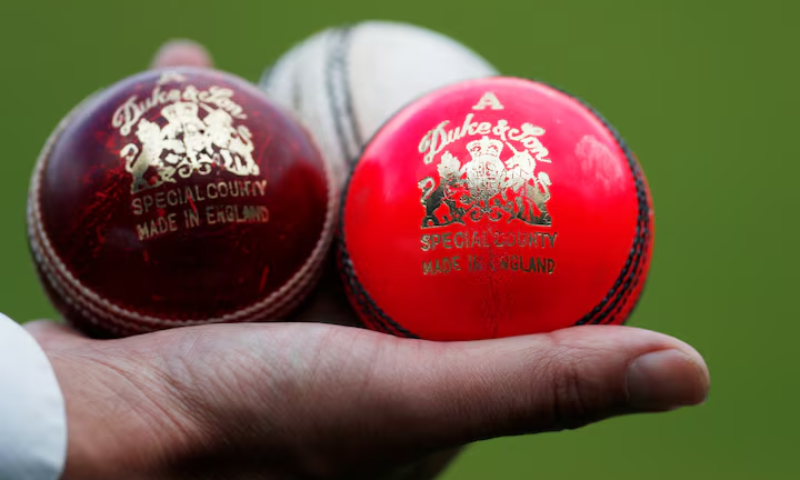
The technique requires careful ball management, with one side kept polished and the other allowed to become rough. This creates the conditions needed to generate reverse swing and gives bowlers another weapon against batters even after the new ball has lost its initial movement.
Players can still use sweat to shine the ball, but it is considered less effective than saliva. Scuffing can occur naturally through bowling and throwing the ball on rough surfaces, but deliberate methods beyond the permitted limits constitute ball-tampering.
Ball-tampering has remained under intense scrutiny since the 2018 scandal involving Australia during the third Test against South Africa at Newlands. Television cameras caught Cameron Bancroft with a piece of sandpaper, exposing a plan to roughen one side of the ball.
Bancroft, then captain Steve Smith and vice-captain David Warner accepted responsibility. Smith received a one-match ban and a fine from the ICC, Bancroft was fined, while Warner received no ICC punishment. Cricket Australia subsequently imposed much harsher sanctions on the players.
The incident, widely known as “Sandpapergate”, prompted the ICC to upgrade ball-tampering to a Level Three offence, carrying stiffer penalties. Reported cases subsequently declined.
Debate over legal ball preparation
Former Australia batter and coach Justin Langer has argued that the scandal effectively discouraged players from developing reverse swing because of fears surrounding ball preparation.
The distinction between legitimate ball management and tampering remains a contentious issue. While natural wear is permitted, deliberately roughening the ball through unauthorised methods is prohibited.
The ICC men’s cricket committee supports reverse swing as long as it does not involve ball-tampering. It has also explored a return to using a single new ball in one-day internationals, instead of two balls used from opposite ends, allowing the ball to age and potentially generate reverse swing.
Former England batter Dawid Malan has also suggested allowing players greater freedom to prepare the ball.
“Historically, over the game, people have been caught trying to tamper with the ball for years,” he said on a BBC podcast.
“I actually think you should legalise it, like just let people scratch the ball. Obviously, do not bring things in from outside. But it’s a skill in itself — to be able to get the ball to reverse swing. It will make cricket a lot more bowler-friendly.”
The debate has once again highlighted the challenge of encouraging reverse swing and maintaining a balance between bat and ball without compromising the integrity of the game.