
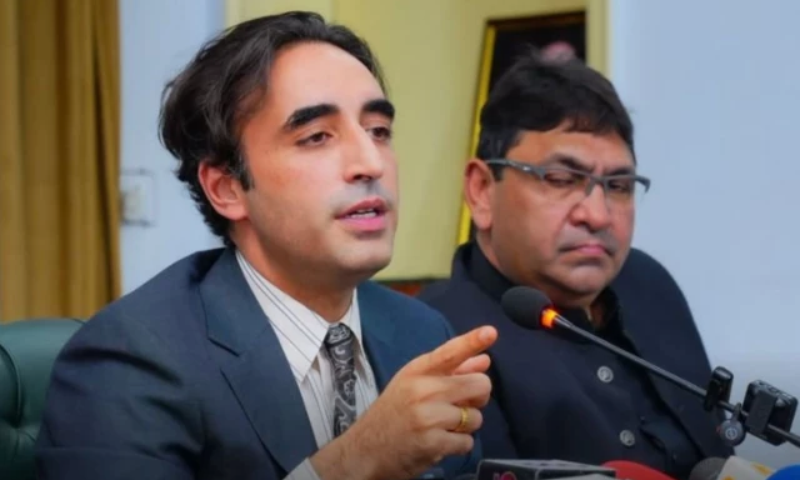
Multan, November 26,2026: Pakistan Peoples Party (PPP) Chairman Bilawal Bhutto-Zardari has described Pakistan Tehreek-e-Insaf (PTI) as a “political reality”, saying its trust in the existing system must be restored for any meaningful political reset in the country.
Speaking at a Meet the Press event at the Multan Press Club on Thursday, Bilawal said that regardless of one’s opinion about PTI founder Imran Khan, the party’s political existence could not be denied and its role in Parliament was essential for moving forward.
“Whatever opinion you may hold about Khan sahib, even if you think he is not a political prisoner, there is no denying the fact that PTI is a political reality,” he said.
Responding to a question about his earlier description of Imran Khan as a “political prisoner”, Bilawal said he had made the observation in the context of Pakistan’s polarised political environment and history, in which elected prime ministers had often been jailed either before or after holding office.
He maintained that even if Imran Khan was considered a convicted prisoner, he was still entitled to his rights, adding that he did not want to perpetuate a cycle of political vengeance.
“Khan sahib is a convict, he is in jail, but PTI is a political reality. Until PTI’s trust is restored in this system […] and they are able to play their role in Parliament, the reset that is being discussed cannot take place in that manner,” he said.
The PPP chairman said the government needed to take confidence-building measures to convince the opposition that institutions, including Parliament, the Election Commission of Pakistan, the judiciary and the accountability system, could be trusted.
He identified the disputed reserved seats from the 2024 general elections as a “low-hanging fruit” that could help restore the opposition’s confidence in the system.
Bilawal said he personally believed PTI should have received the reserved seats, adding that he was not satisfied with the fact that another political party currently did not have its electoral symbol.
He acknowledged that the PPP had been among the parties that challenged the Supreme Court ruling declaring PTI eligible for the reserved seats. However, referring to the subsequent 2025 order of the Supreme Court’s Constitutional Bench, which overturned the earlier decision and awarded the seats to coalition parties, he said the ruling had gone somewhat too far.
He questioned how the seats could be allocated to the PPP, PML-N or JUI-F on the grounds that PTI candidates had contested under the Sunni Ittehad Council (SIC) banner rather than PTI’s electoral identity.
The PPP chairman said political parties would need to negotiate, approach the courts or introduce electoral reforms to resolve the issue, adding that restoring trust required goodwill gestures from the government.
Calls on opposition to play parliamentary role
Bilawal also pointed to a lack of trust between the government and opposition, urging PTI and other opposition parties to treat their parliamentary responsibilities seriously.
He said opposition members should participate in parliamentary committees, including those dealing with finance and the judiciary, and contribute to discussions on the national budget and other important matters.
He observed that the opposition’s participation was essential to addressing unemployment, inflation and poverty, adding that boycotting parliamentary proceedings and committees did not serve the country’s interests.
He also urged the opposition to participate in the proposed electoral reforms committee.
Bilawal warned that without free and fair elections and the confidence of all political parties, provinces and citizens in the electoral system, governments formed through that system would lack legitimacy and strength.
Reiterating his position on the proposed political reset, he said the process must be democratic and political, with all stakeholders, including the opposition, involved in the discussions.
“If we want to make the Parliament functional, then all decisions have to be made in the Parliament alone,” he said, adding that decisions taken outside Parliament would leave the system unable to overcome the country’s challenges.
Calls for diagnosis of governance crisis
Referring to the ongoing debate about a possible system reset, Bilawal said he welcomed the discussion but stressed that the underlying causes of the governance crisis must first be identified.
He recalled his November 17 remarks that the country’s governance system had not collapsed on its own but had been repeatedly made to collapse.
Comparing the situation to a medical diagnosis, he said it was necessary to identify the causes of an illness before attempting treatment.
He argued that the process of determining the reasons behind the institutional and political crisis should involve all relevant stakeholders and should not be left to a handful of former and serving media anchors, media owners or business representatives.
He said such a limited approach would fail to address the real problems facing ordinary citizens.
Bilawal also described his party as “Pakistan-parast and awaamparast”, saying that while nationalist parties in Sindh called the PPP pro-federation, some in Islamabad viewed it as nationalist.
‘You can’t have a hard state with thin skin’
The PPP chairman called for greater tolerance of differing opinions, saying Pakistan should have the confidence to listen to criticism and accommodate opposing viewpoints.
He termed the reactions to his November 17 press conference inappropriate, maintaining that people on both sides of political debates could be patriotic Pakistanis despite their differences.
“If anyone thinks that we can be silenced through such cheap tactics, that is not possible,” he said.
Referring to the description of Pakistan as a “hard state”, Bilawal remarked that such a state should also have a thick skin and the ability to tolerate criticism.
“You can’t have a hard state with thin skin,” he said.
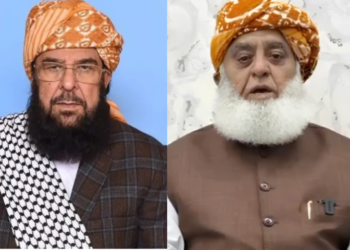
He also condemned the recent actions against Jamiat Ulema-i-Islam-Fazl (JUI-F) chief Maulana Fazlur Rehman during his stay in Lahore, describing them as incomprehensible.
Bilawal said it was the opposition’s patriotic responsibility to criticise the government and that the ruling side should have the tolerance to absorb such criticism and incorporate constructive suggestions into policymaking.
Bilawal says press freedom has become non-existent
Discussing freedom of expression, Bilawal stressed the importance of a free press and called for restoring the influence and role of press clubs across the country.
He said the media had historically played an important role in holding governments accountable and reflecting public concerns.
“I don’t want to topple any government, nor do I want to form another one. But I believe your role is to hold up a mirror to those sitting in power,” he said.
Acknowledging that his party had also made mistakes, Bilawal maintained that weakening the press had never been its intention.
Referring to amendments to the Prevention of Electronic Crimes Act (PECA) in January 2025, which triggered protests by journalists’ organisations, he said that regardless of the PPP’s intentions, the country had reached a point where press freedom was virtually non-existent.
He warned that if the media were restricted to repeating discussions taking place within government circles, issues such as economic hardship and difficulties faced by ordinary citizens would remain largely unreported.
Defends 26th and 27th amendments but acknowledges lack of trust in judiciary
Bilawal also clarified his position on the 26th and 27th Constitutional Amendments, saying his recent remarks should not be interpreted as a withdrawal of support for the legislation.
He said the 1973 Constitution and the 18th Amendment had been passed through mutual political consensus, while the 26th Amendment had secured as much consensus as could be achieved under the circumstances.
He described the passage of the 27th Amendment with a two-thirds majority as a success but acknowledged that it had not enjoyed the same level of political agreement as the earlier constitutional milestones.
The PPP chairman said he could not ignore the fact that the opposition lacked confidence in the existing judicial system and that judges and lawyers he interacted with were also uncomfortable with its current state.
He clarified that questioning the level of consensus behind the 27th Amendment did not mean he wanted it reversed. Instead, he called for dialogue among stakeholders to restore confidence in the judiciary.
Accountability system being used for political victimisation
Bilawal also criticised the country’s accountability framework, saying its structure had largely been used for political victimisation rather than addressing corruption.
He observed that successive governments had made strong claims about eliminating corruption but had failed to achieve meaningful results.
He said the accountability system had instead been used primarily against political opponents, while fundamental public concerns remained largely ignored in parliamentary discussions, government meetings and television debates.
Highlighting the economic difficulties faced by ordinary citizens, Bilawal said people were struggling to afford basic necessities, including food, education and healthcare.
He also expressed concern over unemployment and the financial difficulties confronting young people, saying that even those with jobs often spent a significant portion of their salaries on commuting.
The PPP chairman said political stability, national unity and public confidence in state institutions were essential if the country was to overcome its economic difficulties and external challenges.
He urged all political stakeholders to take immediate steps towards restoring institutional trust and ensuring that the country’s governance system served the interests of the people.