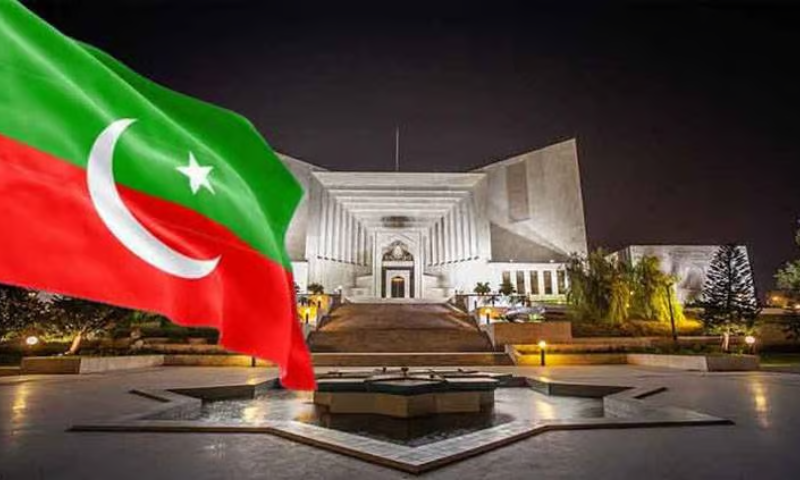
Islamabad, June 27, 2025: Pakistan Tehreek-e-Insaf (PTI) on Friday strongly condemned the Supreme Court’s decision to deny it reserved seats for women and minorities, calling the ruling a “judicial assault” on democratic representation and a “murder of justice.”
The criticism follows the Supreme Court’s ruling earlier in the day, where a 10-member constitutional bench declared that PTI, whose candidates contested the February 2024 general elections as independents due to the loss of its electoral symbol, is not entitled to reserved seats. The Court upheld review petitions filed by the Election Commission of Pakistan (ECP), PML-N, and PPP, concluding that reserved seats must be proportionally distributed among parliamentary parties — and since PTI candidates ran independently, the party does not qualify.
“This is the darkest chapter in Pakistan’s political history,” a PTI spokesperson said shortly after the verdict. “What we witnessed today was not just judicial overreach — it was the institutional burial of the people’s mandate.”
Senior PTI leader Ali Muhammad Khan termed the ruling “shameful” and accused the judiciary of siding with the establishment to dismantle the party’s political power.
“First, they took away our symbol. Then, they denied us reserved seats. Now, they’ve handed those seats to the ruling alliance. This is not justice — it’s political warfare in judicial robes,” he said.
Other party leaders took to social media to express outrage, accusing the judiciary of facilitating what they termed a “slow, surgical execution of democracy.” One post likened each verdict against PTI to “a scalpel in the hands of those in power.”
The party also pointed to the 26th Constitutional Amendment, which expanded the size of the Supreme Court and allowed for larger benches, as an example of what it called “institutional engineering.” In a joint statement, PTI officials said:
“The state was reshaped through structural amendments. The establishment acted, and the judiciary stood by silently.”
Political analysts and some journalists have warned that the ruling may further polarize Pakistan’s democratic landscape and erode public trust in the electoral process. The decision is likely to intensify PTI’s narrative of victimhood and institutional bias, especially as the party continues to claim a majority support base.
Meanwhile, the ruling coalition welcomed the Supreme Court’s verdict, calling it a correct interpretation of constitutional law and a reaffirmation of the ECP’s authority in ensuring electoral compliance.
The ruling marks a major blow to PTI’s parliamentary strength and significantly alters the composition of legislative bodies ahead of crucial policy decisions and upcoming local elections. The party has vowed to challenge the decision through public mobilization and legal avenues.