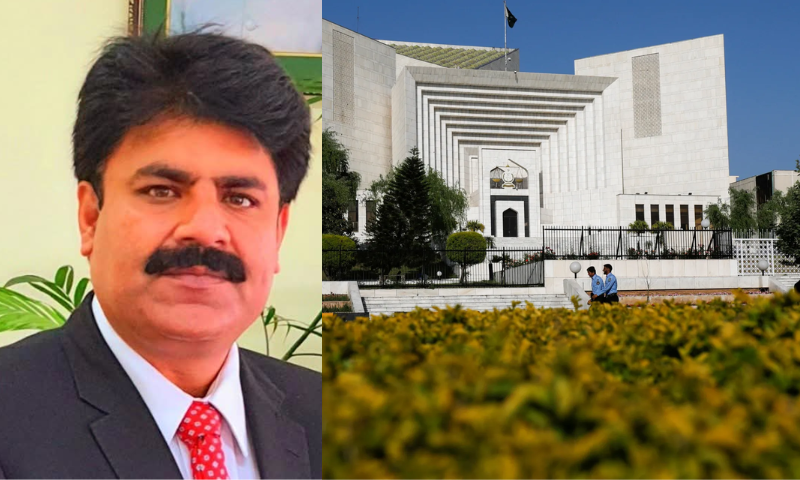
By Hafiz Ahsaan Ahmad Khokhar, Advocate Supreme Court of Pakistan, Constitutional Expert
The Supreme Court of Pakistan’s judgment dated 27 June 2025, delivered by a resounding majority of 10 to 3, marks a critical inflection point in the interpretation of the constitutional and statutory framework governing the allocation of reserved seats in the national and provincial legislatures. By allowing the review petitions and setting aside its earlier rulings of 12th July 2024, the Court has judiciously exercised its review jurisdiction to rectify a misapprehension of law that threatened the foundational structure of electoral representation in Pakistan. In doing so, the Court has restored fidelity to the constitutional scheme outlined in Articles 51 and 106, and reaffirmed the binding nature of Sections 66 and 104 of the Elections Act, 2017, along with Rule 95 of the Election Rules, 2017.
This corrective pronouncement stands as a resolute affirmation of both the spirit and the textual scheme of the Constitution, and a necessary reassertion of the defined limits of judicial discretion. It is now beyond cavil that reserved seats constitute a constitutional entitlement, one that is inextricably linked to strict compliance with prescribed pre-election and post-election legal requirements. Any departure from this constitutional framework not only offends the express provisions of the Constitution but also distorts the representative character and democratic integrity of the legislature. The recent review judgment, therefore, transcends mere procedural rectification; it embodies a substantive and principled reaffirmation of the Constitution’s command and the statutory architecture enacted to operationalize it.
With the enactment of the Twenty-Sixth Constitutional Amendment, the insertion of Article 191-A(3) of the Constitution unambiguously mandates that matters concerning the enforcement of fundamental rights shall be adjudicated by Constitutional Benches of the Supreme Court. Accordingly, the composition of the Bench that heard the review petitions was not a matter of procedural convenience but a constitutional necessity. Any objections assailing the legitimacy or competence of the said Bench are devoid of legal merit and were rightly repelled. Neither the Constitution nor the Supreme Court Rules, 1980, place any limitation or jurisdictional bar upon a duly constituted Constitutional Bench to entertain and decide review petitions arising out of judgments involving questions of fundamental rights.
In this constitutional framework, the judgment rendered by the Supreme Court in the review proceedings—impugning its earlier decisions dated 12th July and 23rd September 2024—emerged as a majority pronouncement by ten to three (10–3). The original Bench constituted to hear the review petitions comprised thirteen (13) Hon’ble Judges. At the very inception of proceedings, two learned Judges dismissed the review petitions in limine, thereby forming part of the dissenting minority. Subsequently, one learned Judge recused himself on the final day of hearings and did not participate in the final adjudication. The remaining ten (10) Hon’ble Judges decided the matter on merits, all of whom allowed the review petitions. Of these, seven (07) Hon’ble Judges formed the principal majority and categorically set aside the impugned judgments, while three (03) Hon’ble Judges, concurring in the result, adopted separate reasoning and remitted the matter to the Election Commission of Pakistan for determination in accordance with law. The net legal effect is that the earlier judgments stand conclusively set aside by a clear and binding majority of ten Hon’ble Judges, rendering the review decision an authoritative 10–3 pronouncement of the Supreme Court.
The constitutional framework embodied in Articles 51 and 106 of the Constitution of Pakistan, when read harmoniously with Section 104 of the Elections Act, 2017 and Rules 92 to 94 of the Election Rules, 2017, delineates a stringent and mandatory regime governing the entitlement to reserved seats in the national and provincial legislatures. These provisions, in clear and categorical terms, prescribe that only those political parties shall be eligible for the allocation of reserved seats which have: (i) participated in the general elections under a common electoral symbol; (ii) secured at least one seat in the general election; (iii) duly submitted their list of candidates for reserved seats within the timeframe notified by the Election Commission; and (iv) obtained declarations from returned independent candidates who wish to join such party within the statutorily prescribed period. These stipulations are not mere procedural formalities but are constitutionally entrenched and substantively binding conditions. They are designed to uphold the proportionality, integrity, and representative character of the parliamentary scheme and to prevent arbitrary or retrospective distortions in the electoral process. Any departure from this normative framework undermines the constitutional structure and statutory safeguards governing democratic representation.
Furthermore, the constitutional and statutory framework governing elections in Pakistan—particularly the relevant provisions of the Constitution and the Elections Act, 2017—unequivocally establishes that a political party which fails to satisfy the essential pre-election legal prerequisites, including the timely submission of priority lists for reserved seats and the securing of at least one general seat in the relevant legislature, is not entitled, as a matter of law, to claim any allocation of reserved seats post-election. These statutory and constitutional requirements are not of a procedural or directory character but are substantive, mandatory, and operate as conditions precedent to the lawful entitlement and allocation of reserved seats.
The consistent jurisprudence of the superior judiciary has reaffirmed that failure to adhere to the electoral timetable and the express provisions of the governing electoral law results in ineligibility for such allocations. Section 104 of the Elections Act, 2017, when read conjointly with Rules 92 to 94 of the Election Rules, 2017, categorically prohibits the submission, consideration, or acceptance of revised, supplementary, or post-deadline priority lists, thereby underscoring the imperative and binding nature of these temporal stipulations.
In addition, the constitutional scheme does not envisage or permit post-election affiliations by returned independent candidates with a political party that lacks legislative presence in the National Assembly or the relevant Provincial Assembly. In the absence of such parliamentary representation, the legal avenue for such affiliations is foreclosed, and any claim to reserved seats by such a party stands nullified ab initio for want of constitutional and statutory legitimacy.
Articles 51(6)(d) and 106(3)(c) of the Constitution, read in conjunction with Section 104 of the Elections Act, 2017 and Rule 94 of the Election Rules, 2017, establish a stringent and meticulously structured legal framework governing the allocation of reserved seats in the National and Provincial Assemblies. This framework unequivocally mandates that only those political parties which have demonstrated electoral viability—specifically by securing at least one general seat—are entitled to claim reserved seats as a derivative constitutional benefit. The scheme is clear in its proscription of post-election affiliations or adjustments as a means to cure pre-election legal deficiencies. In the present case, at no stage of the original proceedings—whether before the Election Commission or the Peshawar High Court—did Pakistan Tehreek-e-Insaf (PTI) or the Sunni Ittehad Council (SIC) establish that they had fulfilled these foundational constitutional and statutory requirements. Their eventual recourse to the Supreme Court was premised on a procedurally irregular and legally untenable claim, devoid of any substantive or textual support in the Constitution, the Elections Act, or the Rules framed thereunder.
The earlier majority decisions of 12th July 2024, rendered by a narrow margin of 8 to 5, were marked by a jurisprudential and constitutional overreach. Pakistan Tehreek-e-Insaf (PTI) was neither a party to the original proceedings before the Election Commission of Pakistan nor in the litigation at any subsequent stage up to the review before the Supreme Court. At no point did PTI assert any claim to reserved seats through a constitutionally cognizable process; rather, it consistently and openly supported the SIC’s case throughout the initial Supreme Court proceedings. Nonetheless, the earlier majority judgment of the Supreme Court expanded the scope of Article 17(2) of the Constitution—guaranteeing the right to form and join political parties—and Article 187(1)—empowering the Court to do complete justice—in a manner that disregarded the express limitations embedded in Articles 51 and 106, read with Article 175(2) of the Constitution.
By permitting a political alliance lacking general seat representation to assert entitlement to reserved seats solely on the basis of independent declarations, the Court, in its earlier pronouncement, misconstrued the constitutional and statutory architecture governing electoral representation. This interpretation effectively bypassed the mandatory criteria for electoral viability and contravened the proportional representation principle, which is foundational to the allocation of reserved seats under the constitutional framework. The deviation from the clear textual scheme of the Constitution and the Elections Act, 2017, ultimately disrupted the representative equilibrium envisioned by the drafters, thereby undermining the integrity of the constitutional electoral process.
The judgment dated 12th July 2024 not only exemplified constitutional overreach but also extended the contours of judicial interpretation beyond the permissible constitutional limits. This expansion resulted in a distortion of the constitutional and statutory scheme governing the allocation of reserved seats, effectively diluting the mandatory preconditions expressly stipulated in the Constitution and the Elections Act, 2017. In contrast, the subsequent review judgment serves to realign judicial interpretation with the original intent of the framers and the unambiguous language of the Constitution and the law. It thereby restores the internal coherence, normative consistency, and structural integrity of Pakistan’s electoral framework, reaffirming the foundational principles of representative democracy and the rule of law.
While Article 187(1) of the Constitution equips the Supreme Court with broad authority to do complete justice, this power is not unbounded and cannot be exercised to circumvent or override express constitutional mandates. The Court is not vested with jurisdiction to create entitlements or carve out exceptions where the Constitution is categorical and unambiguous. Likewise, although Article 17(2) enshrines the right to form and be a member of a political party as a fundamental political freedom, it is subject to reasonable restrictions and does not override the other constitutional and statutory preconditions necessary for participation in the electoral process. The jurisprudential misstep lies in conflating general political rights with specific electoral entitlements, thereby disturbing the carefully calibrated balance of constitutional and electoral framework.
Moreover, the judgments dated 12th July September 2024 suffer from grave constitutional and procedural infirmities. The Supreme Court, in those decisions, proceeded to declare Rule 94 of the Election Rules, 2017 and the legislative amendments enacted in August 2024 as ultra vires, despite the absence of any specific challenge or prayer to that effect by any party before the Court. More critically, the Federation was notice served upon the Attorney General for Pakistan, as mandatorily required under Section 27-A of the Code of Civil Procedure, 1908. This legal omission constitutes a fatal procedural lapse that vitiates any declaration on the constitutional validity of statutory instruments. The Supreme Court has, in a consistent line of authority, held that any adjudication affecting the vires of a statute, rendered without notice to the Attorney General, is procedurally defective and devoid of legal effect.