Islamabad, July 25, 2025: The International Monetary Fund (IMF) has declined Pakistan’s request to abolish the additional 4% sales tax on unregistered persons, linking its removal to a significant expansion of the sales tax base.
Speaking at a meeting of the Senate Standing Committee on Finance, Dr. Hamid Ateeq Sarwar, Member Inland Revenue Operations at the Federal Board of Revenue (FBR), revealed that the IMF rejected the government’s proposal to eliminate the extra tax unless at least 50,000 new individuals are brought into the sales tax net.
The 4% tax, originally introduced as a punitive measure to compel businesses to register, has ironically become a means of staying outside the formal tax system, with businesses passing on the cost to consumers rather than entering the tax net.
“There are just 200,000 registered sales tax filers, and only 60,000 of them actually pay tax,” Dr. Sarwar said. “The additional 4% was meant to encourage registration, but it has failed to deliver the desired results.”
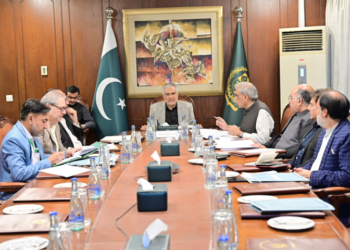
The meeting, chaired by PPP Senator Saleem Mandviwalla, was convened to address the concerns of the business community. Mandviwalla voiced support for broadening the tax base while discouraging evasion.
The session witnessed tense exchanges between FBR officials and business leaders over newly introduced enforcement powers, including arrest authority and restrictions on cash transactions. Recent strikes in Lahore and Karachi prompted the Special Investment Facilitation Council (SIFC) to intervene and mediate.
As a result, the FBR has signaled willingness to address genuine grievances, including clarifications on the implementation of new rules, such as adding cash-based expenses exceeding Rs200,000 back to income.
Rehan Bharara, President of the Faisalabad Chamber of Commerce and Industry, questioned the FBR’s enforcement of previous punitive measures, such as disconnecting utility supplies of non-filers. In response, Dr. Sarwar noted that out of 380,000 industrial and 5 million commercial connections, only 5% are registered in the names of current users, limiting the FBR’s ability to act.
Meanwhile, the FBR surprised many by claiming before Prime Minister Shehbaz Sharif that it had collected an additional Rs455 billion from the retail sector in fiscal year 2024–25, bringing the total to Rs617 billion. However, this figure is under scrutiny, with concerns that corporate entities may have been misclassified as retail firms to inflate the numbers.
The breakdown reportedly includes Rs316 billion in quarterly advance taxes, paid by wholesalers, retailers, traders, and some companies. Given the informal nature of the sector, observers have called for independent verification of the data and a clearer definition of “retail.”
Representatives from the Karachi Chamber of Commerce and Industry (KCCI) raised fresh objections to the FBR’s arrest powers and penalties related to cash purchases above Rs200,000. PML-N Senator Anusha Rahman also flagged legal loopholes, warning that tax authorities could exploit vague provisions like arrests based on “suspicion” or “reason to believe.”
Minister of State for Finance Bilal Azhar Kayani assured the committee that the prime minister has directed zero tolerance for taxpayer harassment, and action would be taken in case of misuse.
While the FBR said legal amendments could not be made before the next budget, Dr. Sarwar stated that concerns would be addressed via subordinate legislation through explanatory circulars. However, PTI Senator Mohsin Aziz countered that subordinate rules cannot override primary legislation.
Mandviwalla cautioned that making immediate amendments would undermine parliamentary integrity, including the standing committees that deliberated on the Finance Bill.
Defending the FBR’s stance, Dr. Sarwar said, “In just two years, there have been attempts to defraud the government of Rs2.2 trillion in sales tax. We’ve registered FIRs and prosecuted several individuals. If anyone doubts this, we can arrange visits to meet them in jail.”