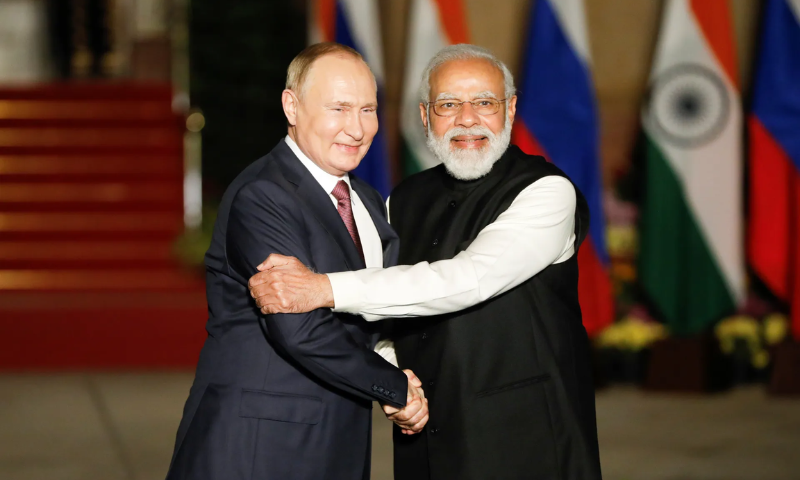
Washington/Moscow/New Delhi, August 4, 2025: A senior aide to U.S. President Donald Trump has accused India of financing Russia’s war in Ukraine by continuing to purchase discounted oil from Moscow, as Washington intensifies pressure on New Delhi to curb its energy ties with the Kremlin.
In a televised interview with Fox News, Stephen Miller, Deputy Chief of Staff at the White House and one of Trump’s closest advisors, said:
“What he [Trump] said very clearly is that it is not acceptable for India to continue financing this war by purchasing oil from Russia.”
India has emerged as the second-largest buyer of Russian crude after China, with more than 30 percent of its fuel supplies now coming from Russia—compared to just 1 percent before the Ukraine conflict began in 2022. These purchases, critics say, have provided the Kremlin with vital revenue despite Western sanctions.
Miller’s comments follow the Trump administration’s decision to impose a 25 percent tariff on Indian goods last week, citing New Delhi’s ongoing military and energy dealings with Russia. The administration has also warned of additional economic penalties if India continues its purchases of Russian arms and oil.
“People will be shocked to learn that India is basically tied with China in purchasing Russian oil. That’s an astonishing fact,” Miller remarked.
Despite the criticism, the White House aide acknowledged Trump’s longstanding relationship with Indian Prime Minister Narendra Modi, describing it as “tremendous.”
On July 30, Trump echoed this sentiment on his Truth Social platform:
“While India is our friend, it has always bought most of its military equipment from Russia and is Russia’s largest buyer of ENERGY, along with China, at a time when everyone wants Russia to STOP THE KILLING IN UKRAINE – ALL THINGS NOT GOOD!”
“I don’t care what India does with Russia. They can take their dead economies down together, for all I care,” he added bluntly.
President Trump has also floated the possibility of 100 percent tariffs on imports from countries that continue purchasing Russian oil unless a peace agreement is reached between Moscow and Kyiv.
The Trump administration’s sharp rhetoric appears to be part of a broader effort to pressure both Russia and India, while also extracting trade concessions from New Delhi. Analysts say the U.S. is trying to reduce its $45 billion trade deficit with India and influence its strategic choices amid evolving global alliances.
Trump has also criticized India’s continued participation in BRICS, the economic bloc co-founded by Russia and China, suggesting that its alignment may undermine Western efforts to isolate Moscow.
In response, Indian government officials told Reuters that New Delhi will continue buying oil from Russia, stressing that the decision is guided by national interest and economic necessity.
The Ministry of External Affairs reaffirmed that India’s relationship with Russia is “steady and time-tested” and should not be viewed through the lens of any third-party conflict. India has long-standing defense and energy ties with Russia dating back to the Soviet era.
According to the Stockholm International Peace Research Institute (SIPRI), Russia remains India’s top arms supplier, providing key military systems for its armed forces.
Prime Minister Modi visited President Vladimir Putin in Moscow last year and has since met him multiple times at international forums as part of New Delhi’s diplomatic balancing act between East and West.
India’s crude import patterns shifted dramatically after the war in Ukraine began in February 2022. Taking advantage of discounted Russian oil, India ramped up its imports to 1.12 million barrels per day by June 2022, peaking at 2.15 million barrels daily in May 2023. At one point, Russian oil accounted for nearly 40 percent of India’s total imports, according to Kpler, a data analytics firm.
While India historically relied on Middle Eastern suppliers, the Ukraine conflict created an opportunity for cost-effective diversification. Officials in New Delhi maintain that their energy imports are within international legal norms and have contributed to stabilizing global crude prices.