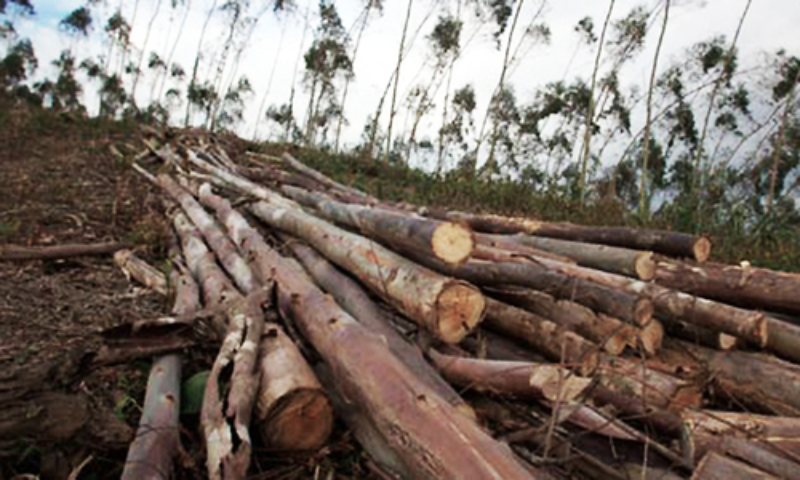
Islamabad, August 17, 2025: Pakistan has reached a critical environmental tipping point as deforestation, rangeland degradation, and climate change combine to worsen floods, landslides, and cloudbursts, experts warned on Sunday. A national newspaper reported that forest cover has shrunk by 18% since 1992, leaving the country exposed to grave environmental, economic, and national security risks.
Environmental scientists say that the catastrophic floods of 1992, 2010, and 2025 are stark reminders of how deforestation and rangeland destruction have transformed the upper watersheds into “flood factories.”
Forests, they stress, are not just trees but Pakistan’s first line of defence. They absorb rainwater to prevent flash floods, recharge groundwater, reduce soil erosion, regulate rainfall, and sustain agricultural fertility. They also help balance climate by reducing heat, storing carbon, and shielding communities from disasters.
Key declines and losses
- Forest cover dropped from 3.78 million hectares in 1992 to 3.09 million hectares in 2025.
- Annual deforestation declined from 40,000 hectares in 1992 to about 11,000 hectares today, but international organisations warn Pakistan is still losing the equivalent of 30 hectares daily.
- Rangeland area shrank from 60% to 58%, with biomass productivity collapsing to 20–30% of potential yield.
- In Chitral, over 3,700 hectares of forest vanished between 1992 and 2009; experts predict a further 23% decline by 2030.
- Illegal timber theft in Arandu Gol led to the loss of 1.6 million cubic feet of wood, the largest such case in Pakistan’s history.
District-level impact
In Kalam, Swat, decades of logging weakened the Swat River catchment, intensifying the 1992 and 2010 floods. In Buner, the August 2025 cloudburst triggered flash floods that destroyed villages and farmland. Battagram saw landslides block the Karakoram Highway, while Bajaur and Mansehra faced repeated cloudbursts and flash floods. In Gilgit-Baltistan, forest cover has dropped below 4%, increasing vulnerability to wildfires and glacial lake outburst floods.
Dr. Adil Zareef, Convener of Sarhad Conservation Net, explained that deforestation is directly altering weather patterns: “Bare mountains heat 5°C to 8°C more than forested areas, causing monsoon winds to rise rapidly and trigger sudden cloudbursts instead of steady rain.”
Dr. Khalid Khan said the forests and rangelands of Khyber Pakhtunkhwa are the country’s natural shield, and their destruction is “endangering lives, livelihoods, and national security.”
One-third of households in KP depend on livestock, but rangeland productivity has plummeted to 20–30%. Families that once relied on forest fodder and firewood are now resorting to even more unsustainable practices, worsening the cycle of environmental degradation.
Experts stressed that plantation drives alone are insufficient without strict enforcement against timber mafias and accountability of complicit officials. They urged the government to declare deforestation and rangeland destruction a national emergency and adopt a comprehensive strategy including watershed and grazing management, community-based rangeland restoration, satellite-based environmental monitoring, specialized wildfire management units for mountain districts and promotion of alternative fuel sources.
“Without urgent leadership and coordinated action, Pakistan will continue to face more frequent and destructive floods, landslides, and environmental emergencies,” the experts warned.